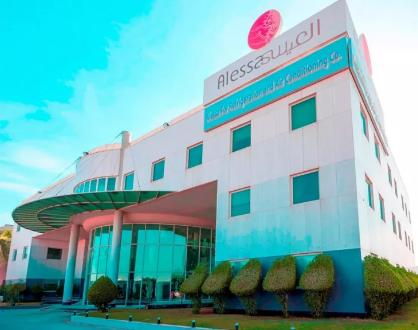
Honeywell announced that Saudi Arabia-based appliance manufacturer Al-Essa Industrial Company has adopted Honeywell Solstice Liquid Blowing Agent (LBA) for use in insulation of its products.
Honeywell Solstice LBA will help Al-Essa Industrial Company phase out higher-global warming potential (GWP) solutions that contribute to climate change, in-line with Saudi Arabia’s climate objectives, while also ensuring it maintains compliance with regulations in the kingdom.
Saudi Arabia has a target to achieve carbon neutrality by 2060, and under the Saudi Green Initiative it intends to reduce carbon dioxide emissions by 278 million tonnes per annum (mtpa) by 2030. Honeywell’s Solstice LBA supports these objectives as an ultra-low-GWP alternative to traditional hydrochlorofluorocarbons (HCFCs) such as HCFC-141b, which is banned in Saudi Arabia.
HCFCs are sometimes used in foam, refrigeration and air conditioning applications, but deplete the protective ozone layer and contribute to climate change. Alternative hydrofluorocarbon (HFC) solutions are also potent greenhouse gases and do not meet energy regulations.
With a GWP of 1, 99.9% lower than HFC blowing agents, Solstice LBA will enable Al-Essa Industrial Company to meet energy standard requirements in Saudi Arabia and other countries for exports.
“Honeywell’s ready-now Solstice LBA plays a critical role for the manufacturing industry as we see the continued phaseout of high-GWP materials and increasing regulations on reducing emissions globally,” said George Bou Mitri, vice president and general manager of Performance Materials and Technologies for the Middle East and North Africa at Honeywell. “Switching to Solstice LBA will not only support Al-Essa Industrial Company’s sustainability initiatives, but will also help to accelerate the industry’s transition to more environmentally-conscious and energy efficient applications of blowing agents. Through this collaboration, Al-Essa Industrial Company and Honeywell are supporting the Kingdom’s initiative of building up its local manufacturing capabilities with reduced impact on the environment.”