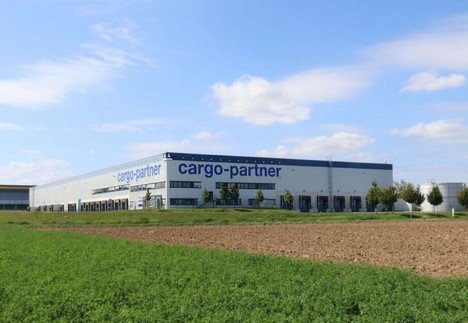
As of January 2020, the cargo-partner iLogistics Center next to Prague Airport has been certified for the storage and handling of organic products according to the EU Eco-regulation.
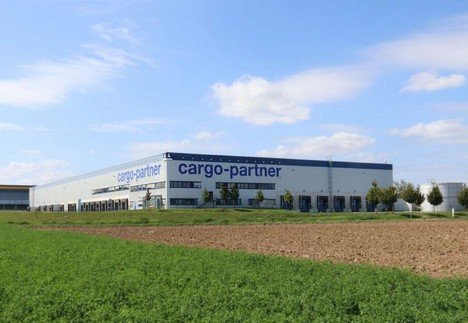
Since the opening of the 10,900 m² iLogistics Center at Prague Airport’s Logicor Park in 2019, cargo-partner has taken several steps to make the warehouse ideally suitable for the storage of foodstuffs and perishables, including temperature-sensitive goods and products of organic farming. As of January 14, 2020, the cargo-partner iLogistics Center Prague has been certified in accordance with the EU Eco-regulation by the inspection body ABCERT. This certification confirms that the warehouse fulfills the requirements for the storage and handling of organic products according to Article 29 (1) of the European Union regulation (EC) 834/2007, also known as the EU Eco-regulation. The European Union regulation (EC) 834/2007 on organic production and labeling of organic products defines how agricultural products and foods that are designated as organic products have to be grown.
Jiri Jelinek, Managing Director of cargo-partner in the Czech Republic, explains the motivations for obtaining the organic certification: “Since we opened our iLogistics Center Prague in January 2019, numerous customers from the foodstuffs and perishables industry have been making use of the warehouse. We continue to optimize our facility for the requirements of this important market: In April 2019, we added a temperature-controlled section. In July 2019, our foodstuffs warehouse received the IFS certification for foodstuffs logistics. Finally, in January of this year, we obtained the organic certification, which allows us to ensure storage and handling of organic foods compliant with the EU Eco-regulation.”
The iLogistics Center Prague is located in Logicor Park at Prague Airport, directly connected to the highway and 15 minutes away from the airport as well as from the city center. The multi-user warehouse is HACCP certified and allows for cross-docking, vendor-managed inventory as well as comprehensive order fulfillment. Services provided at the warehouse range from container unloading, palletization, pick & pack and reverse logistics to repacking, sorting, labeling, bundling, assembling, customs clearance and logistics consulting. The cargo-partner iLogistics Center Prague provides optimal storage conditions for milk, meat, baked goods, beverages, fruits and vegetables in primary packaging as well as all other goods requiring temperature-controlled storage. In 2019, the cargo-partner team at the iLogistics Center Prague had obtained the IFS (International Featured Standard) Logistics certification for its 5,000 m² foodstuffs warehouse and installed a 1,500 m² temperature-controlled section with a constant temperature between +2°C and +8°C.