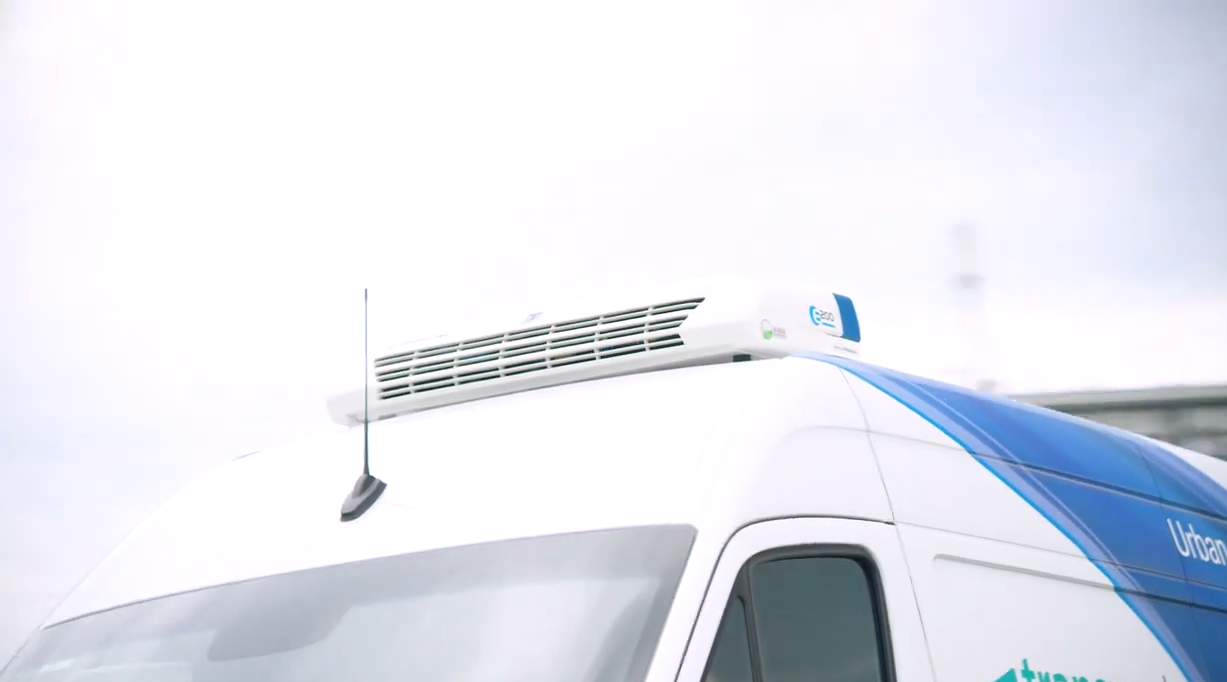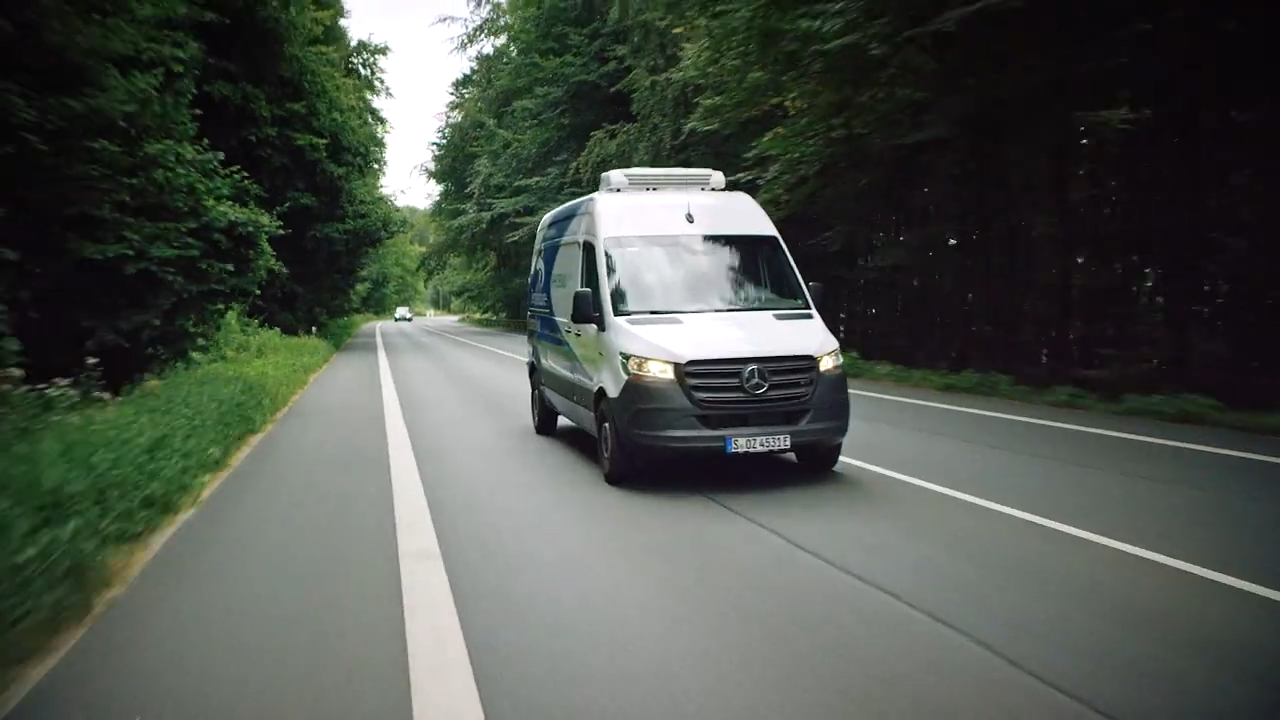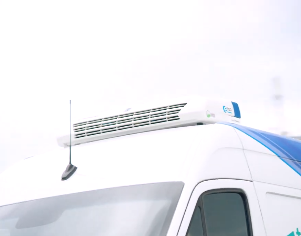
Thermo King, a leader in transport temperature control solutions and a brand of Trane Technologies,announced the collaboration with Mercedes-Benz AG to create a fully electric, refrigerated Mercedes-Benz eSprinter van prototype specified for local zero-emission last mile urban delivery of pharmaceuticals and medicines.
The Mercedes-Benz eSprinter Pharma prototype features the all-electric E-200 refrigeration unit and the new lithium-ion (Li-ion) battery from Thermo King. Combined, the E-200 andthe state-of-the-art Li-ion battery deliver independent and constant capacity ensuring an unbroken cold chain even while the driver stops for delivery or break.This is particularly important for maintaining controlled and uncompromised temperature in the load compartment – a critical element to ensure the quality, integrity and efficacy of transported pharmaceuticals and medicines.
“The collaboration between Thermo King and Mercedes-Benz AG to develop an all-electric pharma- delivery vehicle will enable our customers to benefit from the best combination of distribution and refrigeration technologies,” said Eneko Fernandez, product management leader at Thermo King. “Electrification of transport industry is a trend that addresses the noise and emission pollution in cities and urban areas. At Thermo King, we want to challenge what is possible in our industry. Working together with Mercedes-Benz Vans on the eSprinter Pharma, we are developing a local zero-emission refrigerated transportation that will help improve the quality of life, in a sustainable way.”
“Sustainability and environmental protection are increasingly important for our customers, who are facing more and more challenges that apply to inner city deliveries,” said Matthias Brzenczek Industry Manager Pharma at Mercedes-Benz AG. “With the eSprinter Pharma, we want to offer a sustainable, electrically-powered van specifically built to meet the needs of the pharmaceutical industry.From the outset, we wanted to avoid solutions using independent auxiliary battery or passive cooling methods. We want our customers to be able to rely on an active and efficient cooling and heating system in the load compartment.”
The prototype van has undergone first rounds of successful testing. Over the period of four weeks, the vehicle drove more than 2000 kilometers maintaining the temperature of the load compartment between 15 and 25 degrees Celsius, and successfully delivering pharmaceuticals to pharmacies in and around the city.Further testings are planned for the end of 2020 and early 2021.