A widespread U.S. heat dome pushed heat indices above 100°F (37.8°C), while early July brought above-normal temperatures across the country. HARDI analyzed weather and HVAC financing data to examine how higher temperatures affect cooling demand.
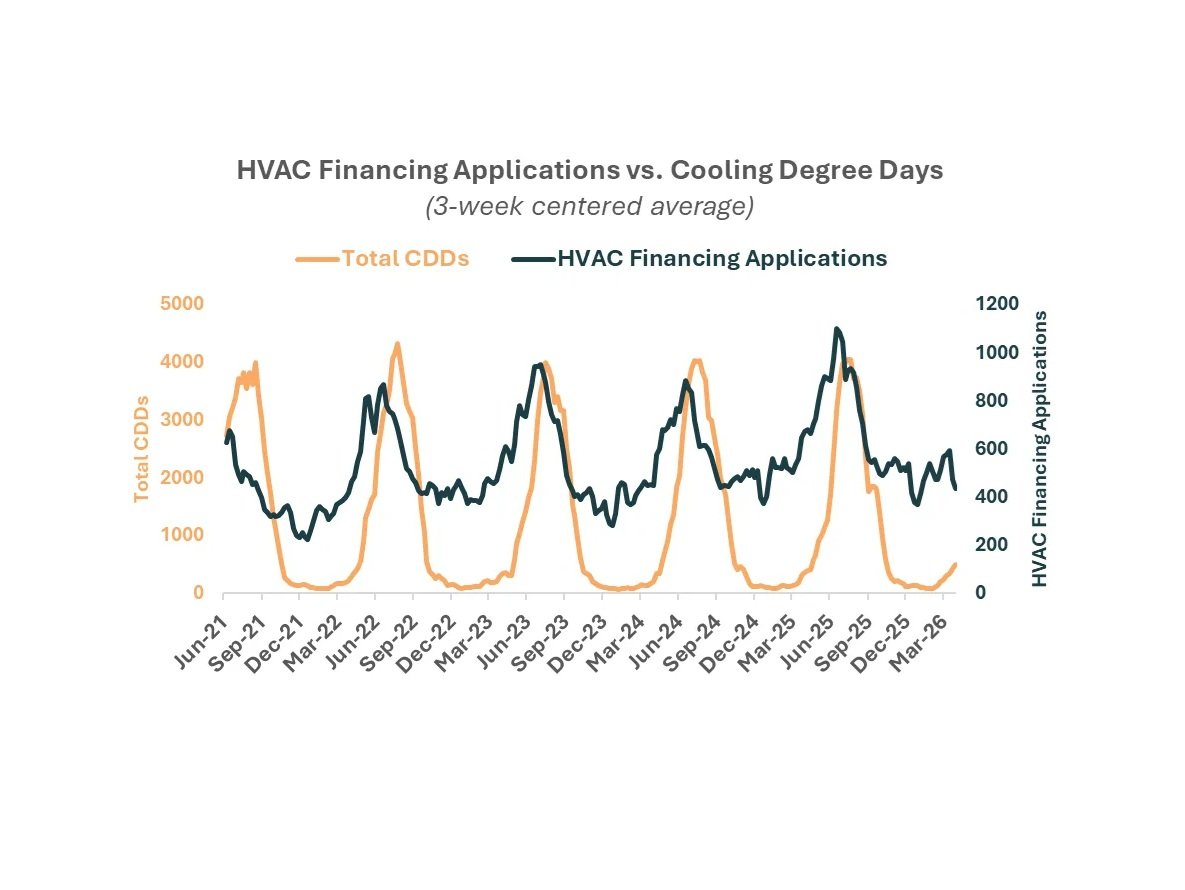
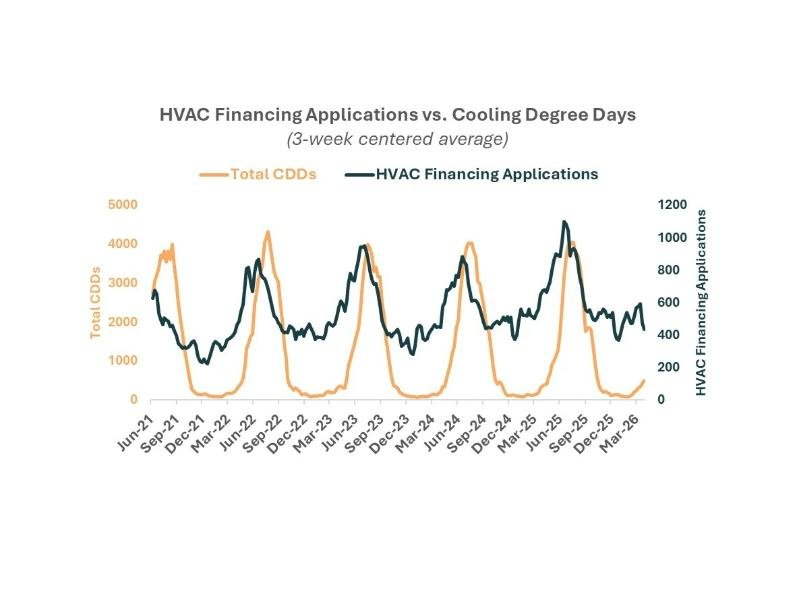
HARDI measures cooling demand through cooling degree days (CDD), calculated as the difference between the daily average temperature and 65°F (18.3°C). Weekly NOAA data showed a strong correlation between increases in CDDs and aggregate HVAC financing applications provided by FTL Finance, with applications generally rising after the first increases in CDDs each cooling season.
A log-linear regression model found a statistically significant 0.04% increase in financing applications for each additional weekly cooling degree day. In Alabama, NOAA recorded 122 CDDs during the referenced week, which the model associated with a 4.88% increase in applications.
The model used 12-month differenced cooling degree days and logged 12-month differenced weekly FTL application totals, with time fixed effects by year.
HARDI said the Northeast, Mid-Atlantic and Great Lakes regions face difficult comparisons with July 2025, while the Southwest and West have easier weather comparisons. The organization expects the heat dome’s movement into Central and Western states to increase pressure on HVAC systems, potentially supporting emergency replacements and distributor sales growth in affected regions.