Influential policymakers from India worked with University of Birmingham and other UK academic and industry experts to develop a working blueprint that could help the country’s agriculture and food sectors tackle the challenge posed by ever-increasing global demands for cooling.
The plan will see partners in the UK and India working together to develop a clean and sustainable post-harvest cold chain food delivery model, run by the farming institution in partnership with industry.
It will see in-country Clean Cold Chain Centres of Excellence established in India to demonstrate to farmers and industrialists the benefits of using sustainable technologies and practices in the country’s food distribution network.
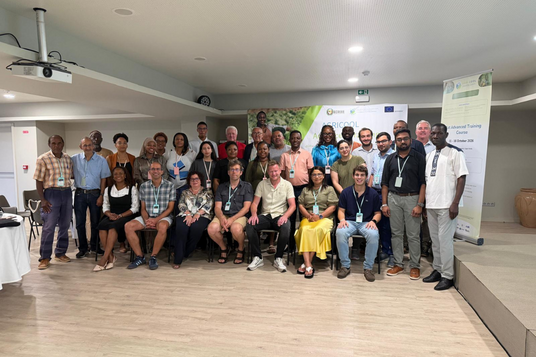
Birmingham’s clean cold specialists worked with industry and agriculture experts from the states of Haryana, Punjab and Andhra Pradesh to develop the blueprint in a special two-day India Clean Cooling and Living Labs workshop – hosted by the Birmingham Energy Institute and co-funded by the Department for International Trade.
Professor Toby Peters, from the Birmingham Energy Institute, said: “Our work during the workshop at the University of Birmingham represents a big step forward in tackling the issue of cooling for India and other rapidly developing countries.
“Cooling is the backbone of society and demand is growing fast, but we need more radical innovations beyond electricity and batteries; energy, food and water are interlinked and we need an innovative approach that embraces new technological solutions and ways of working.
“We need to act urgently and create one community working collaboratively – not just in India, but around the globe. The opportunities offered in developing markets can encourage new thinking, business models and policy.”
The partners’ vision is to harness clean technologies to create an integrated and seamless network of refrigerated and temperature controlled pack houses, distribution hubs and vehicles. This network would maintain the safety, quality and quantity of food, while moving it swiftly from farm gate to consumption centre with limited environmental impact.
Indian participants in the workshop included: Sai Sree Aparna Bhumi – Economic Development Board, Andhra Pradesh Food Processing Society; Andal Gottumukkala, Assistant Director of Horticulture, Andhra Pradesh; Vikas Garg – Managing Director, Punjab Agro Industries Corporation; Amit Dhaka – Secretary, Punjab Mandi Board; Dr. Abhilaksh Likhi – Principal Secretary, Agriculture & Farmers Welfare Department; and Dr. Arjun Singh Saini – Director, General Horticulture and Managing Director, Small Farmers’ Agri-business Consortium, Haryana (SFACH).
Partners are meeting next week in Delhi and will continue to refine the plan ahead of the world’s first international congress dedicated to clean cold, which will be hosted by the University of Birmingham in April 2018.
The ‘Cool World’ conference will build on Birmingham’s work with partners to explore how ‘clean cold’ technology can sustainably meet the broad range of needs from cold chains for food and medicine to making more and more of the world bearable – or even safe – to live in.
Participants will address a wide range of issues, including:
- Future role of cooling – where demand will come from and what will drive it;
- Economic, social and health opportunities of cold for the developing world;
- Social, environmental and economic risks of not addressing demand or using existing, predominantly fossil fuelled, technologies;
- Alternative and emerging clean cold technologies; and
- Economic opportunity created by a new ‘cold economy’.
The Birmingham congress will support the SEforALL ‘Cooling for All’ initiative, launched in July, to identify the challenges and opportunities of providing access to affordable, sustainable cooling solutions for all. The initiative is supported by the UN, World Health Organisation (WHO), industry experts and Governments.
Working with the National Centre for Cold-chain Development (NCCD), and the UK’s Science and Innovation Networks, the Birmingham Energy Institute brought together government, industry, technology and academic professionals from India and the UK earlier this year.
The four-day initiative in India examined ways to deliver cold chains from farm to market whilst minimising carbon footprint. Currently as much as 40% of food can be lost in India due to lack of cold chains.
Source: University Birmingham