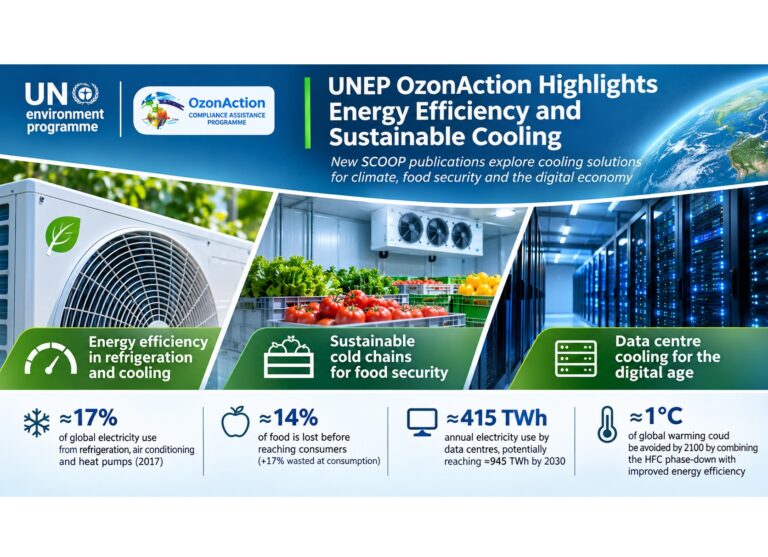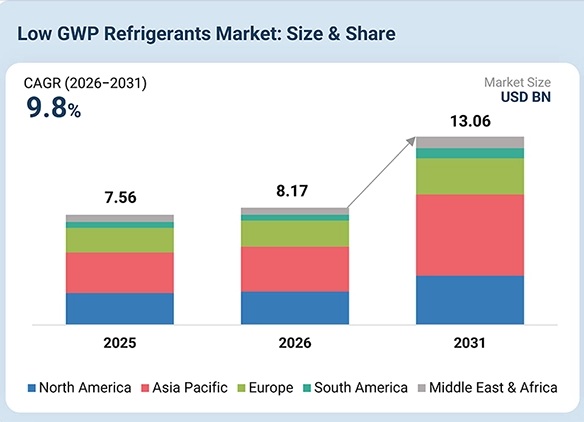
In developing countries and emerging economies, the demand for cooling services and equipment is rising as a result of increasing energy access, economic growth, and higher temperatures due to climate change. Kenya experiences rapid population growth linked with rapid urbanization, growing urban poverty, water scarcity, falling food production and decreasing resilience to climate change. These challenges have led to an increase in demand for Refrigeration and Air-Conditioning (RAC) appliances and services. Transitioning to alternative RAC technologies with high levels of energy-efficiency as well as ozone and climate-friendly refrigerants, holds a large saving potential in terms of electricity costs and Green-House Gas (GHG) emissions, thereby contributing to sustainable development.
RAC emissions, based on Ozone Depleting Substances (ODS), are responsible for damage of the ozone layer and have a significant share of global GHG emissions. Low levels of energy efficiency and high leakage rates of refrigerant gases with high Global Warming Potential (GWP) will increase these emissions drastically.
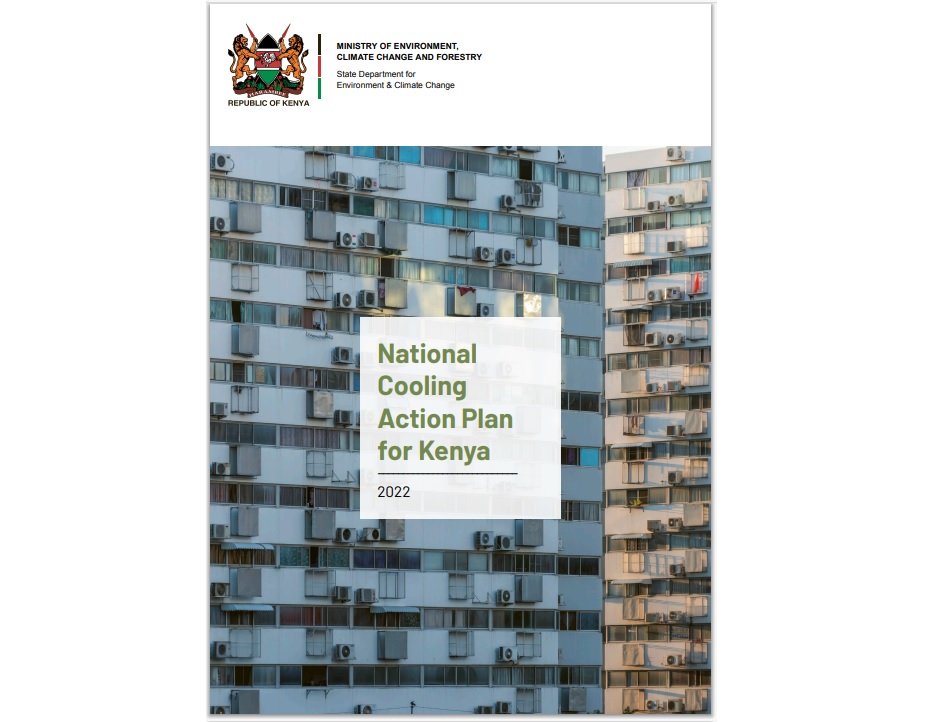
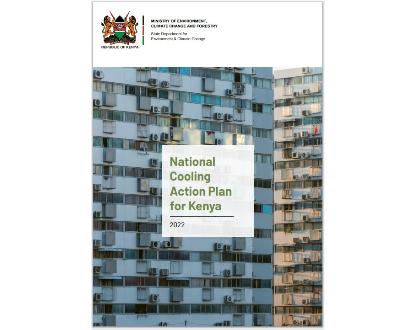
The National Cooling Action Plan (NCAP) has been developed based on the various mitigation scenarios for the Kenyan RAC sector, and is guided by the Environmental Management and Coordination Act (EMCA) 1999 which is the framework law on environment and conservation. NCAP’s five-year plan (2023-2027), is designed to guide the provision of access to sustainable cooling for all Kenyans through; accelerating market transition to high efficiency cooling appliances and equipment; transitioning the cooling sector to natural refrigerants with low global warming potential and increasing access to agricultural cold chain solutions.