Esta página solo está disponible en inglés. Ir a la portada en español

×

Questa pagina è disponibile solo in inglese. Home page in italiano

×

Diese Seite ist nur auf Englisch verfügbar. Zur deutschen Startseite

×

Cette page est disponible uniquement en anglais. Aller à la page d'accueil en français

×

Lineage Logistics Closes Acquisition of Kloosterboer Norway Facility

Lineage Logistics Closes Acquisition of Kloosterboer Norway Facility

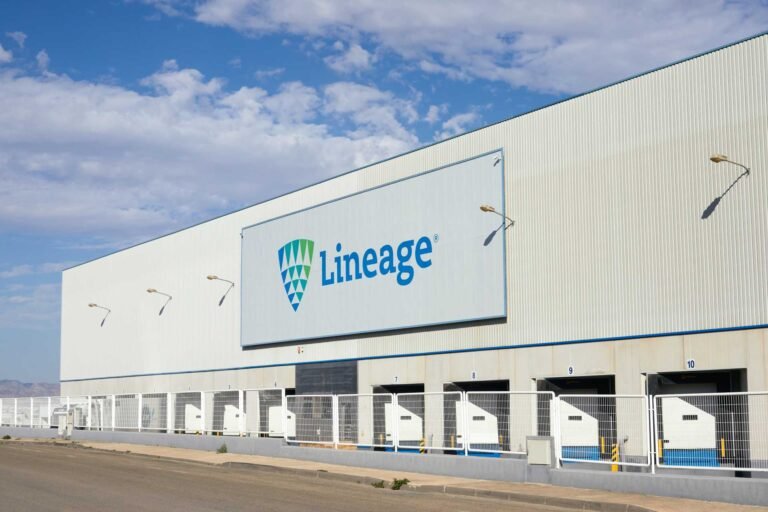
Lineage Logistics, LLC, the world’s largest and most innovative temperature-controlled industrial REIT and logistics solutions provider,  announced the acquisition of the Kloosterboer Norway facility. Terms of the deal were not disclosed.

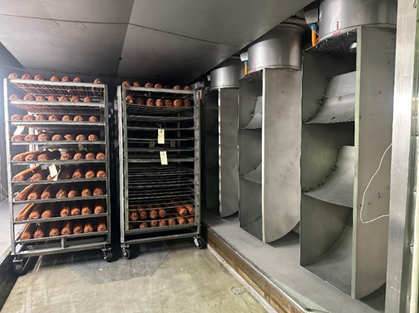
The Kloosterboer Norway facility totals 17,500 pallet positions and is strategically located outside of Oslo where it is well-positioned to serve both food producers and retailers. The facility’s structural design provides a highly efficient use of the volume in the cold store, allowing Lineage to continue executing its purpose to transform the food supply chain to eliminate waste and help feed the world.

“We’re excited to bring the Kloosterboer Norway facility into the Lineage network to enable us to further serve and reach customers in the Northern European region,” said Mike McClendon, Lineage’s President of International Operations & EVP of Network Optimization. “Kloosterboer, founded in 1925, is a strong and independent family business and we welcome the team at the Kloosterboer Norway facility to the Lineage family.”

“Kloosterboer’s strategy is to be an integrated supply chain partner for its customers, which is leading us in the direction of building multiple new locations in a short period of time. Because the Nordics are not a key development market in this strategy, we are pleased to sell Kloosterboer Norway to Lineage,” said Stephane Pluenet, Kloosterboer’s Executive Director of Automation.

The acquisition follows Lineage’s entrance into Norway in October 2020, and more broadly, Lineage’s entrance into the Scandinavian region in June 2020. The acquisition also contributes to the strategic expansion of Lineage’s facility network across Europe. Following the close of this transaction, the combined Company will feature a global footprint that spans over 1.9 billion cubic feet of temperature-controlled capacity across over 330 facilities in 14 countries spanning North America, Europe, Asia, Australia, New Zealand, and South America.

Ro Sommernes acted as legal advisor to Lineage.

Get the daily refrigeration briefing

One email a day. Trusted by 3,000+ RACHP professionals.

Related news

Most read this month

All news →

Related insights

Article

Secop’s Solar Direct Drive (SDD) System Earns WHO PQS Approval – The Team Behind It

Partner's material In March 2026, Secop’s Solar Direct Drive Power Management Module was granted WHO PQS prequalification and officially listed in the WHO Catalogue of Prequalified Immunization Devices. The WHO IMD-PQS (Immunization Devices Performance, Quality and Safety programme) is the global benchmark for cold chain equipment used in immunisation. Being listed in its catalogue is

22 Jun 2026
Tech Guide

Case Study – Effect of Louvers or diffusers on air flow distribution and cooling time on a meat log during Chill cycle

By Kushal Aurangabadkar An experimental analysis was conducted on a cooler space measuring 3.66 m × 6.096 m (12.0 ft × 20.0 ft), equipped with an ammonia refrigeration coil, five 30 cm (12 in.) fans, and five diffusers. The study measured airflow patterns, cooling rates, and heat transfer efficiency in meat storage by testing two configurations:

Kushal Aurangabadkar · 21 Jan 2026
Tech Guide

Total Cost of Ownership (TCO) for Modular Refrigeration Systems in Life Sciences Distribution Centers

by Ramez Naguib, P.E. Introduction Life sciences distribution centers are under immense pressure to deliver consistent temperature control, comply with increasingly stringent regulations, and optimize operational efficiency. Traditional built-up refrigeration systems often prove cumbersome, costly, and slow to implement. In contrast, modular, factory-assembled refrigeration systems have emerged as a compelling alternative. Drawing on lessons from

14 Jan 2026