Esta página solo está disponible en inglés. Ir a la portada en español

×

Questa pagina è disponibile solo in inglese. Home page in italiano

×

Diese Seite ist nur auf Englisch verfügbar. Zur deutschen Startseite

×

Cette page est disponible uniquement en anglais. Aller à la page d'accueil en français

×

Maersk launches its cold store in St. Petersburg, Russia

Maersk launches its cold store in St. Petersburg, Russia

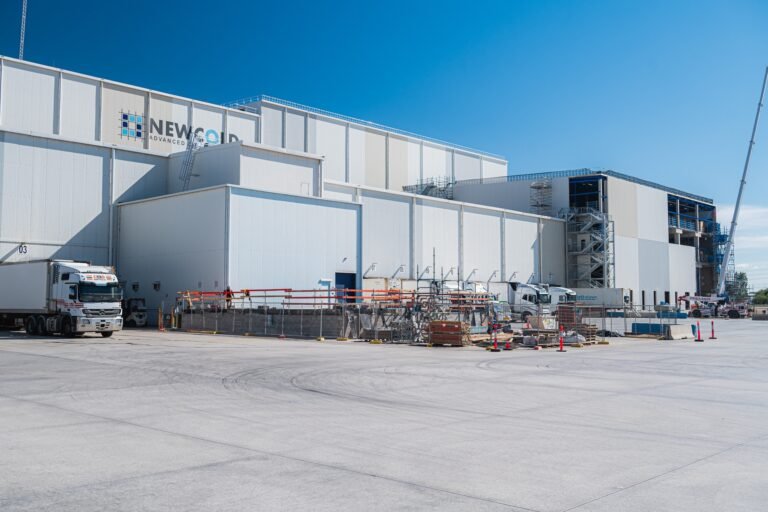
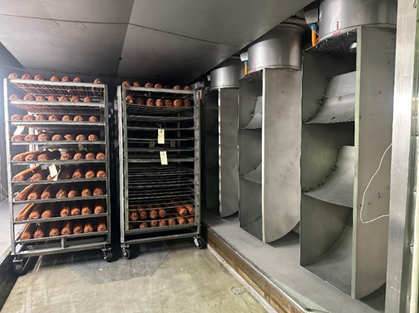
The largest cold store in St. Petersburg, whose construction commenced in June 2019 is now operational. The 3-chamber warehouse operated by Maersk offers specialised solutions extending the life cycle of perishable goods.

After only 9 months after the construction began in June 2019, the chilled capabilities of Maersk’s own cold store in St. Petersburg are operational, addressing the needs of a high-demand Russian market. In the near future the facility will also offer freezing capabilities in a separate storage chamber for frozen produce 
(-25°C).

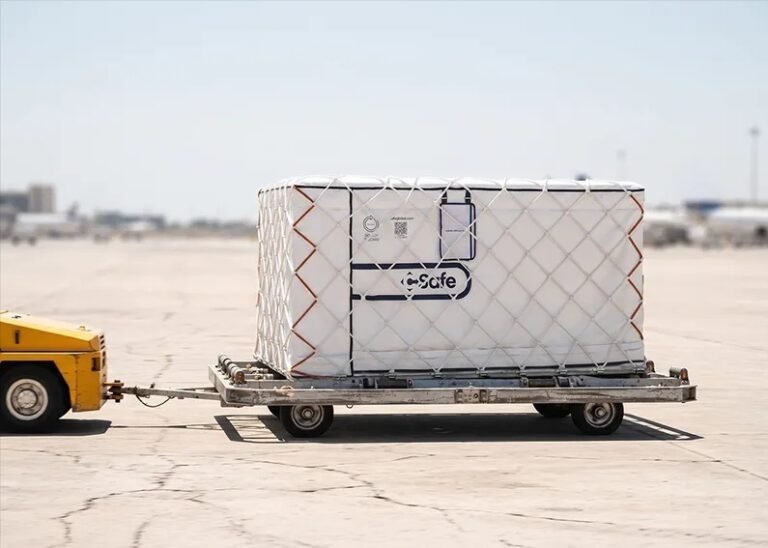
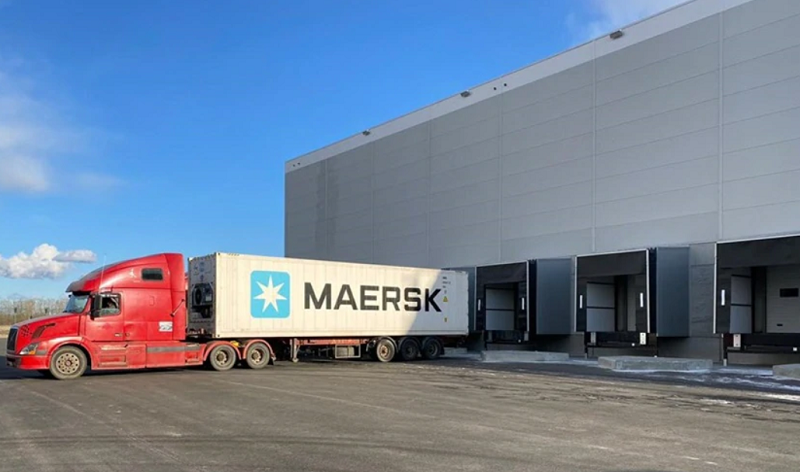
The first container to arrive at the new warehouse brought pears from Argentina after a 26-day journey and was unloaded swiftly into the chilled chamber operating at a temperature of 0.5 Celsius. In total, more than 60 Maersk’s refrigerated containers were scheduled to arrive at the facility as part of the end-to-end service from Argentina, as well as grapes and apples originating from South Africa.

“The full end-to-end offering will allow our customers to enjoy shorter overall lead time, predictable costs and best in class service” said Zsolt Katona, Managing Director, Eastern Europe at Maersk during the inauguration of the first reefer container.

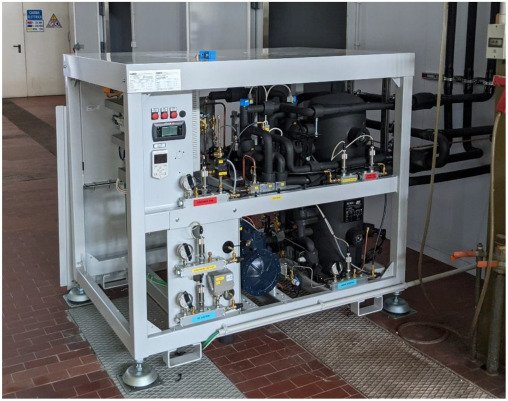
The new cold store operated by Maersk has a total capacity of more than 40 000 pallets in 3 chambers and uses CO2 cooling, which makes it the largest commercial cold store in Russia using this new technology. Over the next months, as part of its Cold Chain Management product, Maersk will also establish on site customs clearance, bonded cold storage (frozen) and phyto sanitary/veterinary services, as increased interest by both current and prospective customers underpins Maersk’s strategy of providing integrated solutions for reefer logistics.

About Maersk Cold Chain Distribution Centre Sankt Petersburg:

  • Highly energy efficient building
  • Latest cooling technology
  • 24/7 Operations
  • Inland container depot
  • 3 chambers: +13˚/+6˚/-25˚C
  • >40,000 pallet locations
  • >50,000 tons storage capacity
  • Pick/Pack, customization, Delivery to Russia by Road/Rail
Get the daily refrigeration briefing

One email a day. Trusted by 3,000+ RACHP professionals.

More on Cold Chain

All on Cold Chain →

Insights

Secop's Solar Direct Drive (SDD) System Earns WHO PQS Approval – The Team Behind It
Article

Secop’s Solar Direct Drive (SDD) System Earns WHO PQS Approval – The Team Behind It

Partner's material In March 2026, Secop’s Solar Direct Drive Power Management Module was granted WHO PQS prequalification and officially listed in the WHO Catalogue of Prequalified Immunization Devices. The WHO IMD-PQS (Immunization Devices Performance, Quality and Safety programme) is the global benchmark for cold chain equipment used in immunisation. Being listed in its catalogue is

22 Jun 2026
Case Study - Effect of Louvers or diffusers on air flow distribution and cooling time on a meat log during Chill cycle
Tech Guide

Case Study – Effect of Louvers or diffusers on air flow distribution and cooling time on a meat log during Chill cycle

By Kushal Aurangabadkar An experimental analysis was conducted on a cooler space measuring 3.66 m × 6.096 m (12.0 ft × 20.0 ft), equipped with an ammonia refrigeration coil, five 30 cm (12 in.) fans, and five diffusers. The study measured airflow patterns, cooling rates, and heat transfer efficiency in meat storage by testing two configurations:

Kushal Aurangabadkar · 21 Jan 2026
Total Cost of Ownership (TCO) for Modular Refrigeration Systems in Life Sciences Distribution Centers
Tech Guide

Total Cost of Ownership (TCO) for Modular Refrigeration Systems in Life Sciences Distribution Centers

by Ramez Naguib, P.E. Introduction Life sciences distribution centers are under immense pressure to deliver consistent temperature control, comply with increasingly stringent regulations, and optimize operational efficiency. Traditional built-up refrigeration systems often prove cumbersome, costly, and slow to implement. In contrast, modular, factory-assembled refrigeration systems have emerged as a compelling alternative. Drawing on lessons from

14 Jan 2026
Everything on Cold Chain: 2,036 articles, 1 case study, 23 insights

Most read this month

All news →