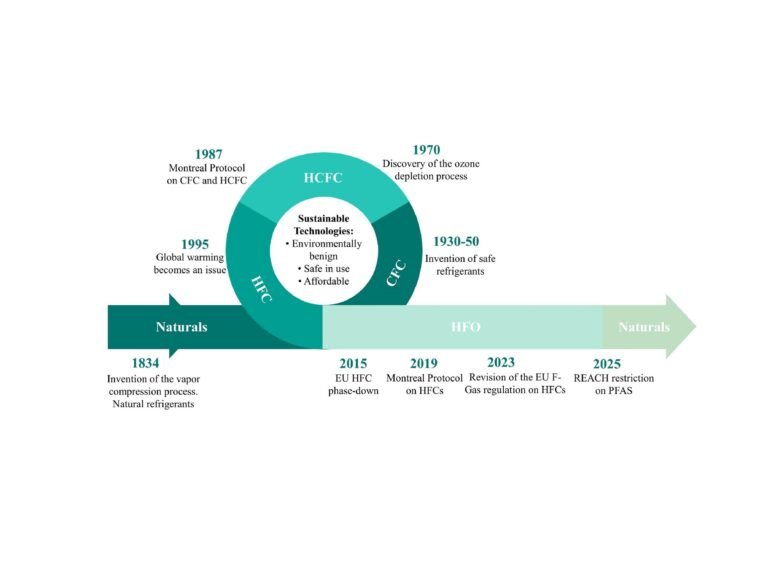
Stratospheric ozone depletion as well as atmospheric greenhouse effect due to refrigerant emissions have led to drastic changes in the refrigeration and air conditioning technology since the beginning of the 1990s.
This is especially true for the area of commercial refrigeration and air conditioning systems with their wide range of applications. In former years the main refrigerants used for these systems were ozone depleting types, namely R12, R22 and R502; for special applications R114, R12B1, R13B1, R13 and R503 were used.
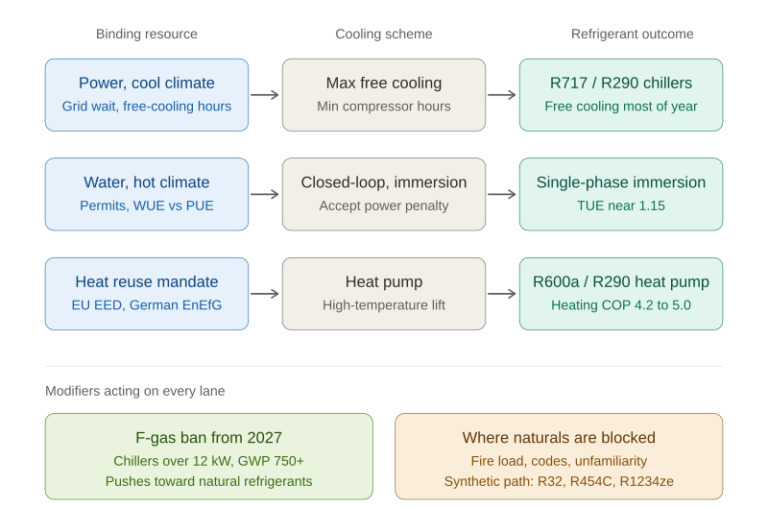
The use of these substances is no longer allowed in industrialised countries, but the use of R22 has been extended through transitional periods. However, the European Union also commited to an early phase-out for R22, which was enforced in several stages (see page 8). The main reason for this early ban of R22 contrary to the international agreement is the ozone depletion potential although it is only small.
Since 2010, phase-out regulations became effective in other countries as well, for instance in the USA.
This implies enormous consequences for the whole refrigeration and air conditioning sector. BITZER therefore committed itself to taking a leading role in the research and development of environmentally friendly system designs.
Bitzer Refrigerant Report 20
Refrigerants
Copied
Get the daily refrigeration briefing
One email a day. Trusted by 3,000+ RACHP professionals.