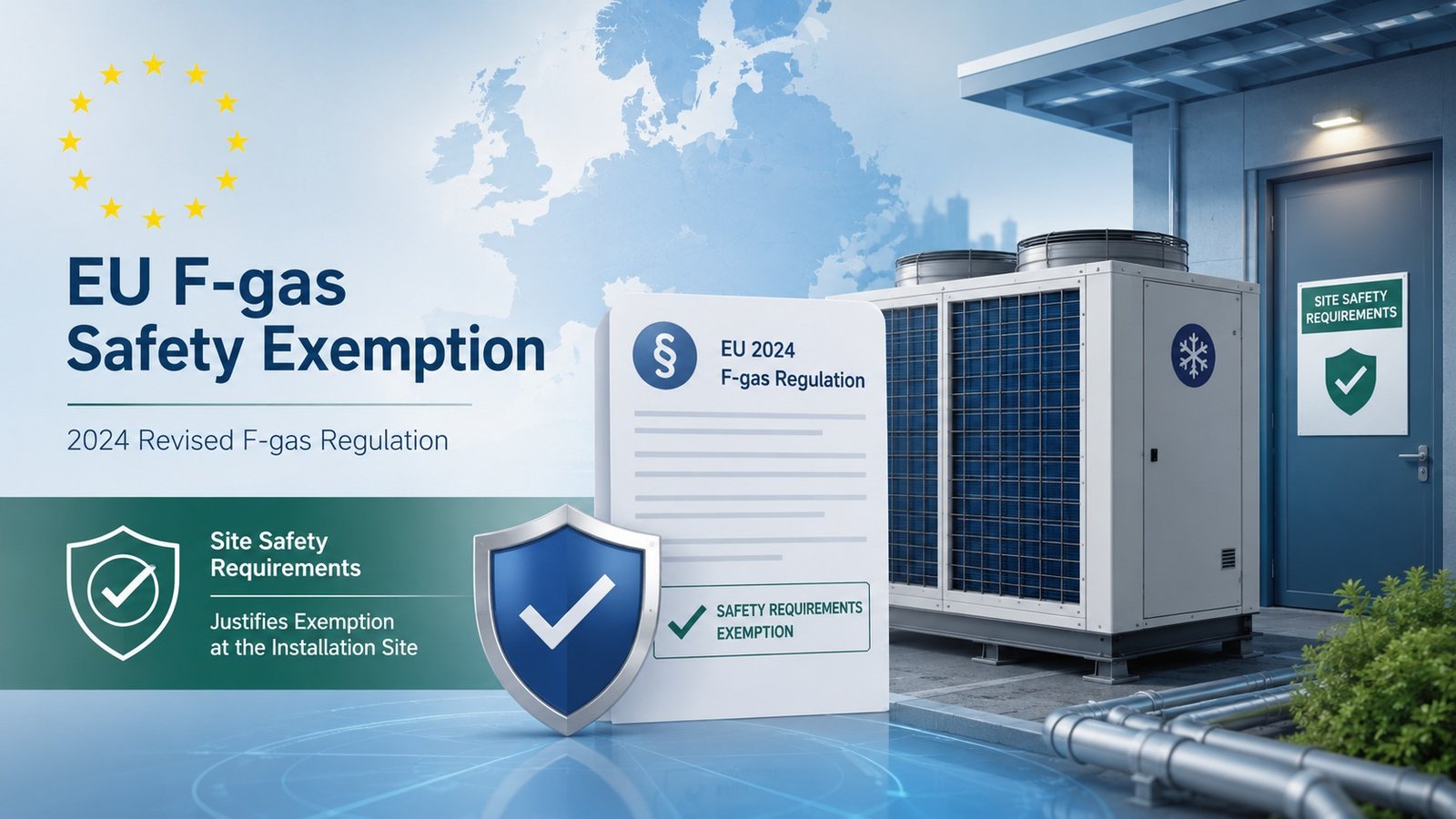
EPEE has proposed a practical understanding of how safety requirements exemptions should work under the revised EU 2024/573 F-gas Regulation. The association says the aim is to support consistent and workable application by the European Commission and national competent authorities.
The regulation introduces stricter product bans with lower GWP refrigerant thresholds, while allowing exemptions where required to meet safety requirements at the site of operation. The first relevant exemption may apply from January 1, 2025, for self-contained refrigeration equipment.
According to EPEE, the safety exemption can be used if safety requirements at the site of installation do not permit the use of systems with fluorinated greenhouse gases or alternatives. For RACHP equipment, EPEE says the exemption applies to bans 4, 5(c), 7(b and d), 8(b and e), and 9(b and f) in Annex IV where the exemption is explicitly added.
The paper states that the exemption is not a general exemption for a product category. It applies on a case-by-case basis to the configuration of product, refrigerant and site of installation. Other lifecycle phases beyond installation and product use, such as transport or end of life, cannot be used as grounds for the exemption.
EPEE says the exemption does not require prior notification or authorisation from authorities. Equipment placed on the EU market using the safety requirements exemption will need a label stating: “Prohibited to be operated unless required by safety requirements that have to be applied at the site of operation”.
The paper assigns responsibilities to manufacturers, installers and operators. Manufacturers must place safe products on the market and define installation restrictions in manuals; installers must follow manufacturer instructions and support evidence for the exemption; operators must keep evidence for authorities for at least five years.