Honeywell today announced the U.S. Environmental Protection Agency (EPA) has recognized its environmentally preferable Solstice Refrigerant technology for use in centrifugal and positive displacement chillers and industrial process air conditioning systems.
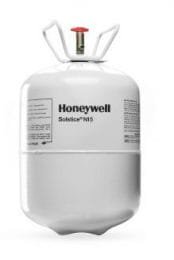
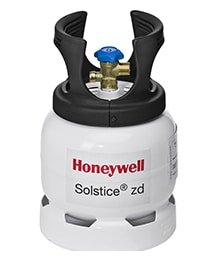
Solstice N15 (R-515B), a non-flammable, low-global-warming-potential (LGWP) refrigerant, was listed by the EPA’s Significant New Alternative Policy program (SNAP) as acceptable for use in centrifugal and positive displacement chillers and new industrial process air conditioning systems. In addition, the EPA also listed Solstice zd (R-1233zd) as acceptable for use in new and retrofit industrial process refrigeration systems primarily used in chemical, pharmaceutical, petrochemical and manufacturing industries.
The EPA’s SNAP program evaluates and lists substitute chemicals and technologies that reduce environmental impact compared to existing alternatives. The final listing rule notice will be published in the Federal Register in early November.
Numerous global environmental regulations have prompted companies to seek alternative solutions that are reliable, practical and help reduce carbon footprint to meet hydrofluorocarbon (HFC) phasedown requirements in support of the Kigali Amendment. In the U.S., many state governments are enacting regulations to reduce HFC use.
“Honeywell has continued to expand its range of Solstice products, which provide reduced- and low-global-warming-potential replacements for HFCs, allowing our customers worldwide to meet their sustainability goals and comply with regulations,” said Chris LaPietra, vice-president and general manager, Honeywell Stationary Refrigerants. “Solstice N15, one of our newest additions to the portfolio, will provide chiller manufacturers with a long-term solution that can address any installation requirement with the same chiller design. And Solstice zd has been incorporated into improved equipment designs to deliver stronger performance for customers in various cooling applications.”
Solstice N15 has a GWP of 292, 80% lower than R-134a, and is an alternative for chillers and industrial A/C including flooded evaporator designs. Its GWP is 50 percent lower than R-124, which it replaces in high ambient air conditioning applications. Solstice N15 ensures long-term compliance with EU regulations and directives like F-Gas, EcoDesign and EU’s Energy Performance of Building Directives or EPBD. The refrigerant also contributes to achieving U.S. building certifications, including LEED and BREEAM.
As a non-flammable R-134a replacement, Solstice N15 can be used immediately by chiller and air-conditioning manufacturers where safety standards and buildings codes limit the use of A2L and A3 refrigerants. Its similar product characteristics to R-1234ze provides original equipment manufacturers with a long-term solution that is flexible for both A1 and A2L refrigerants.
Solstice zd is a non-flammable, ultra-low GWP replacement for R-123 for low-pressure centrifugal chillers. It offers better capacity and similar efficiency to R-123. Solstice zd has a GWP of just 1, which is 99.9% lower than R-245fa, making it an environmentally preferable alternative in applications such as Organic Rankine Cycle (ORC) and high-temperature heat pumps.
Honeywell’s Low-Global-Warming-Potential Solutions Approved By U.S. Environmental Protection Agency
Get the daily refrigeration briefing
One email a day. Trusted by 3,000+ RACHP professionals.