Issue 5 of EIA’s Illegal Trade Bulletin (20 February 2026) highlights post-seizure refrigerant management, including a recent U.S. government auction of seized hydrofluorocarbon (HFC) refrigerants and updates from international enforcement activity.
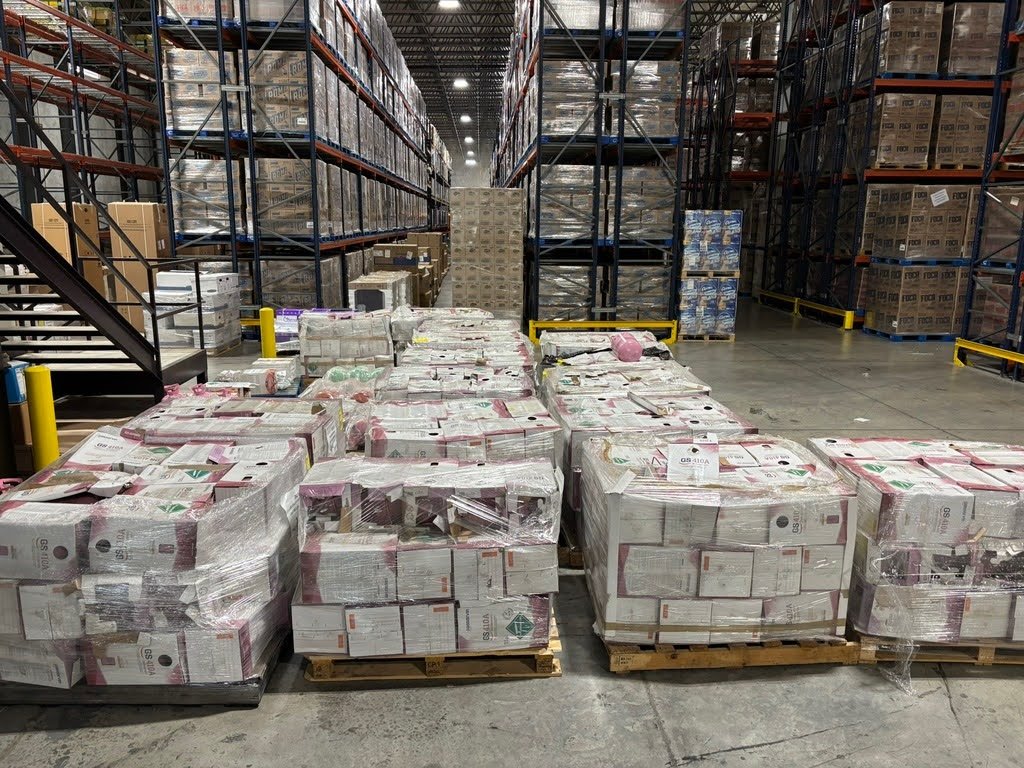
From February 5–12, 2026, the U.S. Department of Treasury and U.S. Customs and Border Protection offered approximately 30,500 pounds (approx. 13,835 kg) of seized HFC refrigerant for auction, including R-410A, R-404A, R-134a, and R-32. EIA said prospective bidders were required to have available HFC allowances allocated by the U.S. EPA under the AIM Act, and that bids were submitted to U.S. Customs for approval and verification to ensure compliance with federal quota and licensing requirements.
EIA said removing these “superpollutants” from the black market and reducing the likelihood of release into the atmosphere could be “a significant win for American businesses as well as the environment.” The bulletin states the climate impact of the 30,500 pounds (approx. 13,835 kg) of refrigerant amounts to over 28,000 metric tons CO2e (approx. 30,865 short tons CO2e), equated to driving approximately 6,600 cars for a year or burning more than 30 million pounds (approx. 13,608 metric tonnes) of coal. EIA also noted that the seized refrigerants offered for auction include 1,050 cylinders of R-410A, and stated R-410A has a GWP of 2,088.
On seized refrigerant handling, the bulletin cites the United Nations Environment Programme (UNEP) checklist “Auction of Seized Refrigerants – How to Get it Right,” outlining options such as long-term storage, government denial of entry, re-export to the country of origin, destruction or export for destruction, and auctioning. It also notes that the Montreal Protocol’s Technology and Economic Assessment Panel (TEAP) maintains a list of approved destruction technologies for controlled substances, including refrigerants, and stresses that strong controls, oversight, and refrigerant purity testing are important when auctions are tied to national licensing and quota systems.
The bulletin also references World Customs Day (January 26) and UNEP OzonAction interviews with enforcement officers, and summarizes results from Operation Demeter XI shared by the World Customs Organization (WCO) in late January 2026. The WCO said the 2025 operation ran over five weeks in two phases, involved 120 Customs administrations, and resulted in 409 seizures; as part of Demeter XI, authorities seized 168 tonnes (approx. 370,377 lb) of ODS and HFCs, and 13 tonnes (approx. 28,660 lb) and 5,707 pieces of equipment containing or relying on controlled substances. Examples cited include Hong Kong Customs seizing approximately 1,300 cylinders of high-GWP and ozone-depleting refrigerant in November 2025 from a shipment misdeclared as laminate flooring, and a Belgium Customs action involving the seizure and subsequent return of electronic waste shipments including refrigerators and freezers.
EIA invited tips on suspected illegal refrigerant activity via its anonymous form or by emailing
specialnotices@eia-global.org
, and noted that possible violations of environmental laws or regulations may also be reported to the U.S. Environmental Protection Agency (EPA).