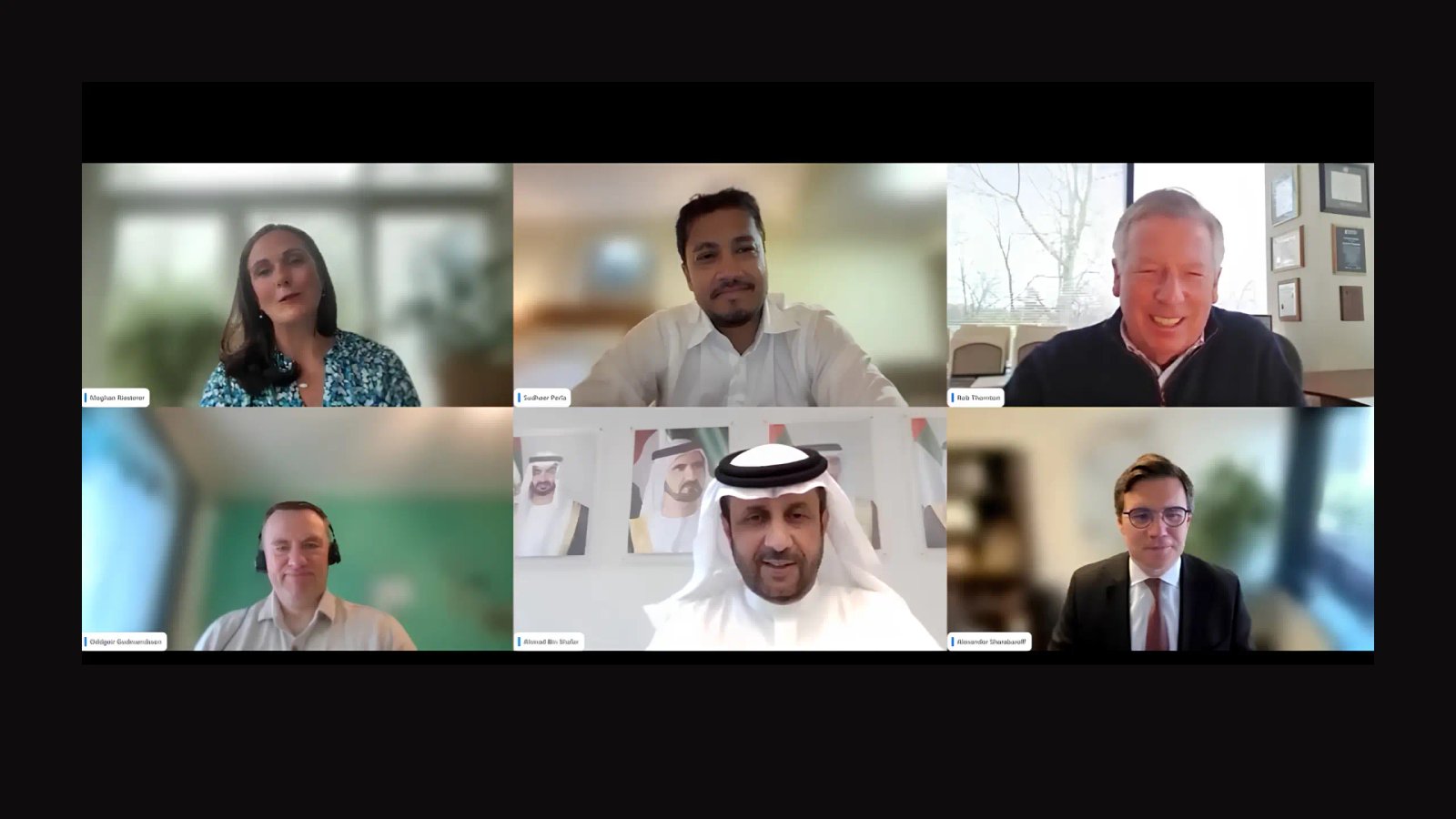
District cooling is becoming a standardised infrastructure option for cities facing rising heat, higher cooling demand, constrained power grids and dense urban growth, according to the April 2026 Cool Talk webinar. The session brought together global district cooling leaders to discuss policy signals, utility models, financing structures and planning decisions needed to scale the technology.
Rob Thornton, President and CEO of the International District Energy Association, said the global district cooling market is projected to grow from around USD 30 billion in 2024 to USD 55 billion by 2033. He cited Dubai, Singapore, Paris and Stockholm as examples of different urban and climate applications. Dubai has 1.7 million refrigeration tons installed, 2 million refrigeration tons contracted and 90 plant rooms in operation.
IDEA is hosting its 117th Annual Conference and Trade Show from 23 to 26 June in Ottawa under the theme “Connecting Networks.” Second Vice Chair Meghan Riesterer moderated the panel and described the Centrio Chicago system as the largest carbon-zero district cooling system in the United States. The Chicago system uses North America’s largest ice battery and ultra-filtered water from the Chicago River to cool more than 50 million square feet while saving 250 million gallons of freshwater annually.
H.E. Ahmad Bin Shafar, CEO of Emirates Central Cooling Systems Corporation PJSC, said Empower has grown from an initial temporary capacity of 5,400 refrigeration tons in 2004 to the world’s largest district cooling services provider. The company serves approximately 160,000 customers with 1.7 million refrigeration tons of connected cooling capacity across nearly 1,800 buildings in multiple sectors. “We strongly believe that we can replicate the Dubai model elsewhere, factoring in cost, construction conditions, community acceptance, government policy and affordability as decisive factors,” Bin Shafar said.
Oddgeir Gudmundsson, District Energy Solutions Director at Danfoss, said district cooling systems are shaped by their ability to use local conditions and integrate with surrounding energy systems. He cited Barcelona, Paris, Copenhagen and Stockholm as examples involving LNG regasification waste cold, river heat rejection, renewable power, sea-based free cooling, heat pumps and district heating. He also said networks and buildings must be designed together using accurate demand data, avoiding oversized chillers and applying modulating controls to maintain high temperature differences between supply and return.
Sudheer Perla, Senior Advisor for District Cooling at the UNEP Cool Coalition, said India’s record peak power demand reached 256 GW in April 2026, with around 75 GW already used for cooling and more than 70% of cooling demand powered by coal. India has 73 operational district cooling projects, mainly captive campus systems in offices, hotels, hospitals, IT parks and mixed-use developments. “The opportunity now is to move from captive systems to merchant cooling utilities that can serve multiple buildings across urban districts,” Perla said.