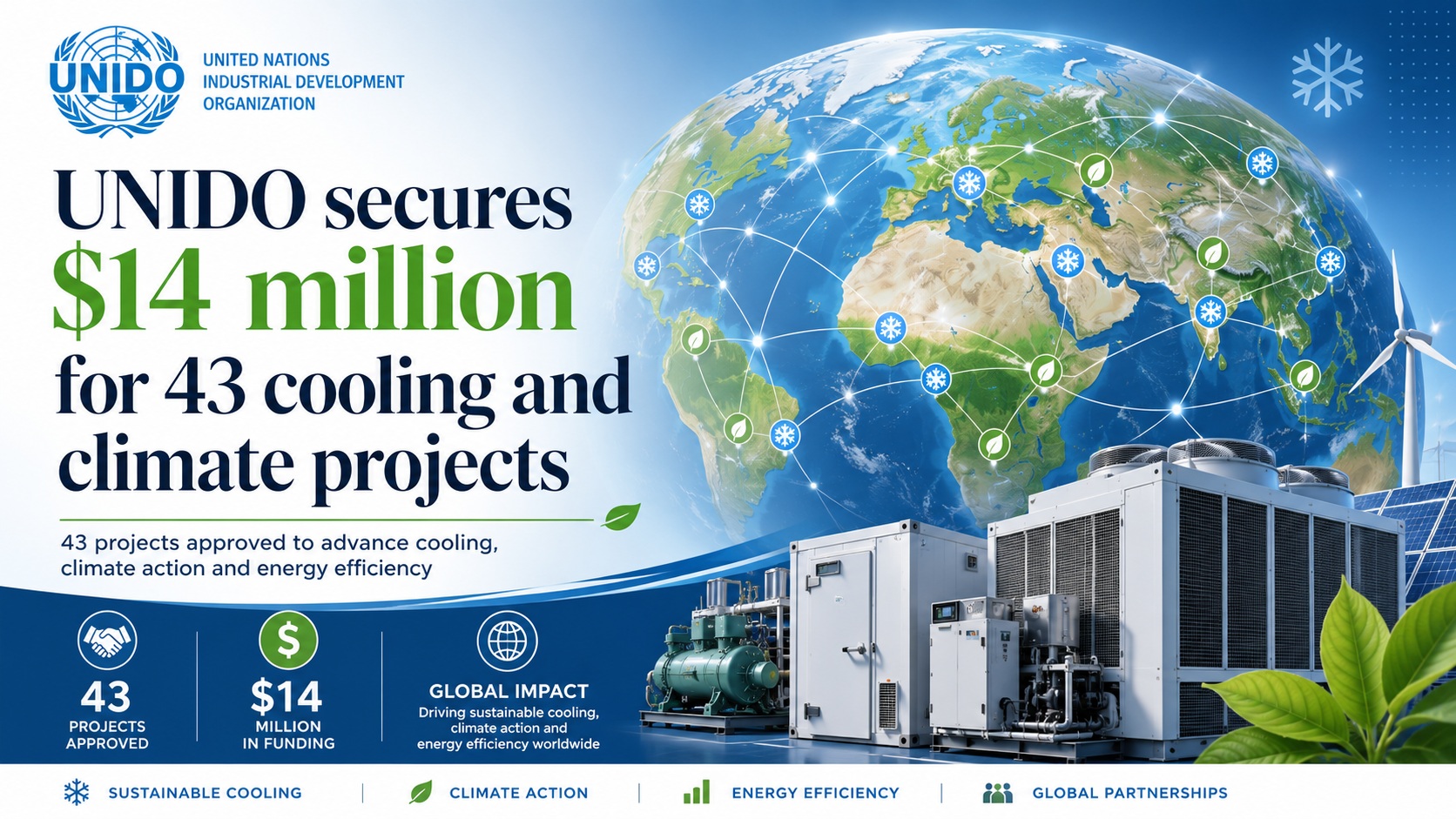
The Executive Committee of the Multilateral Fund for the Implementation of the Montreal Protocol has approved 43 UNIDO projects, including one regional project, in 22 countries. The projects have a total cost of USD 14 million and cover refrigerant transitions, energy efficiency and institutional strengthening.
The approvals include HCFC phase-out projects in 10 countries and HFC phase-down plans in nine countries. HCFCs are used mainly in refrigeration, air conditioning and foam production, while the Kigali Amendment seeks to reduce HFC use globally by 80–85% by 2047.
In Brazil, UNIDO will lead work in the industrial refrigeration sector under the first stage of the country’s HFC plan. The project will support climate-friendly alternatives and demonstrate ammonia-based systems combined with high-temperature hydrocarbon heat pumps for industrial waste heat recovery.
Ecuador’s projects include a sector-wide plan for the polyurethane foam industry to adopt low-carbon alternatives and a pilot covering energy efficiency and HFC conversion at a shrimp exporter’s refrigeration facility. In Nigeria, an updated Kigali Amendment implementation plan is expected to reduce more than 4 million tonnes of CO2 equivalent (about 4.4 million US tons) by 2030, supported by a national ban on manufacturing equipment that uses HFCs.
In Morocco, UNIDO will support the fisheries cold chain in adopting more sustainable solutions, including vessel retrofits, ammonia freezing and a national refrigerant reclamation centre co-financed by industry. Other approved work includes HFC-23 destruction projects.
“The true value of these projects is in the industrial transformation they trigger. Once industry is aware of the technological options and pathways, thanks to our work under the Montreal Protocol, it starts investing its own resources in the sector to remain competitive and maintain market share,” said Alois Mhlanga, Director of Climate Innovation and Montreal Protocol division.