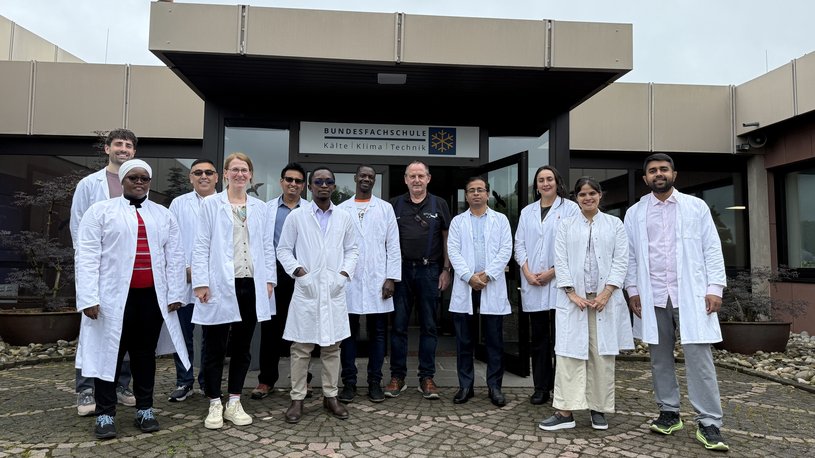
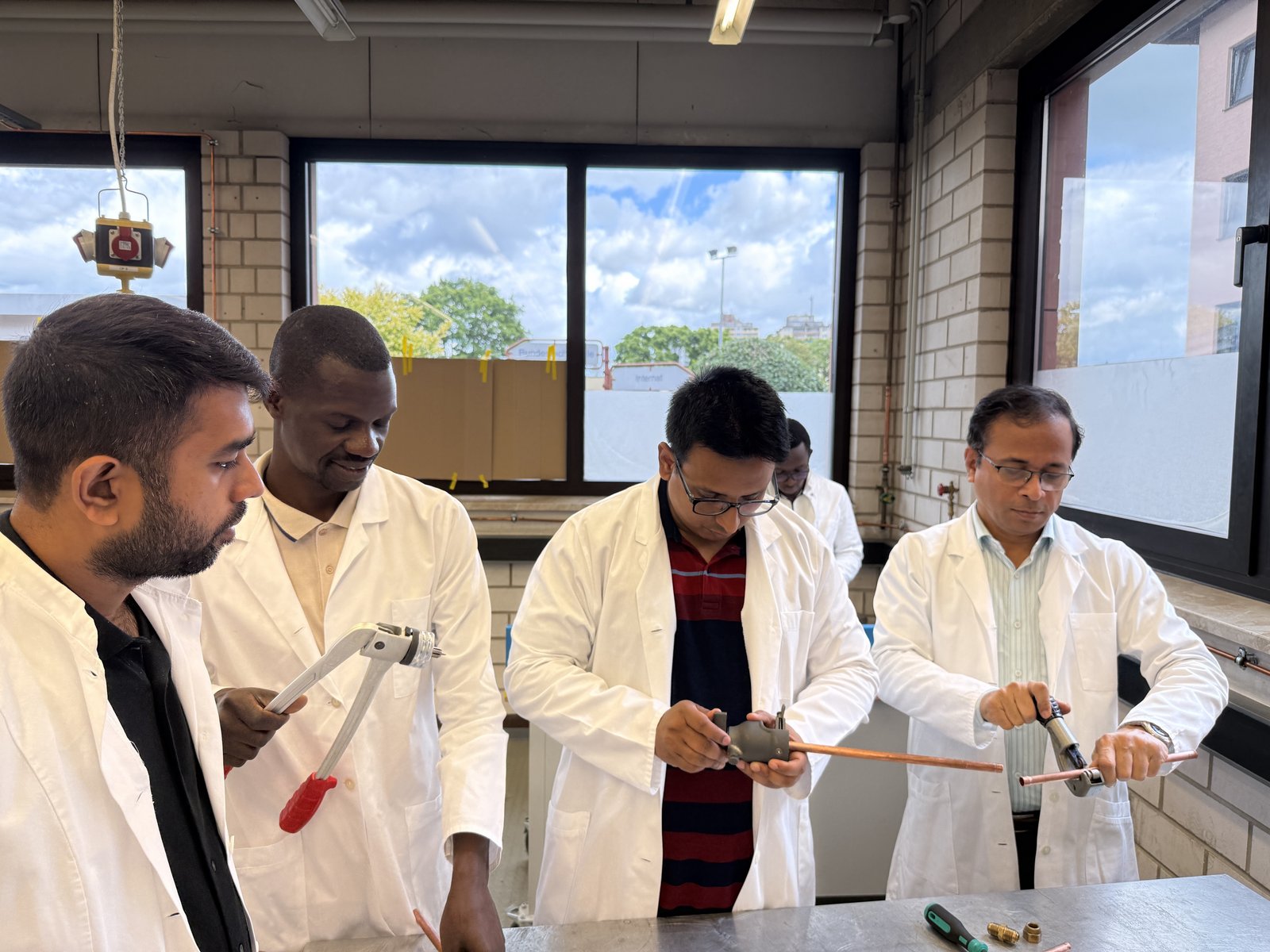
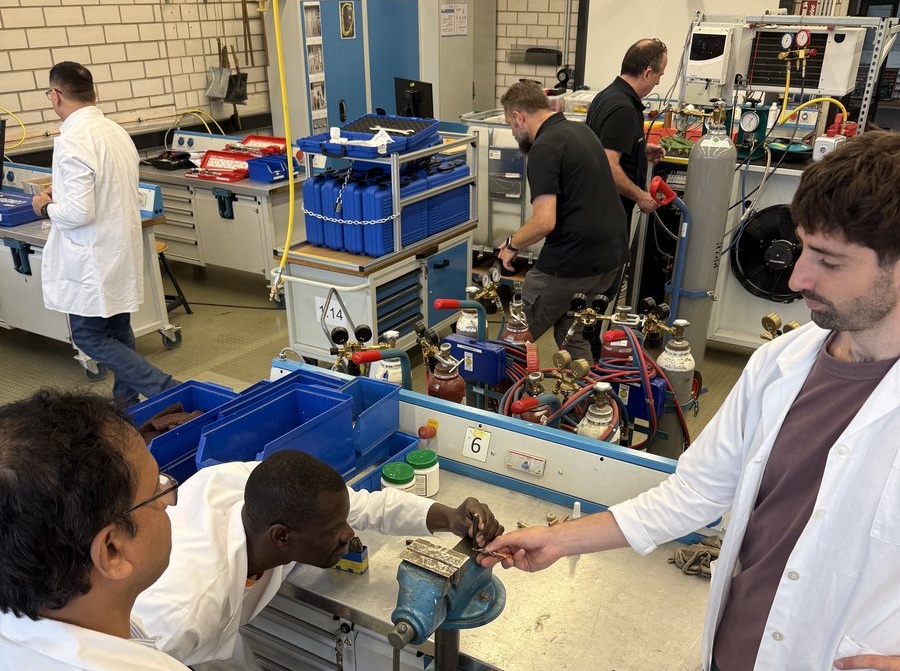
Faisal Khan, advisor at GIZ Proklima in Bangladesh, attended Cool Training for policymakers from June 8 to 12, 2026, at the Bundesfachschule Kälte-Klima-Technik, Germany’s national training school for refrigeration and air conditioning. The course combined policy discussions with practical work involving copper piping, brazing, nitrogen purging and leak detection.
Bangladesh is beginning to move air conditioners away from R-410A and R-32. According to Khan, their global warming potentials over a 20-year timeframe are more than 4,800 and 2,900 respectively, based on IPCC AR6, while propane, or R-290, has a GWP below 1.
R-290 is classified as an A3 flammable refrigerant. During the training, instructors focused on preventing gas leaks, flammable mixtures and ignition sources through system evacuation, nitrogen purging, room ventilation and safe working procedures.
Khan said Bangladeshi manufacturers could move directly from R-410A to R-290 instead of first adopting R-32. He stated that R-290 units operate roughly 20% more efficiently than the R-32 split air conditioners currently produced by most factories and could allow manufacturers to avoid intermediate retooling for R-32.
Bangladesh is developing a training pipeline for around 250 technicians through national institutes, with efforts to increase women’s participation in the trade. “The technician is not at the end of this transition. The technician is the engine of it,” said Faisal Khan, advisor at GIZ Proklima in Bangladesh.