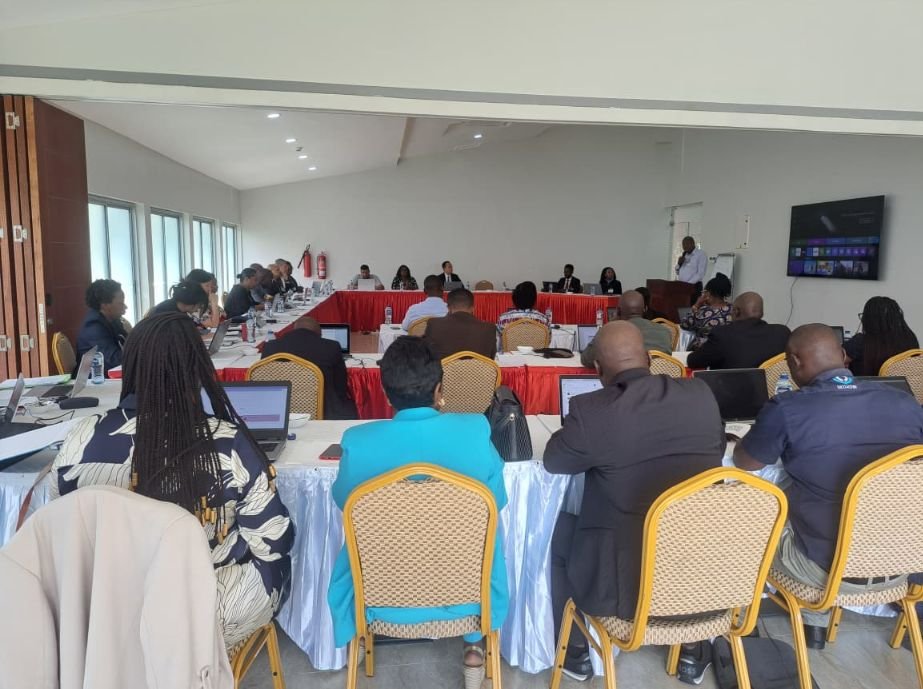
From 10 to 12 November 2025, the World Customs Organization (WCO) hosted a regional workshop in Mombasa, Kenya, focused on strengthening the ability of Customs administrations in selected African countries to tackle the illegal trade of environmentally sensitive goods, including ozone-depleting substances (ODS), hydrofluorocarbons (HFCs), and hazardous wastes. The event was supported by the China Customs Co-operation Fund (CCF-China).
A total of 37 participants from Customs administrations in Angola, Botswana, Burundi, the Democratic Republic of the Congo, Ethiopia, the Gambia, Kenya, Liberia, Mauritius, Namibia, Nigeria, São Tomé & Principe, Seychelles, South Africa, Tunisia, Uganda, Zambia, and Zimbabwe attended in person, along with global experts. An additional 26 participants joined virtually. The event was supported by experts from the WCO Secretariat, UNEP OzonAction, the Green Customs Initiative, the Basel, Rotterdam and Stockholm Conventions Secretariat, IMPEL, and other regional offices.
The workshop aimed to enhance enforcement of the Montreal Protocol and the Basel Convention by improving the detection, investigation, and prevention of illegal trade in controlled substances and waste. Sessions covered the identification of illegal shipments, methods to prevent trafficking, and the links between environmental crime and organized criminal networks.
Participants explored digital enforcement tools such as WhatGas, the GWP–ODP Calculator, and AI-assisted profiling systems, which support chemical verification and cargo screening. Updates to the Harmonized System (HS) Codes were also discussed to improve the classification of controlled substances and minimize fraudulent declarations.
Discussions included the Informal Prior Informed Consent (iPIC) mechanism, with Customs representatives showing interest in enhancing cooperation with National Ozone Units. The potential for a structured or digital system to facilitate this exchange was noted for further exploration.
A UNEP OzonAction representative commended the WCO for its efforts in promoting inter-agency collaboration and intelligence-led operations. Experts from WCO, UNEP, and IMPEL emphasized the importance of AI-driven intelligence, cross-border data sharing, and continued capacity building to support environmental enforcement.
The WCO reiterated its commitment to working with member administrations and partners to develop enforcement tools, build capacity, and carry out joint operations to fight the illegal trade of environmentally sensitive goods.
Source