Esta página solo está disponible en inglés. Ir a la portada en español

×

Questa pagina è disponibile solo in inglese. Home page in italiano

×

Diese Seite ist nur auf Englisch verfügbar. Zur deutschen Startseite

×

Cette page est disponible uniquement en anglais. Aller à la page d'accueil en français

×

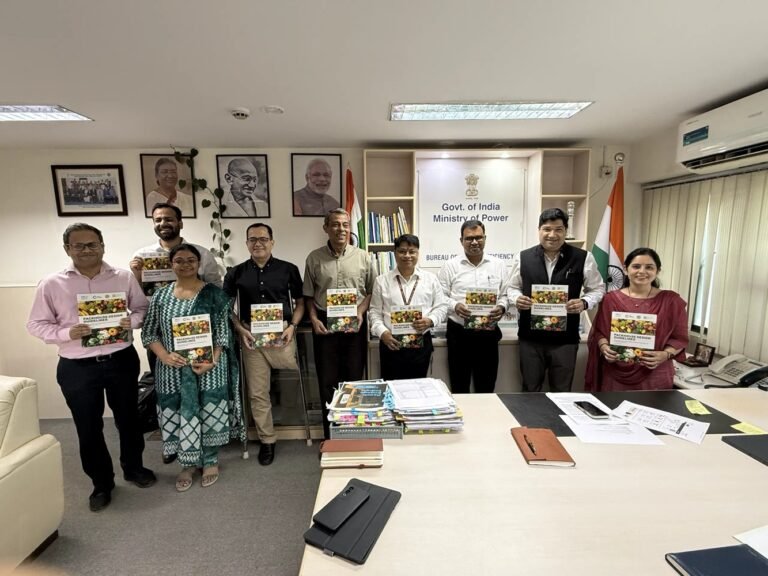
SPACECOOL deploys passive cooling carts to extend produce shelf life in India

Early results indicate up to four days of marketability and potential vendor income gains of 10–25%, without additional energy use.

SPACECOOL deploys passive cooling carts to extend produce shelf life in India

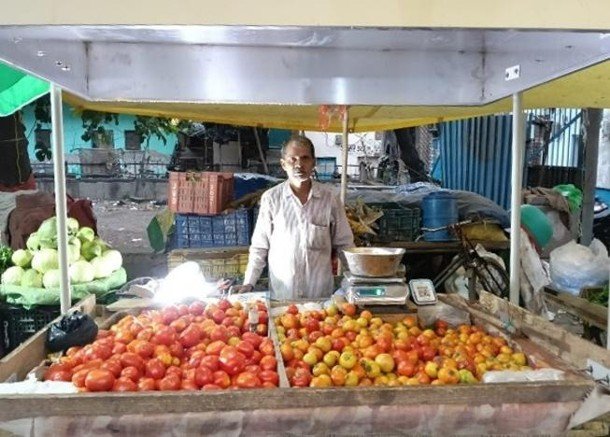
SPACECOOL has deployed its radiative cooling material on fruit and vegetable vending carts in India. Early users report that produce remains marketable for up to four days, compared with around two days under similar conditions. Preliminary estimates indicate the carts could contribute to a 10–25% increase in vendor income by reducing food losses and improving operating efficiency.

The carts use SPACECOOL passive radiative cooling technology without requiring additional energy consumption. Vendors report that green leafy vegetables, which are particularly vulnerable to heat exposure and spoilage, deteriorate more slowly and generate less end-of-day waste.

The deployment is part of SPACES, or Scaling Passive and Affordable Cooling Solutions for Economic resilience and Sustainability. The initiative is funded by Shell Foundation and the UK government’s Foreign, Commonwealth & Development Office through the Transforming Energy Access platform under the Global Research and Technology Development portfolio, with Intellecap serving as implementation partner.

The programme focuses on cooling applications intended to reduce the effects of heat stress on low-income communities in India. Longer produce shelf life can reduce vendors’ trips to wholesale markets, cutting fuel use, travel time and associated operating costs. Participating vendors have also reported increased customer interest linked to the cart design.

SPACES is moving into its next phase, with continued monitoring of cooling performance, user comfort, productivity and income impacts. Evidence from the pilot deployments will be collected and shared with potential adopters, policymakers and other ecosystem partners as the programme evaluates opportunities for wider commercial adoption.

Get the daily refrigeration briefing

One email a day. Trusted by 3,000+ RACHP professionals.

More on Cold Chain

All on Cold Chain →

Insights

Secop's Solar Direct Drive (SDD) System Earns WHO PQS Approval – The Team Behind It
Article

Secop’s Solar Direct Drive (SDD) System Earns WHO PQS Approval – The Team Behind It

Partner's material In March 2026, Secop’s Solar Direct Drive Power Management Module was granted WHO PQS prequalification and officially listed in the WHO Catalogue of Prequalified Immunization Devices. The WHO IMD-PQS (Immunization Devices Performance, Quality and Safety programme) is the global benchmark for cold chain equipment used in immunisation. Being listed in its catalogue is

22 Jun 2026
Case Study - Effect of Louvers or diffusers on air flow distribution and cooling time on a meat log during Chill cycle
Tech Guide

Case Study – Effect of Louvers or diffusers on air flow distribution and cooling time on a meat log during Chill cycle

By Kushal Aurangabadkar An experimental analysis was conducted on a cooler space measuring 3.66 m × 6.096 m (12.0 ft × 20.0 ft), equipped with an ammonia refrigeration coil, five 30 cm (12 in.) fans, and five diffusers. The study measured airflow patterns, cooling rates, and heat transfer efficiency in meat storage by testing two configurations:

Kushal Aurangabadkar · 21 Jan 2026
Total Cost of Ownership (TCO) for Modular Refrigeration Systems in Life Sciences Distribution Centers
Tech Guide

Total Cost of Ownership (TCO) for Modular Refrigeration Systems in Life Sciences Distribution Centers

by Ramez Naguib, P.E. Introduction Life sciences distribution centers are under immense pressure to deliver consistent temperature control, comply with increasingly stringent regulations, and optimize operational efficiency. Traditional built-up refrigeration systems often prove cumbersome, costly, and slow to implement. In contrast, modular, factory-assembled refrigeration systems have emerged as a compelling alternative. Drawing on lessons from

14 Jan 2026
Everything on Cold Chain: 2,039 articles, 1 case study, 23 insights

Most read this month

All news →