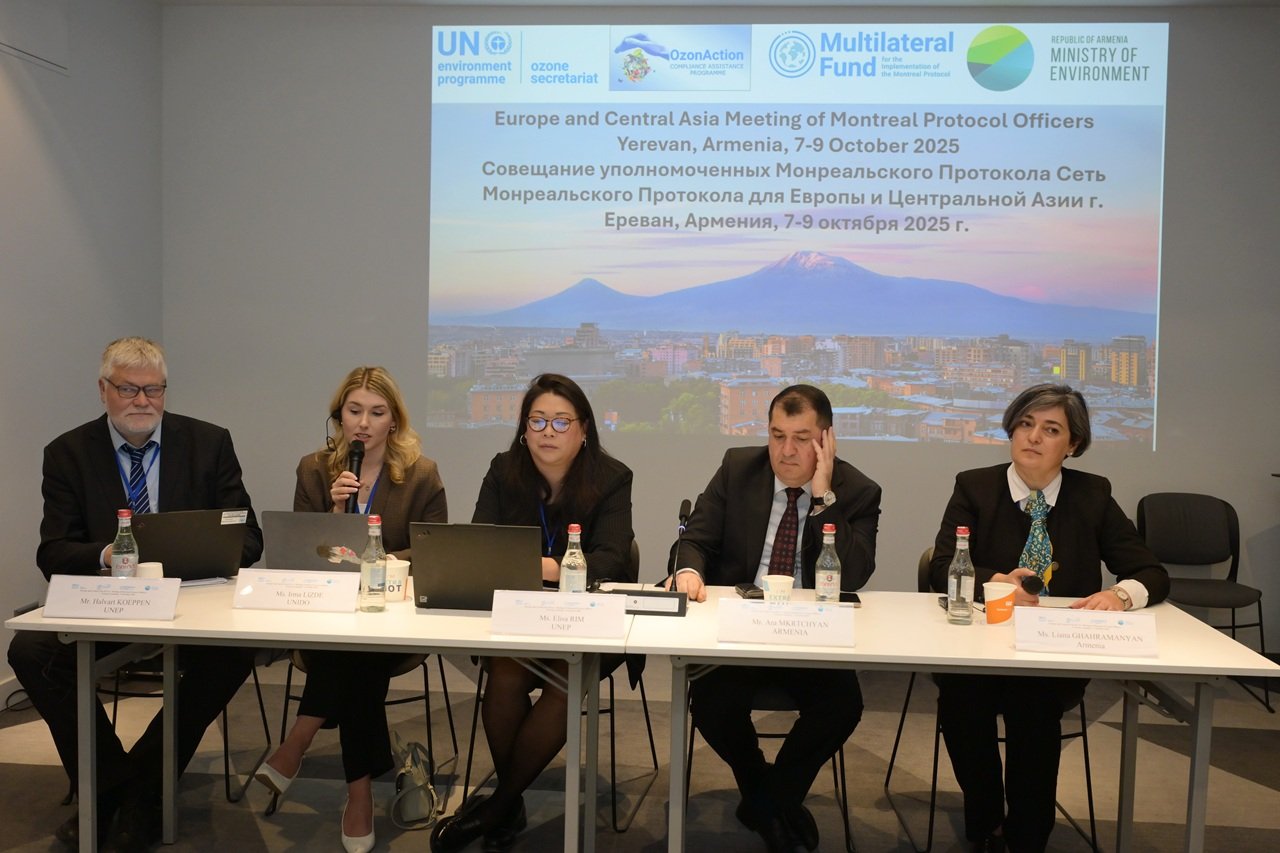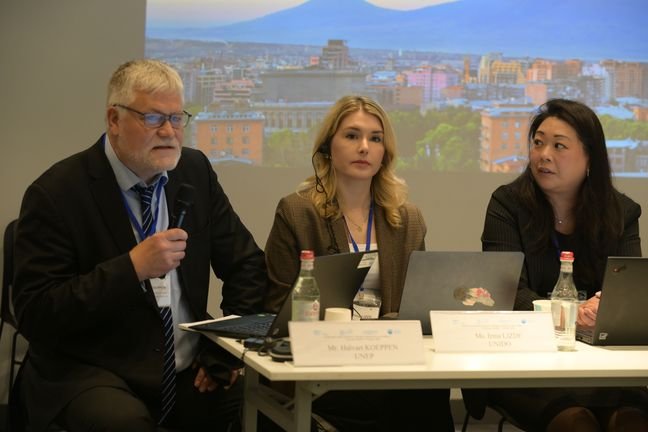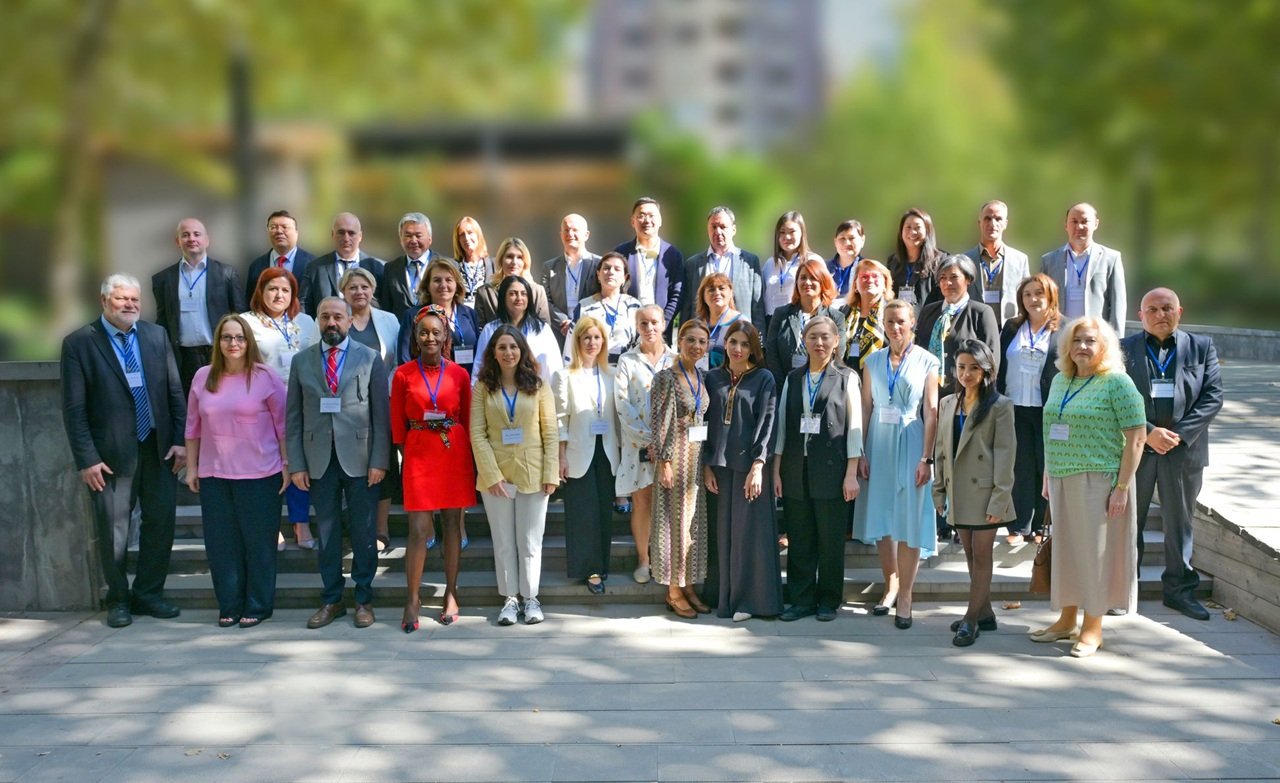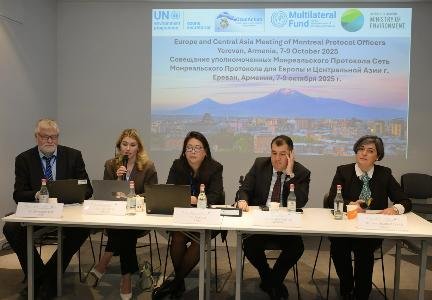
The Europe and Central Asia (ECA) network meeting on Montreal Protocol implementation took place in Yerevan, Armenia on 7 October 2025. Organized by UNEP OzonAction with support from the Armenian Ministry of Environment, the event brought together national Montreal Protocol Officers from the region to discuss key topics related to ozone protection and refrigerant management.
For the first time in years, the meeting focused solely on Montreal Protocol Officers, as recommended by network countries. Participants included new staff from national ozone units, with additional support from UNIDO for the participation of Kazakhstan and Uzbekistan. Contributions were also made by experts from the Czech Republic, the Environmental Investigation Agency (EIA), and the Ozone Secretariat.
Key agenda items included energy efficiency, HFC licensing and quota systems, unwanted substance disposal, gender mainstreaming, project sustainability, and safety standards. Special sessions addressed the Kigali Amendment, HCFC phase-out plans, and national implementation challenges. Discussions followed the Executive Committee’s flexible format, with extended time for exchange among countries.
A technical visit to an ammonia chiller installation at Kilikia brewery and a networking reception at a local winery complemented the agenda. Participants also reviewed outcomes from the previous network meeting in Batumi and planned future events, including upcoming meetings in Kyrgyzstan and Türkiye in 2026, and a twinning workshop in 2027.
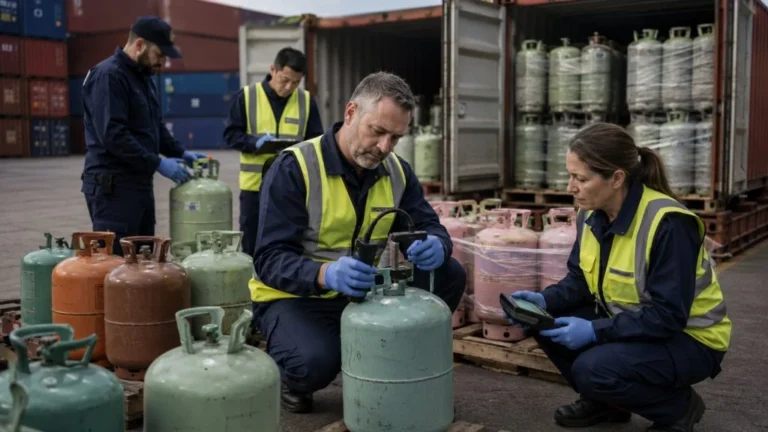
Countries raised regulatory and enforcement issues, such as the definition of “waste” under the Protocol, challenges in transboundary shipments for destruction, and gaps in licensing systems. Proposals included updating lists of reclaim/destruction facilities and enhancing prior informed consent procedures.
The EIA encouraged improvements to import/export licensing practices, while Türkiye shared its experience in completing HCFC phase-out ahead of schedule. Armenia and the Czech Republic presented updates on safety standards development, and Georgia highlighted gaps in technician certification practices.
World Ozone Day activities were showcased, including videos on energy-efficient appliances and public outreach campaigns. Georgia also reported findings during its Kigali plan preparation, noting the use of R-134a in laser treatment, which should be reported as aerosol use.
The meeting concluded with a session on sustaining project outcomes through institutional measures, training integration, financing models, and legal frameworks. Participants expressed their appreciation to ECA Network Coordinator Halvart Koeppen for two decades of leadership.