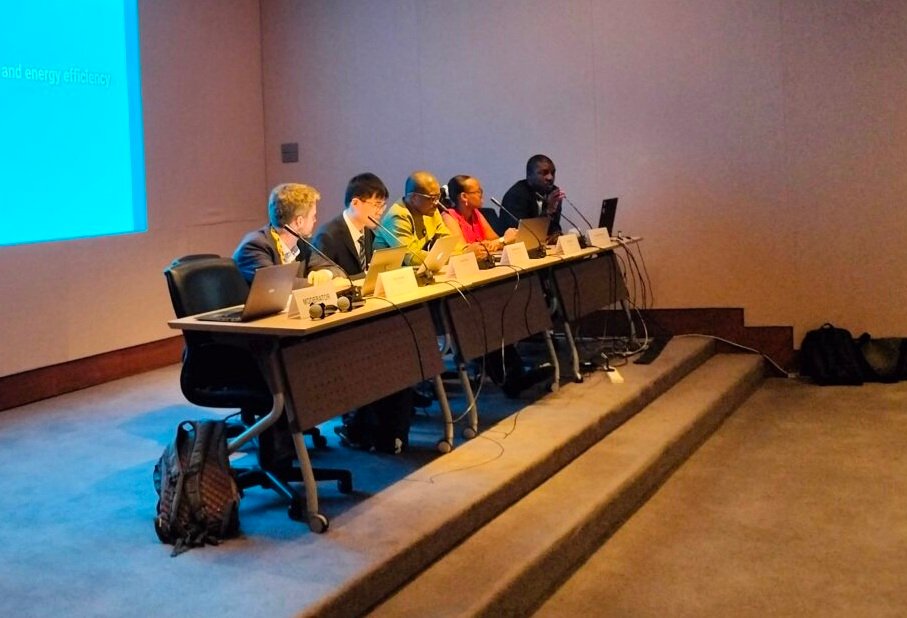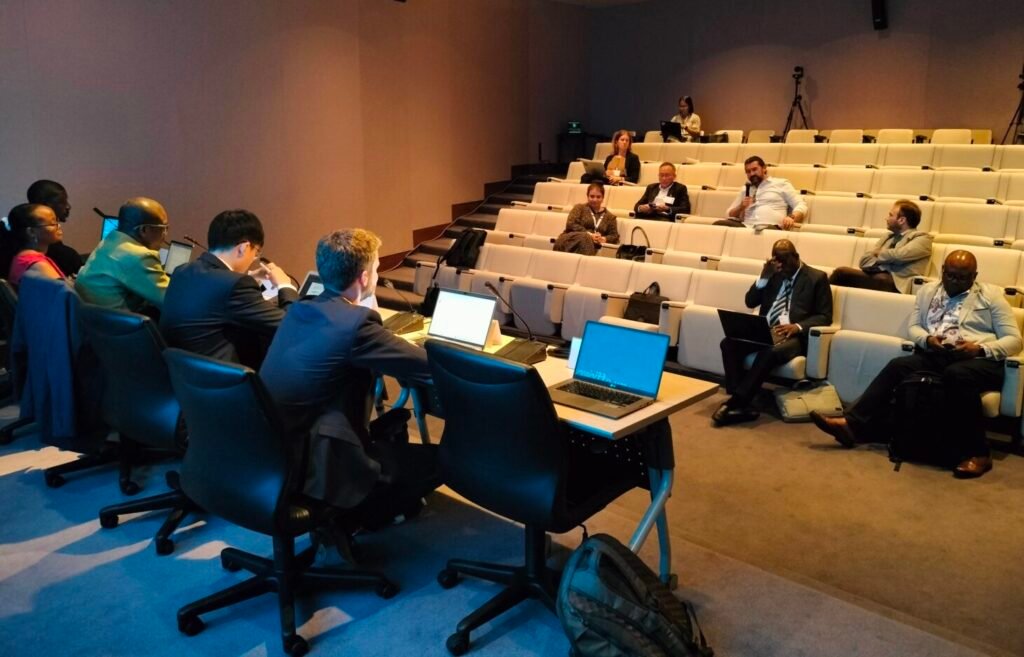
UNEP’s United for Efficiency initiative (UNEP-U4E) brought government representatives and technical experts together at OEWG48 on July 15, 2026, to discuss policies supporting more efficient, lower-GWP cooling. The Bangkok side event focused on coordinating energy-efficiency and refrigerant-transition policies while developing practical pathways for implementation and enforcement.
Participants highlighted the need to prepare markets alongside new requirements, including product availability, testing and registration systems, market surveillance, enforcement, safety requirements, and trained installation and servicing technicians. UNEP-U4E also presented its updated Model Regulation Guidelines for Air Conditioners and Air-to-Air Heat Pumps, covering areas such as Minimum Energy Performance Standards (MEPS), energy labels and refrigerant-related requirements.
Country representatives outlined different policy approaches. Ghana has introduced voluntary refrigerant labels for air conditioners and refrigerators/freezers alongside its appliance efficiency labelling programme, including information based on refrigerants’ climate impact over 20 years and identifying natural refrigerants such as R290 and R600a as PFAS-free. Rwanda discussed integrating energy-efficiency and refrigerant requirements into the same regulation and using a centralized Product Registration System framework, while Nigeria described its market-surveillance experience and preparations for upcoming cooling-product requirements.
Technical contributors also addressed implementation experience. The China Household Electric Appliance Research Institute (CHEARI) discussed air-conditioner testing and performance assessment in China, while GIZ Proklima shared lessons from work on refrigerant transitions, energy efficiency, safety and capacity building across different countries. U4E also highlighted its Country Savings Assessments for estimating potential energy, financial and emissions benefits from stronger product policies.
“Where efficient, lower-GWP technologies are already technically and commercially ready, countries should not wait for the minimum Kigali timelines. We need to prepare our markets now so that these sectors can transition faster, while ensuring that the necessary implementation, enforcement and technical capacity is in place,” said Hubert Nsoh Zan of the Energy Commission, Ghana.