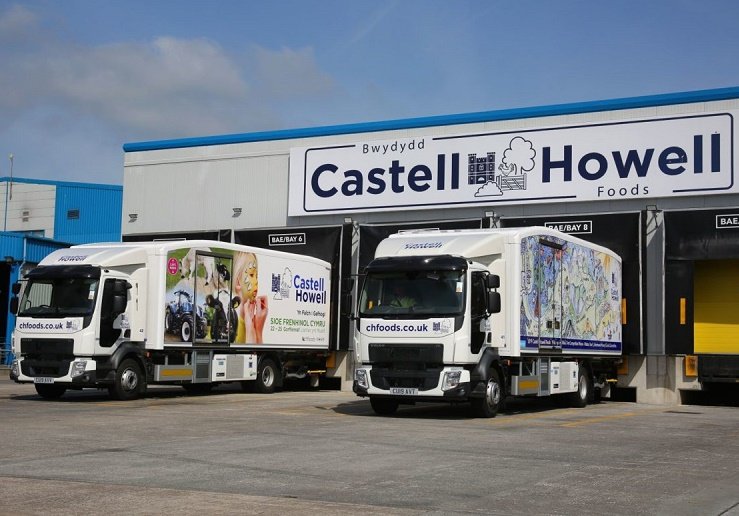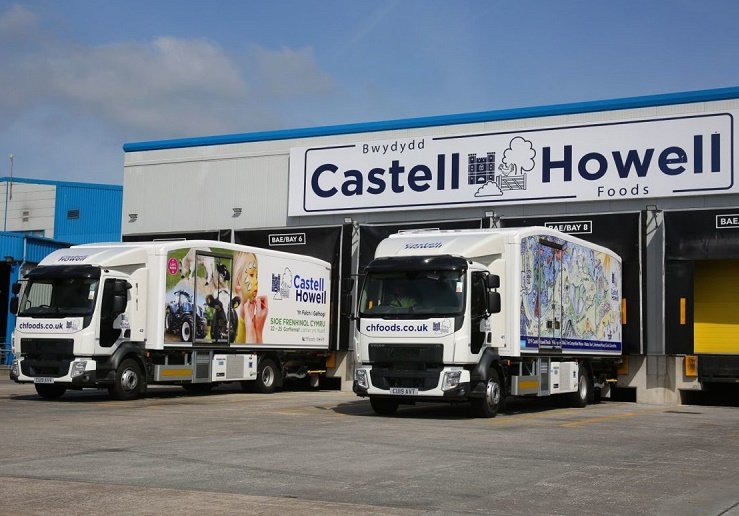
Thermo King and Frigoblock, along with Marshall Fleet Solutions all members of the Cold Chain Federation, are working with Castell Howell Foods, a UK food wholesaler, to operate a hybrid fridge system for undermount application on trucks and drawbar trailers.
This innovation, which was originally shown for the first time at the CV Show earlier this year, focusses on how transport and delivery companies can today future proof their refrigerated truck, trailer and home delivery operations and investments with solutions powered by electricity, data and clean technology.
“Thermo King were the first to offer its European customers true hybrid and non-diesel truck and trailer refrigeration solutions and currently they have more than 25 electric products in its portfolio providing superior performance for customers. Moreover 20,000 trucks and trailers are on the road with TK electrified transport refrigeration units and the number is growing daily,” said Mark Howell, Managing Director, Marshall Fleet Solutions.
Supplied and installed by Marshall Fleet Solutions, the UT-Series Hybrid Spectrum unit that Castell Howell Foods is operating, builds on the Thermo King SLXi Hybrid trailer systems. Frigoblock alternator and inverter-drive technology allow the Thermo King unit to switch the power between diesel and electric mode as required or necessary, allowing the truck to operate in inner cities, residential areas and low emission zones
Thermo King and Frigoblock, together with Marshall Fleet Solutions, collaborated with Castell Howell Foods, a UK food wholesaler, to test a prototype of hybrid fridge.
“We have been using Frigoblock electric units in our fleet for over 15 years and we’ve been waiting for a solution that would combine both the Frigoblock and Thermo King technologies in a rigid truck refrigeration system,” said Martin Jones, director of transport operations, Castell Howell Foods.
“The versatility and fuel efficiency of a unit running on the power of the truck where it can, with backup of a conventional diesel on certain routes with long stops or intense drop counts will definitely increase the flexibility of our operations.”
“The UT Hybrid technology also aligns perfectly with our company’s sustainability strategy. Our doors are open for cleaner and more efficient technologies that will help us lower our carbon footprint. We are truly looking forward to demonstrating this new hybrid project to our customers as another step in creating a more sustainable and environmentally cautious transport,” continued Jones.
Since May 2019, Castell Howell has conducted thorough, real-life testing of the TK hybrid system, running the truck six days a week on mixed routes, combining motorway and city centre routes, with upwards of 30 deliveries a day.
“With the hybrid mode always on, we experience fuel savings reaching approximately 20 litres of fuel each day, six days a week. It’s a significant mark in the truck’s operational bottom line and were really pleased to see how the Thermo King system combines the best of both alternator-driven electric and diesel technologies and how it works out in the field,” said Martin.
The system has been well accepted by Castell Howell drivers, mainly due to the simple and smooth transition from one technology to the other. The driver needs only to set the vehicle when leaving the depot and the system will switch between electric and diesel modes seamlessly during the working day depending on the unit’s requirements.
“During the cooler autumn days, we didn’t even turn the unit’s engine on. The Thermo King UT Spectrum is a very powerful unit with a very quick pulldown. Even in the summer, this significantly reduces the time when the engine is on and gives drivers a degree of flexibility when delivering to residential areas, especially early in the morning,” said Jones.