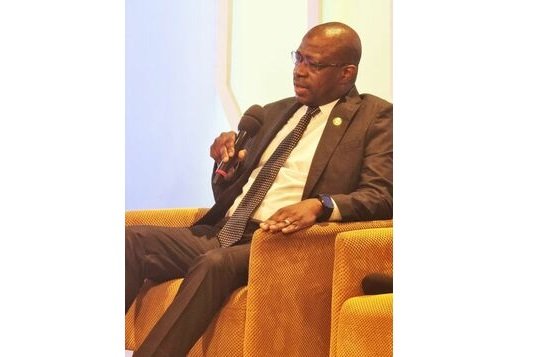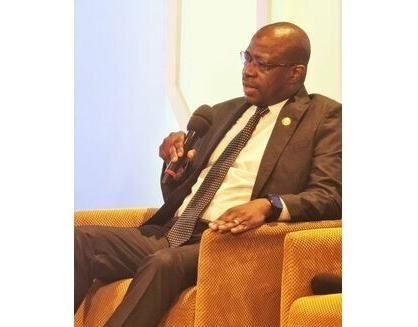
According to Francis Sempore, director of ECREEE, energy efficiency is a key sustainability issue that needs to be promoted, funded and supported through the implementation of regional programs and projects in West Africa.
As stated by the UN Environment Programme, the refrigeration sector is becoming a global priority. The 2023 UN Climate Change Conference will take place in Dubai, United Arab Emirates (UAE) from November 30 to December 12. Sustainable cooling will be the focus of COP 28 as one of the key solutions to tackle climate change. The IIR will be partnering with UNEP’s Cool Coalition and several other organisations to deliver a “Global Cooling Stocktake report” program promoting sustainable cooling.
In the run-up to COP28, the IIR’s monthly newsletter features the views of experts on sustainability in various areas of refrigeration.
Francis Semporé, Executive Director of ECREEE (ECOWAS Centre for Renewable Energies and Energy Efficiency), points out that in the specific context of the 15 member countries of ECOWAS (Economic Community of West African States), energy efficiency is a key point of sustainability in the refrigeration sector. The energy-water-food nexus* is also a topic of interest in relation to sustainability in the refrigeration sector. Finally, the development of sustainable finance should support initiatives in relation to sustainability in the refrigeration sector.
An overview of renewable energies
Priorities and barriers to achieve sustainability
Mr. Semporé believes that the priorities to be set to achieve sustainability are:
- Promoting energy efficiency
- Integrating renewable energies
- Capacity-building for all involved in the refrigeration sector and related fields
- Mobilising resources to support programs and projects with a strong socio-economic impact: innovative financing, income-generating activities through the promotion of SMEs and industries operating in the refrigeration sector.
The question of funding is a priority, as it is also a hurdle to be overcome if regional programs and projects are to be implemented through dedicated agencies like ECREEE. It is also important to strengthen institutional and regulatory frameworks, as well as capacity building for the various stakeholders involved.
Key technologies on the road to sustainability
In the specific context of the 15 ECOWAS countries, directives on the use of efficient appliances issued by ECOWAS and the UEMOA (Union économique monétaire ouest-africaine) are being implemented, and some countries have introduced energy labelling schemes. However, effective systems for measuring and verifying savings are lacking.
The West African Economic and Monetary Union (UEMOA) and its 8 member countries (Benin, Burkina Faso, Côte d’Ivoire, Guinea Bissau, Mali, Niger, Senegal and Togo) have adopted energy labelling for household appliances, a project implemented as part of the Regional Energy Efficiency Program. [1] A regional energy labelling standard and an energy label for refrigerators have been adopted. Directive no. 04/2020/CM/UEMOA of June 26, 2020, on the energy labelling of new electric lamps and household appliances in UEMOA member states, has been published. [1]
What are drivers of successful implementation in low- and middle-income countries?
Regional initiatives led by dedicated agencies such as ECREEE, in partnership with member countries and with the participation of various entities (Energy, Environment…), will enable the effective deployment of energy labelling and related mechanisms in the 15 ECOWAS member countries. These initiatives are carried out in synergy with the UEMOA Energy Department to ensure the efficiency of the actions undertaken by the ECOWAS and UEMOA commissions.
ECREEE is in charge of promoting renewable energy and energy efficiency in the 15 ECOWAS countries. Under ECREEE’s leadership, several sustainable energy policies have been developed. These include regional policies on renewable energy (RE), energy efficiency (EE), gender mainstreaming in energy, bioenergy, and, more recently, green hydrogen. ECREEE aims to turn these policies into practical programs and projects on the ground, in order to significantly improve the lives of rural and urban populations on the one hand, and to increase the competitiveness of businesses and industries on the other hand.
[1] Fiche technique PRISME. Réfrigération efficace. https://iifiir.org/en/fridoc/prisme-data-sheet-efficient-refrigeration-146729
Source: iifiir.org