First 10 manufacturers commit to the EU Code of Conduct which aims to ensure interoperability of home appliances. This would contribute to a greater demand-side flexibility of households and help achieve a more stable and optimised power grid.
As renewables’ penetration renders the energy supply in the EU increasingly decentralised and reliant on variable resources, demand-side flexibility offered by households gains importance for ensuring the development and operation of the power grid at lowest costs for consumers.
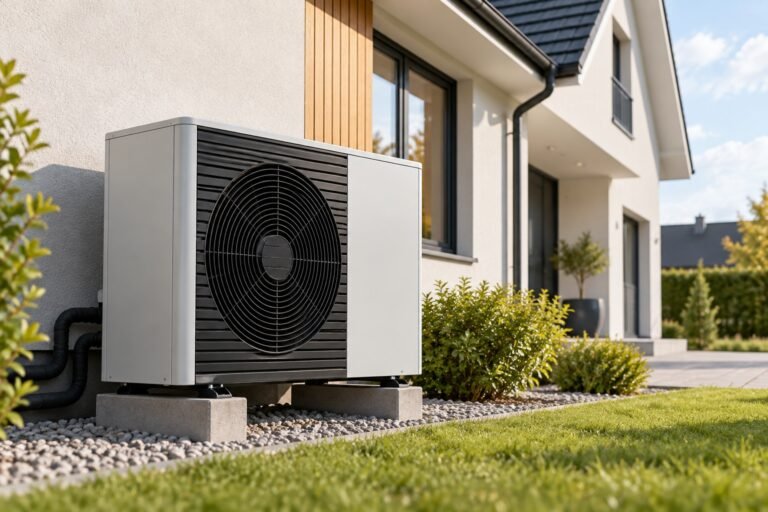
Energy smart appliances (ESA) in homes enable consumers to shift electricity use depending on the preferences and other parameters, contributing to the stability of the power grid, or potentially lowering the electricity bill of the household. An example is running a heat pump or turning on a dishwasher when renewable generation is most abundant, whilst still delivering the service expected by the consumer (e.g. certain minimum temperatures, or to finish a wash cycle before a certain time).
Any energy control unit can usually manage automatically the energy consumption of an ESA. Unlike non-interoperable appliances, which have specific control systems and services depending on their manufacturers, interoperable ESA should offer common services and exchange the same information to enable them. These will allow for instance enabling a flexible start of a device or simply limiting its consumption regardless of the manufacturer.
To bring about cross-brand interoperability of widely used ESA, the JRC and the Commission’s Directorate-General for Energy developed a Code of Conduct (CoC) together with manufacturers. This voluntary initiative aims to increase the number of interoperable energy smart appliances placed on the EU market.
The objective of the Code of Conduct is to define common demand flexibility services and the information that needs to be exchanged to enable them, at a semantic level that can work even where different technical communication protocols are used by manufacturers.
Product manufacturers (from the products in scope of this version), industry associations, NGOs, academia, and Member States were all involved in the process of creating this first version of the Code of Conduct. While the commitment is taken by the manufacturers of the products in scope, other relevant actors of the energy system are asked to acknowledge this Code of Conduct.
This first version of the Code of Conduct covers a range of appliances that have an energy label:
- white goods: washing machines, tumble driers, washer-driers, dishwashers;
- heating, ventilation, and air conditioning (HVAC), including heat pumps and water heating.
It also includes the following “use cases”:
- flexible start
- power consumption monitoring
- limitation of power consumption
- incentive table-based power consumption management
- manual operation (provision of necessary information in case of user driven manual operation of ESA)
At the time of the launch, we have received the commitment of 10 companies producing appliances in the scope of this first version, namely Arçelik, Clivet, Daikin, Electrolux, Miele, Mitsubishi Electric, Panasonic, Vaillant Group, Vestel and Viessmann. The manufacturers have committed to develop interoperable connected products within a year. In addition, a Home Energy Management System manufacturer, GEO, has committed to support compliant ESA through their products.
Besides being beneficial for consumers, products that comply with the Code of Conduct would ultimately help several objectives through the increase of demand side flexibility, such as to improving the environmental impact of energy use over the whole energy system, contributing to grid stability and security of supply, and economical optimisation.