Esta página solo está disponible en inglés. Ir a la portada en español

×

Questa pagina è disponibile solo in inglese. Home page in italiano

×

Diese Seite ist nur auf Englisch verfügbar. Zur deutschen Startseite

×

Cette page est disponible uniquement en anglais. Aller à la page d'accueil en français

×

NACFE Releases First Refrigeration Report

NACFE Releases First Refrigeration Report

There have been developments in the zero-emission temperature control freight movement sector of the trucking industry. 

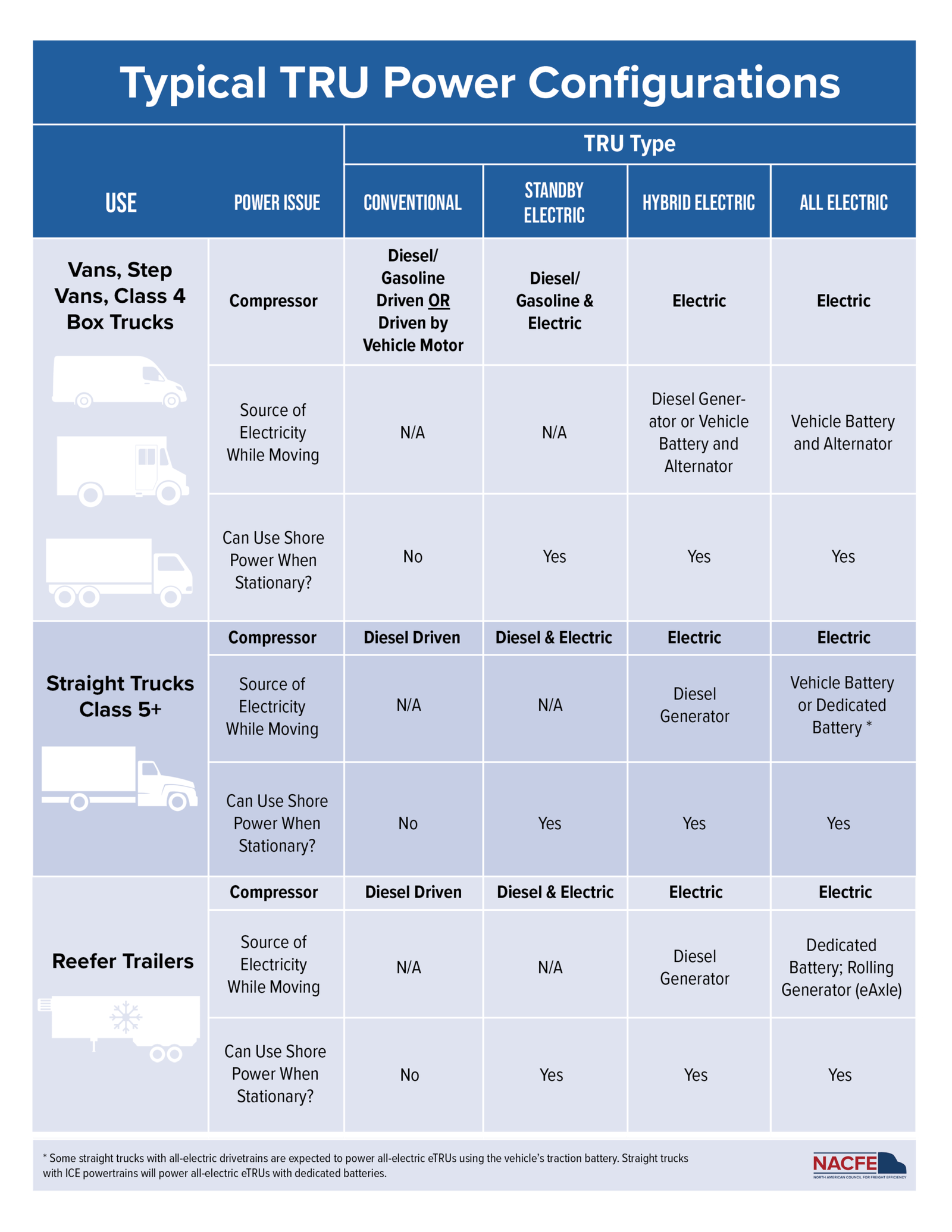
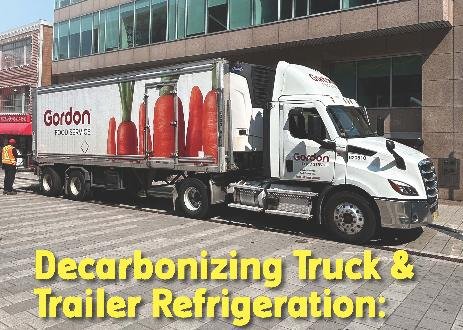
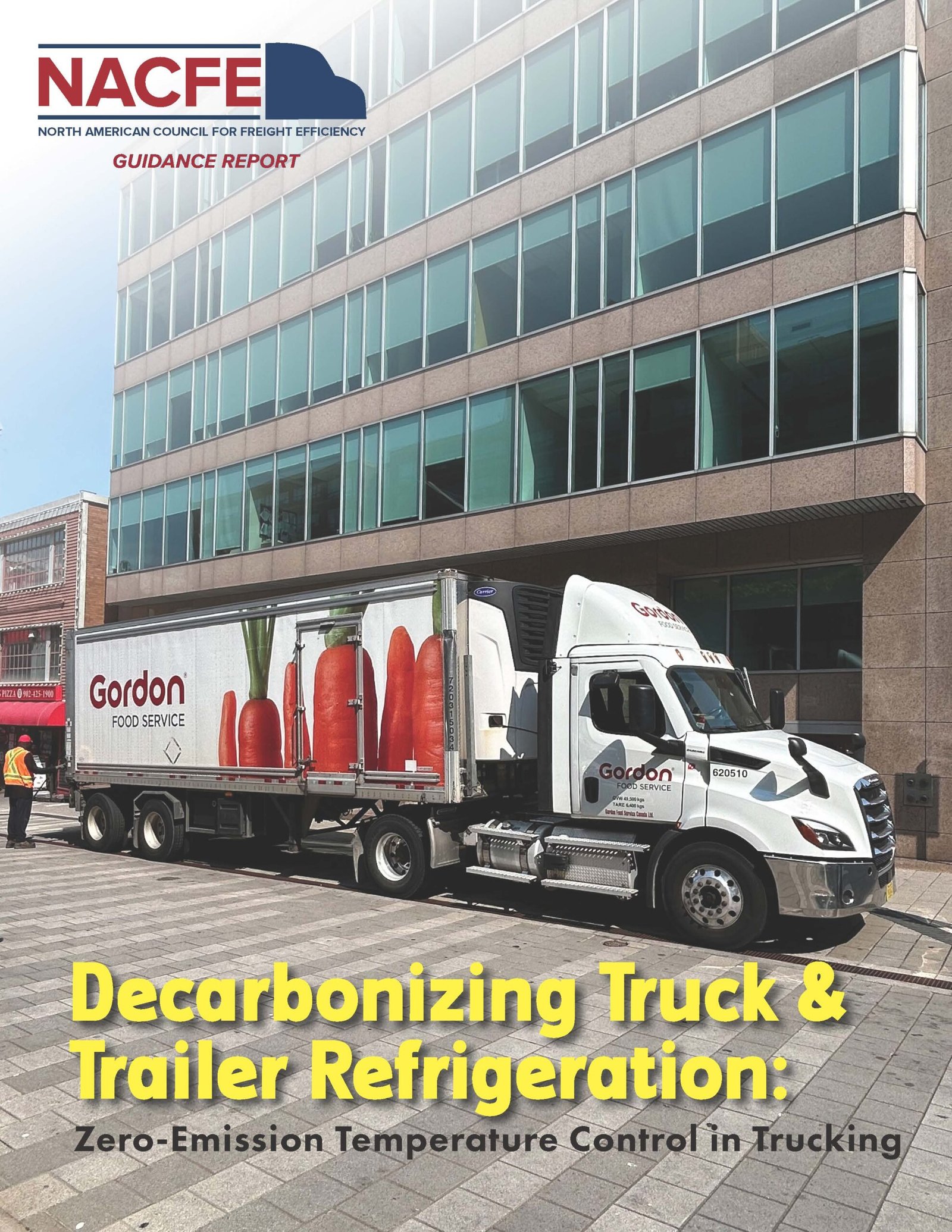
The North American Council for Freight Efficiency (NACFE) has released its first ever report on transport refrigeration. Decarbonizing Truck and Trailer Refrigeration provides basic information about transport refrigeration units (TRUs) and electric transportation refrigeration units (eTRUs). It also identifies and discusses key challenges and opportunities facing the trucking industry ecosystem and its support systems as the CARB eTRU rules come into effect, and as the industry begins to transition away from fossil fuel powered refrigeration.

“About one of every seven straight trucks and trailers on the road uses transport refrigeration units to keep their freight in a specified temperature range,” says Rob Graff, NACFE’s senior technical consultant and study lead. “Most TRUs today are diesel powered. These are increasingly subject to regulations on their emissions — including GHGs. We’ve seen the development of low- to-no-emissions TRU technologies emerging to meet these requirements.” 

There are benefits and challenges of switching to eTRUs from both a cost and operational standpoint and the report explains those in detail. 

Based on its research and analysis, the study team came to the following conclusions about the state of transport refrigeration today:

  • Freight requiring transport in a specified temperature range encompasses about 15% of straight trucks and trailers.

  • Regulations and heightened sustainability expectations are converging to require more sustainable solutions for moving refrigerated goods.

  • New refrigeration units have been developed to run with zero emissions using electricity.

  • Other allied solutions are emerging to support eTRUs.

  • Moving and delivering refrigerated goods with zero or significantly lower emissions while maintaining quality is a large challenge.

  • Activities are underway to plan for and harmonize the connectors and power requirements for charging electric trucks, charging eTRU batteries, and providing shore power when electric reefers are parked or idling.

“Range Energy is excited to see NACFE publishing this important report about eTRUs. There are a lot of challenges and opportunities in the transition to electric TRUs,” says Collin MacGregor, head of systems engineering at Range Energy. “This report will be valuable to the trucking industry as it moves forward to adopt this technology.”
 

Read the full report here.

Get the daily refrigeration briefing

One email a day. Trusted by 3,000+ RACHP professionals.

More on Cold Chain

All on Cold Chain →

Insights

Secop's Solar Direct Drive (SDD) System Earns WHO PQS Approval – The Team Behind It
Article

Secop’s Solar Direct Drive (SDD) System Earns WHO PQS Approval – The Team Behind It

Partner's material In March 2026, Secop’s Solar Direct Drive Power Management Module was granted WHO PQS prequalification and officially listed in the WHO Catalogue of Prequalified Immunization Devices. The WHO IMD-PQS (Immunization Devices Performance, Quality and Safety programme) is the global benchmark for cold chain equipment used in immunisation. Being listed in its catalogue is

22 Jun 2026
Case Study - Effect of Louvers or diffusers on air flow distribution and cooling time on a meat log during Chill cycle
Tech Guide

Case Study – Effect of Louvers or diffusers on air flow distribution and cooling time on a meat log during Chill cycle

By Kushal Aurangabadkar An experimental analysis was conducted on a cooler space measuring 3.66 m × 6.096 m (12.0 ft × 20.0 ft), equipped with an ammonia refrigeration coil, five 30 cm (12 in.) fans, and five diffusers. The study measured airflow patterns, cooling rates, and heat transfer efficiency in meat storage by testing two configurations:

Kushal Aurangabadkar · 21 Jan 2026
Total Cost of Ownership (TCO) for Modular Refrigeration Systems in Life Sciences Distribution Centers
Tech Guide

Total Cost of Ownership (TCO) for Modular Refrigeration Systems in Life Sciences Distribution Centers

by Ramez Naguib, P.E. Introduction Life sciences distribution centers are under immense pressure to deliver consistent temperature control, comply with increasingly stringent regulations, and optimize operational efficiency. Traditional built-up refrigeration systems often prove cumbersome, costly, and slow to implement. In contrast, modular, factory-assembled refrigeration systems have emerged as a compelling alternative. Drawing on lessons from

14 Jan 2026
Everything on Cold Chain: 2,050 articles, 2 case studies, 23 insights

Most read this month

All news →