Esta página solo está disponible en inglés. Ir a la portada en español

×

Questa pagina è disponibile solo in inglese. Home page in italiano

×

Diese Seite ist nur auf Englisch verfügbar. Zur deutschen Startseite

×

Cette page est disponible uniquement en anglais. Aller à la page d'accueil en français

×

GCCA urges EU leaders to invest in cold chain for food supply resilience

GCCA urges EU leaders to invest in cold chain for food supply resilience

The Global Cold Chain Alliance (GCCA) has called on European policymakers to prioritise investment in temperature-controlled logistics as part of efforts to strengthen the continent’s food supply chain resilience.

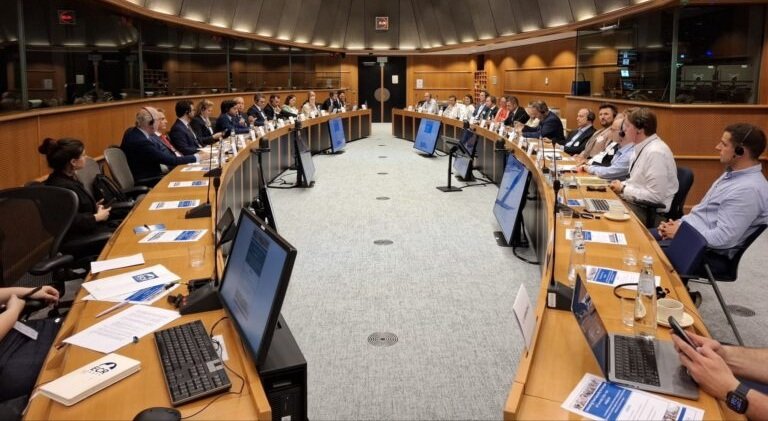
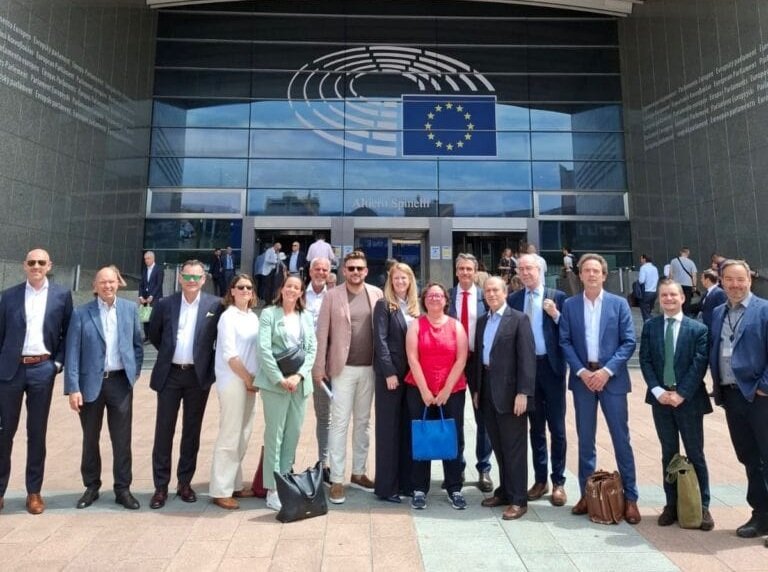
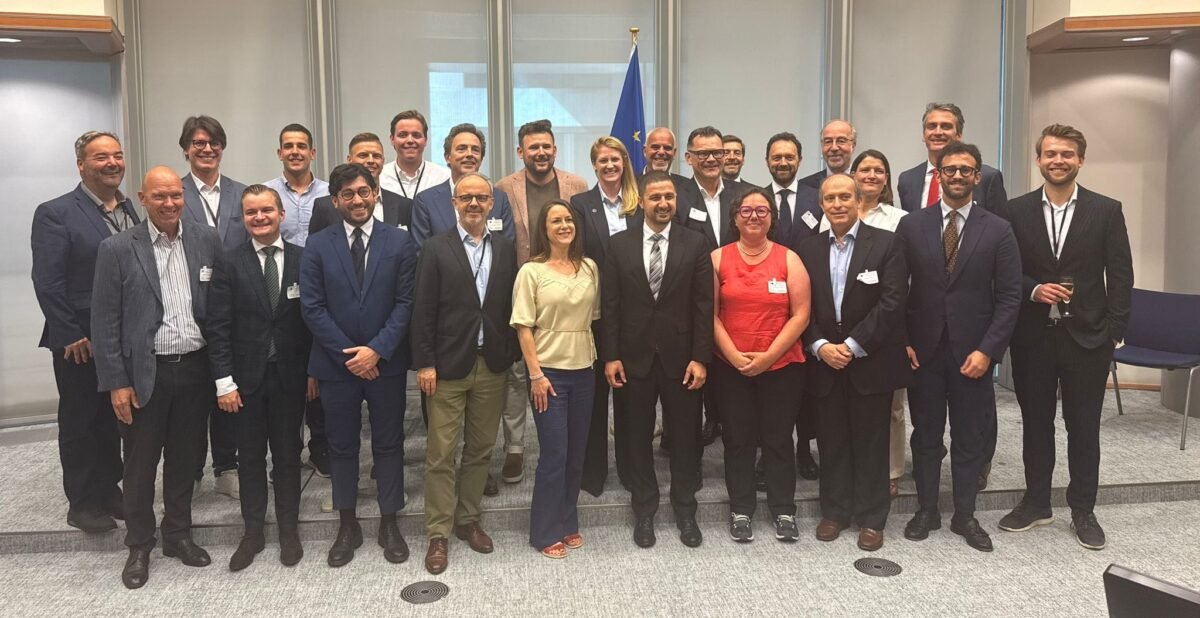
The appeal was made during a roundtable discussion hosted in Brussels on June 25, where Members of the European Parliament (MEPs) and industry leaders gathered to address vulnerabilities in the food supply chain. The event took place amid the European Parliament’s development of a new EU Preparedness Union Strategy, which includes proposals for a coordinated approach to food stockpiling and crisis readiness.

GCCA Director for Europe Julie Hanson highlighted the increasing frequency and impact of recent geopolitical, economic, health and climate-related disruptions. She stated: “Cold storage and refrigerated transportation are central to Europe’s food supply chain resilience. EU policy must support and incentivise investment into the facilities, vehicles, resources and skills that the cold chain needs for today and for the future.”

The roundtable was hosted by Adrian-George Axinia MEP (Romania) and featured contributions from MEPs Daniel Buda, Maria Georgiana Teodorescu, Sander Smit, and Piotr Muller, as well as Romanian lawyer Gheorghe Piperea. Industry participants included representatives from GCCA, the European Cold Storage and Logistics Association, national cold chain associations, and major companies such as Americold, DP World, Gdansk Cold Store, Group GTS, Jodifrost, Port of Antwerp Bruges and Thermotraffic.

Axinia stated: “Tackling vulnerabilities revealed by recent crises is our key priority during the current legislature. […] We have to make sure any new crisis will have an immediate and efficient response.”

Discussion topics included the designation of cold chain logistics as critical infrastructure, the recognition of cold chain professionals as essential workers in crisis scenarios, and the removal of barriers to investment in infrastructure and capacity. Participants also addressed trade facilitation, energy efficiency, automation, and incentives to drive innovation.

This roundtable follows a 2024 industry-wide ‘Call to Action’ from cold chain stakeholders, urging European policymakers to support businesses in delivering food security and supply chain resilience.
Get the daily refrigeration briefing

One email a day. Trusted by 3,000+ RACHP professionals.

More on Cold Chain

All on Cold Chain →

Insights

Secop's Solar Direct Drive (SDD) System Earns WHO PQS Approval – The Team Behind It
Article

Secop’s Solar Direct Drive (SDD) System Earns WHO PQS Approval – The Team Behind It

Partner's material In March 2026, Secop’s Solar Direct Drive Power Management Module was granted WHO PQS prequalification and officially listed in the WHO Catalogue of Prequalified Immunization Devices. The WHO IMD-PQS (Immunization Devices Performance, Quality and Safety programme) is the global benchmark for cold chain equipment used in immunisation. Being listed in its catalogue is

22 Jun 2026
Case Study - Effect of Louvers or diffusers on air flow distribution and cooling time on a meat log during Chill cycle
Tech Guide

Case Study – Effect of Louvers or diffusers on air flow distribution and cooling time on a meat log during Chill cycle

By Kushal Aurangabadkar An experimental analysis was conducted on a cooler space measuring 3.66 m × 6.096 m (12.0 ft × 20.0 ft), equipped with an ammonia refrigeration coil, five 30 cm (12 in.) fans, and five diffusers. The study measured airflow patterns, cooling rates, and heat transfer efficiency in meat storage by testing two configurations:

Kushal Aurangabadkar · 21 Jan 2026
Total Cost of Ownership (TCO) for Modular Refrigeration Systems in Life Sciences Distribution Centers
Tech Guide

Total Cost of Ownership (TCO) for Modular Refrigeration Systems in Life Sciences Distribution Centers

by Ramez Naguib, P.E. Introduction Life sciences distribution centers are under immense pressure to deliver consistent temperature control, comply with increasingly stringent regulations, and optimize operational efficiency. Traditional built-up refrigeration systems often prove cumbersome, costly, and slow to implement. In contrast, modular, factory-assembled refrigeration systems have emerged as a compelling alternative. Drawing on lessons from

14 Jan 2026
Everything on Cold Chain: 2,042 articles, 2 case studies, 23 insights

Most read this month

All news →