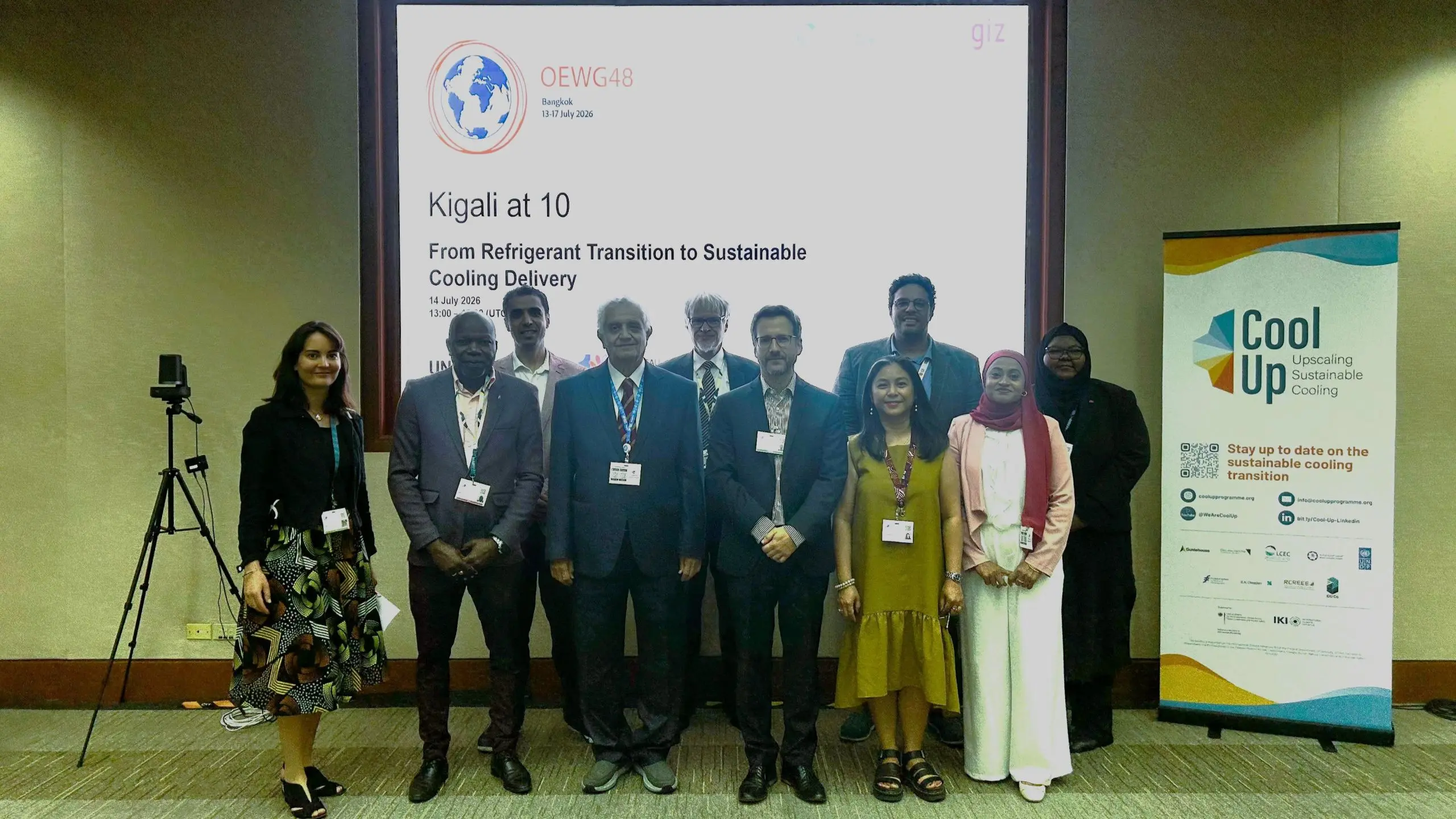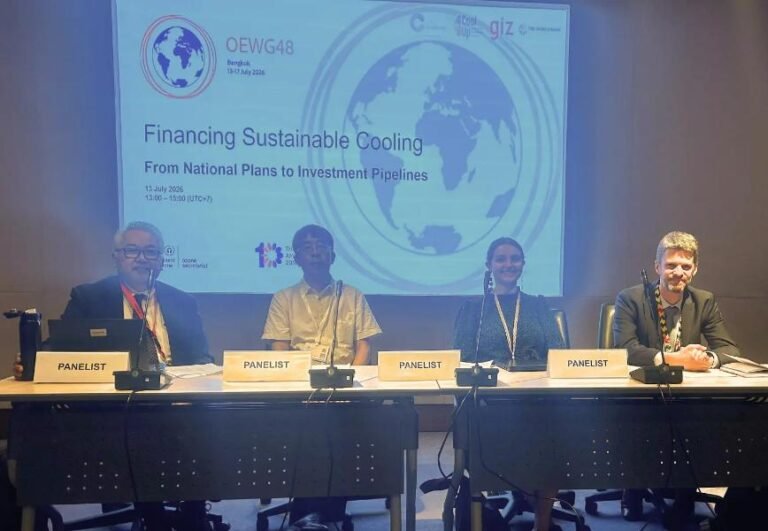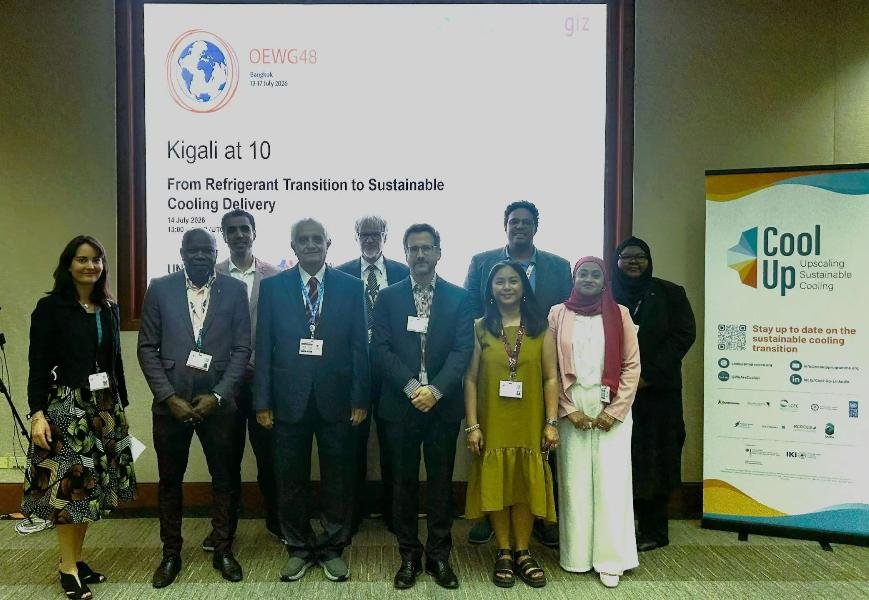
The UNEP Cool Coalition, Climate and Clean Air Coalition, Cool Up programme and GIZ Proklima convened a side event during the 48th Meeting of the Open-ended Working Group of the Parties to the Montreal Protocol to review the first decade of the Kigali Amendment and priorities before the 2029 reduction step.
Article 5 Group 1 parties froze hydrofluorocarbon consumption in 2024 and face their first 10% reduction in 2029, while Group 2 parties are expected to freeze consumption in 2028. Speakers said implementation will depend on translating Kigali Implementation Plans into measures covering equipment imports, technician training, servicing practices, standards, labelling, enforcement and energy efficiency.
Felix Heydel, Project Manager at Öko-Recherche, said implementation must connect refrigerant phase-down schedules with efficient technologies, passive cooling, standards, supply chains and skills. Cool Up modelling includes stronger building-code enforcement, public-building retrofits and Minimum Energy Performance Standards. The programme, funded by Germany’s International Climate Initiative, operates in Egypt, Jordan, Lebanon and Türkiye until January 2027.
Country representatives highlighted sector-specific challenges. Grenada reported that cooling accounts for more than 64% of national electricity consumption and more than half of energy use in hotels and tourism. The country, which began converting to natural refrigerants in 2005, is piloting R290 in supermarket refrigeration. The Maldives said reliable cold storage is essential across fisheries, tourism and other services in a country of roughly 1,900 islands, including about 200 supporting resorts.
Dr Alaa Olama, Air-conditioning and Refrigeration Specialist from Egypt, presented liquid-desiccant indirect cooling and direct-indirect evaporative cooling as options to reduce refrigerant demand. Egypt is testing nine demonstration projects, developing an evaporative indirect cooling code, converting five refrigeration systems to ammonia and preparing a monoblock system under its Kigali Implementation Plan.
“Delivery begins when plans become concrete measures, technologies become affordable and reliable, and countries have the standards, skills and finance to implement them at scale,” said Guntram Glasbrenner, Programme Manager at GIZ Proklima. He added that scaling very-low-global-warming-potential technologies will require additional financing, stronger supply chains, implementation capacity and greater consideration of equipment lifetime costs and savings.