Global electricity demand for space cooling has risen 50% since 2015 to around 2,900 TWh, according to the International Energy Agency. Cooling accounted for 14% of worldwide electricity-demand growth over that period and generated 1,400 GW of peak demand in 2025, equivalent to the total installed power-generation capacity of the United States.
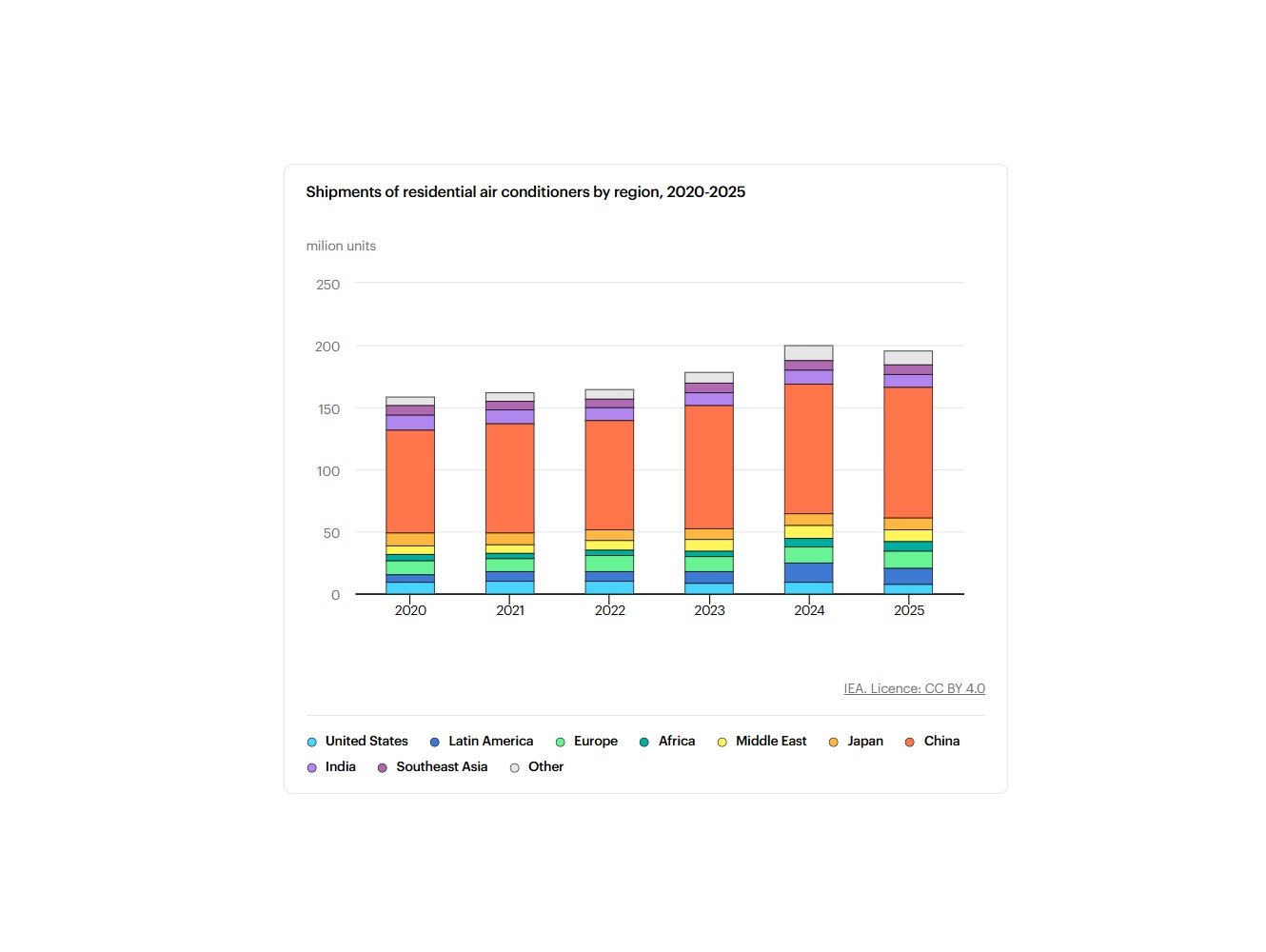
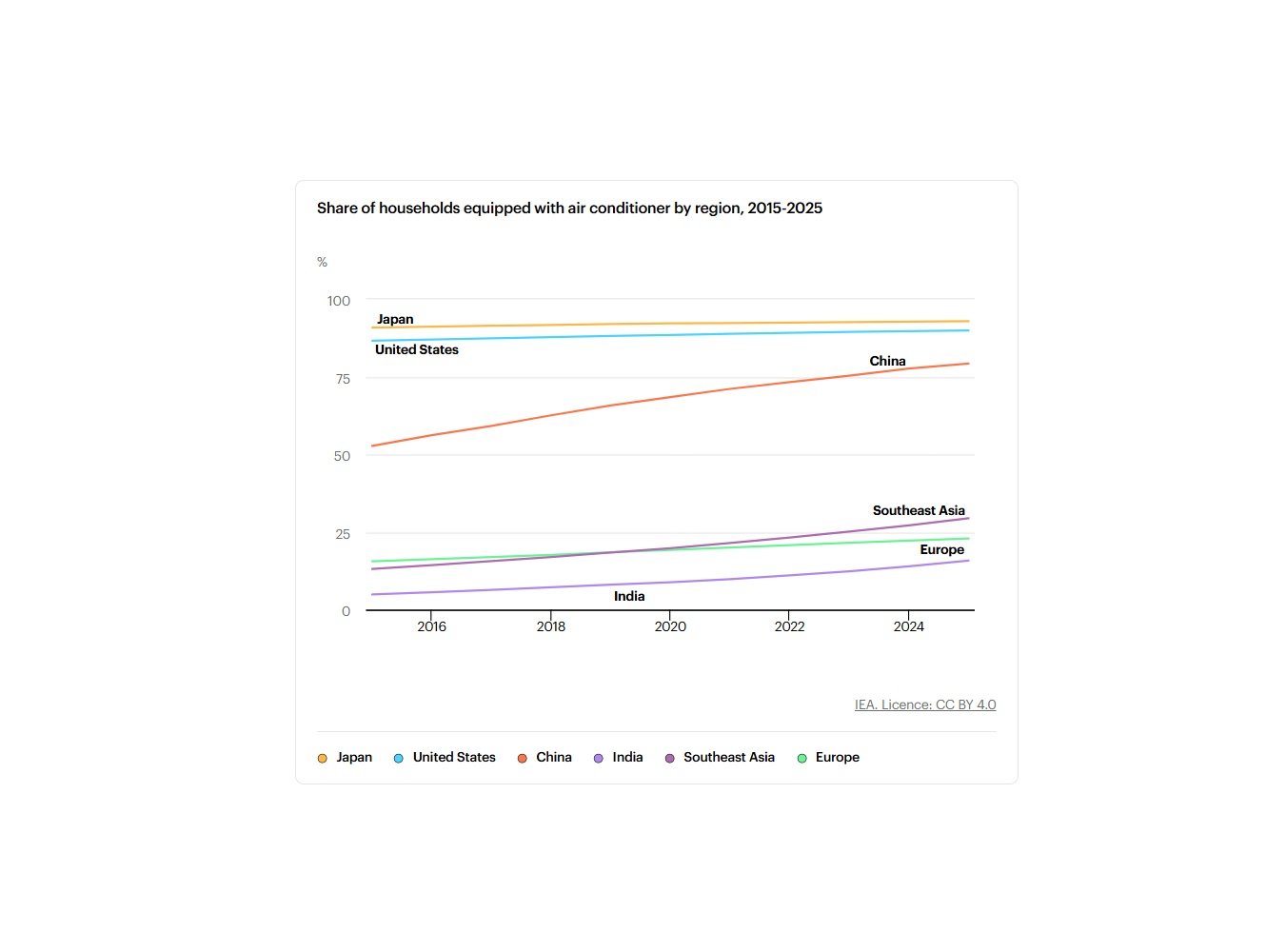
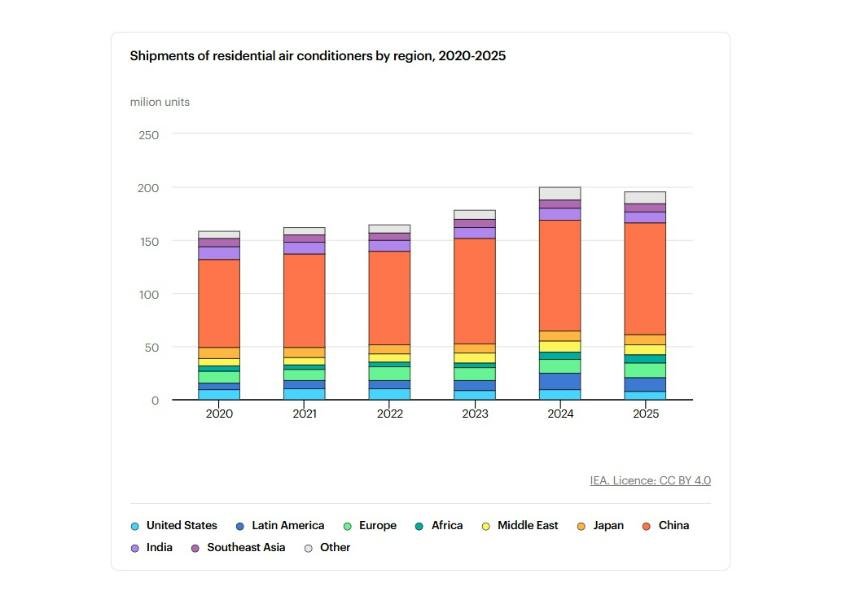
Annual air-conditioner shipments are now 25% higher than five years ago. Shipments reached 200 million units in 2024, while China produces around 170 million units annually and exports about 60 million. Around 40% of the global population has access to air conditioning, although more than 80% experiences cooling needs during at least part of the year.
The IEA expects El Niño to return in 2026, with heat-wave effects potentially extending into 2027. Under current policy settings, cooling demand is projected to grow by 1,600 TWh by 2035. In a sensitivity case assuming a strong El Niño in 2026-27 and similar weather events every three years, cooling would add a further 700 TWh of electricity demand by 2035, with more than 60% linked to faster AC adoption.
Cooling represents around 10% of annual electricity consumption but 30% of peak electricity demand. Since March 2026, Bangladesh, Cambodia, Malaysia, the Philippines, Singapore and Sri Lanka have introduced minimum office AC settings ranging from 24 °C (75 °F) to 26 °C (79 °F). Jordan has restricted AC use in public offices, while Seychelles has asked public offices to switch off air conditioning once a week.
The average AC unit sold globally in 2024 was around 20% more efficient than the average unit sold a decade earlier. The IEA also identified building insulation, shading, ventilation, fans, urban greening and district cooling as measures that can reduce cooling loads and pressure on electricity systems.