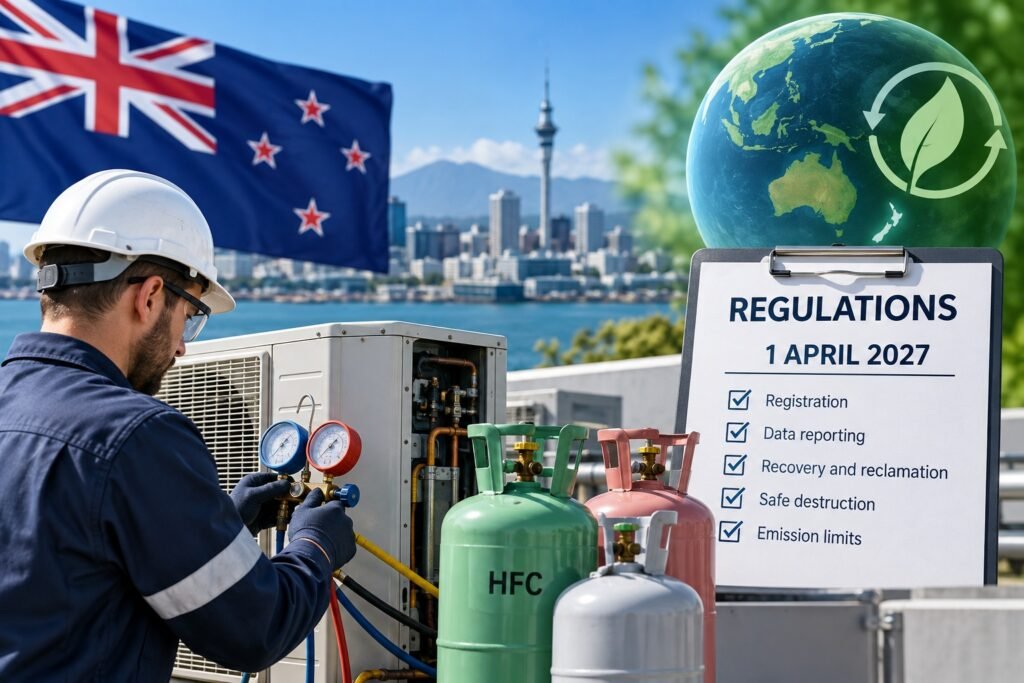
New Zealand will introduce a regulated product stewardship scheme for synthetic refrigerants from 1 April 2027, requiring businesses and individuals selling, installing, maintaining, recovering or destroying these refrigerants to participate.
The Waste Minimisation (Synthetic Refrigerants) Regulations 2026 cover synthetic refrigerants including HFCs and other fluorinated gases used in heating, cooling, refrigeration and air-conditioning equipment. Businesses handling the gases and related equipment will have to register with the scheme and report data on specified activities to the scheme manager.
The regulations introduce nationally consistent requirements for tracking refrigerants through the supply chain and supporting their recovery, reclamation and safe destruction. Anyone destroying synthetic refrigerants must meet regulated efficiency levels and specified air-emissions limits, with annual independent certification required.
The Trust for the Destruction of Synthetic Refrigerants will operate the regulated scheme. The Trust has collected and destroyed synthetic refrigerants since 1993 and has operated an accredited voluntary product stewardship scheme since 2010. That voluntary scheme will continue until 1 April 2027.
The regulated scheme is expected to reduce emissions by an estimated 400,000 tonnes by 2030. Refrigerant gases covered by the measures are estimated to account for about 2% of New Zealand’s greenhouse gas emissions, and the scheme is intended to support the country’s international climate commitments, including under the Montreal Protocol.
A second tranche of regulations will take effect from 2030 and include competency requirements for handling synthetic refrigerants to reduce emissions during use. The Ministry for Cities, Environment, Regions and Transport will work with the Trust and the sector on implementation and development of minimum competency requirements for HVAC&R technicians.