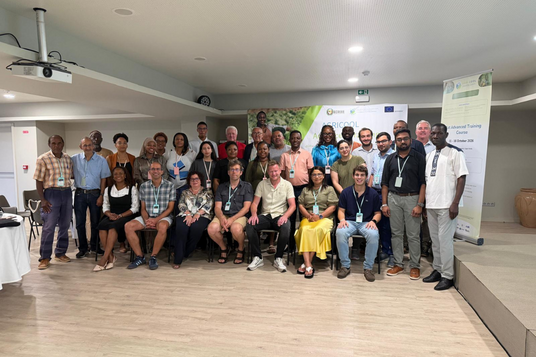
The AGRI-COOL consortium held its annual meeting and first advanced training course in Cape Verde from October 12–15, 2026, focusing on project progress, sustainable cooling technologies, and climate-resilient agricultural systems. Hosted by project partner ECREEE, the activities brought together consortium members and training participants from across Africa.
During the consortium meeting on October 13–14, project coordinator University of Twente reviewed deliverable deadlines, procedural guidelines, and outcomes from the first European Commission review meeting. Partner organisations presented updates on their work packages and milestones as the project passed the halfway point of its timeline. Participants also visited local partner Inalca Food & Beverage to examine existing cold-storage conditions and challenges on Sal Island.
The advanced training course, organised by ECREEE and the University of Western Cape, aimed to strengthen African expertise in sustainable and climate-resilient food systems through the integration of agriculture, energy, and cooling technologies. The fully funded, in-person programme welcomed candidates from across Africa, with particular attention to North, Central, and West African countries.
Training covered three modules addressing technical, economic, and social aspects of integrated agricultural systems. Topics included off-grid renewable energy for agricultural applications, cold-chain and cooling technologies to reduce post-harvest losses, sustainable farming systems, and integrated food-energy-water approaches. Expert presentations were followed by a project-based learning assessment.
The programme also included a visit by Cape Verde’s Deputy Minister Carlos Monteiro, who discussed AGRI-COOL’s objectives and activities in the country with consortium representatives. The training materials emphasised practical applications of sustainable agriculture and cooling solutions across different African contexts.