Esta página solo está disponible en inglés. Ir a la portada en español

×

Questa pagina è disponibile solo in inglese. Home page in italiano

×

Diese Seite ist nur auf Englisch verfügbar. Zur deutschen Startseite

×

Cette page est disponible uniquement en anglais. Aller à la page d'accueil en français

×

Philippines Opens Four Renewable-Powered Modular Cold Storage Facilities

Hybrid solar-wind systems aim to cut post-harvest losses and improve distribution for more than 10,762 regional food producers.

Philippines Opens Four Renewable-Powered Modular Cold Storage Facilities

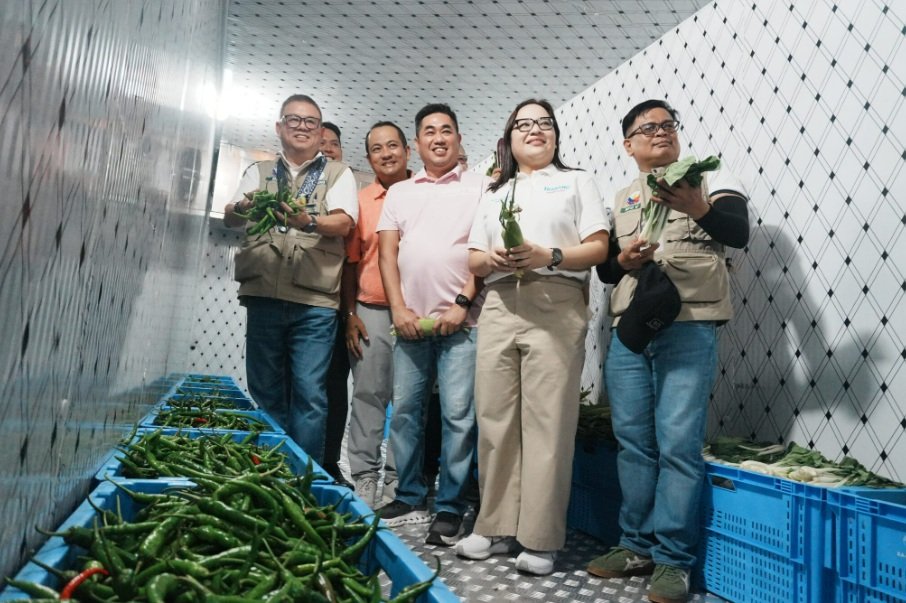
The Philippine Department of Agriculture (DA) has opened four modular cold storage facilities powered by solar and wind energy in Camarines Sur, alongside a PHP 51.5 million (approximately USD 870,000) slaughterhouse. The cold storage facilities, valued at PHP 45.5 million (approximately USD 770,000), are located in San Jose, Garchitorena, Lagonoy, and Tigaon.

Developed through the DA’s Agricultural and Fisheries Logistics Office (AFLO) in coordination with the Bureau of Agriculture and Fishery Engineering (BAFE), the cold storage project aims to reduce post-harvest losses and improve produce handling and distribution. Potential users include growers of vegetables, pineapple, sweet potato, and other high-value crops.

The hybrid energy system combines 30 solar panels rated at a minimum of 700 W each, a 3 kW wind turbine, a lithium-ion battery bank with at least 160 kWh of capacity, and a 25 kW diesel backup generator. A 15 kW inverter supports the solar installation.

Each standard 40-foot (12.2 m) storage unit measures 12 m (39.4 ft) long, 2.44 m (8 ft) wide, and 2.85 m (9.35 ft) high. The units feature 150 mm (5.9 in) polyurethane insulation and a specified operating temperature range of +1°C to +10°C (33.8°F to 50°F). Washing, processing, loading, and staging areas are incorporated into the facilities.

The cold storage project specifies a structural wind-load target of 350 km/h (217 mph), while the wind turbine is rated for wind speeds up to 315 km/h (196 mph). The new infrastructure and additional agricultural interventions are expected to benefit more than 10,762 farmers, fisherfolk, and food producers across 10 towns in Camarines Sur.

“These facilities are investments in the livelihoods of our farmers, fisherfolk and livestock raisers. By reducing post-harvest losses, improving meat-handling services and connecting local producers to better markets, we can help them earn more from their hard work,” said Francisco P. Tiu Laurel Jr., Philippine Secretary of Agriculture.
Get the daily refrigeration briefing

One email a day. Trusted by 3,000+ RACHP professionals.

More on Cold Chain

All on Cold Chain →

Insights

Secop's Solar Direct Drive (SDD) System Earns WHO PQS Approval – The Team Behind It
Article

Secop’s Solar Direct Drive (SDD) System Earns WHO PQS Approval – The Team Behind It

Partner's material In March 2026, Secop’s Solar Direct Drive Power Management Module was granted WHO PQS prequalification and officially listed in the WHO Catalogue of Prequalified Immunization Devices. The WHO IMD-PQS (Immunization Devices Performance, Quality and Safety programme) is the global benchmark for cold chain equipment used in immunisation. Being listed in its catalogue is

22 Jun 2026
Case Study - Effect of Louvers or diffusers on air flow distribution and cooling time on a meat log during Chill cycle
Tech Guide

Case Study – Effect of Louvers or diffusers on air flow distribution and cooling time on a meat log during Chill cycle

By Kushal Aurangabadkar An experimental analysis was conducted on a cooler space measuring 3.66 m × 6.096 m (12.0 ft × 20.0 ft), equipped with an ammonia refrigeration coil, five 30 cm (12 in.) fans, and five diffusers. The study measured airflow patterns, cooling rates, and heat transfer efficiency in meat storage by testing two configurations:

Kushal Aurangabadkar · 21 Jan 2026
Total Cost of Ownership (TCO) for Modular Refrigeration Systems in Life Sciences Distribution Centers
Tech Guide

Total Cost of Ownership (TCO) for Modular Refrigeration Systems in Life Sciences Distribution Centers

by Ramez Naguib, P.E. Introduction Life sciences distribution centers are under immense pressure to deliver consistent temperature control, comply with increasingly stringent regulations, and optimize operational efficiency. Traditional built-up refrigeration systems often prove cumbersome, costly, and slow to implement. In contrast, modular, factory-assembled refrigeration systems have emerged as a compelling alternative. Drawing on lessons from

14 Jan 2026
Everything on Cold Chain: 2,051 articles, 2 case studies, 23 insights

Most read this month

All news →