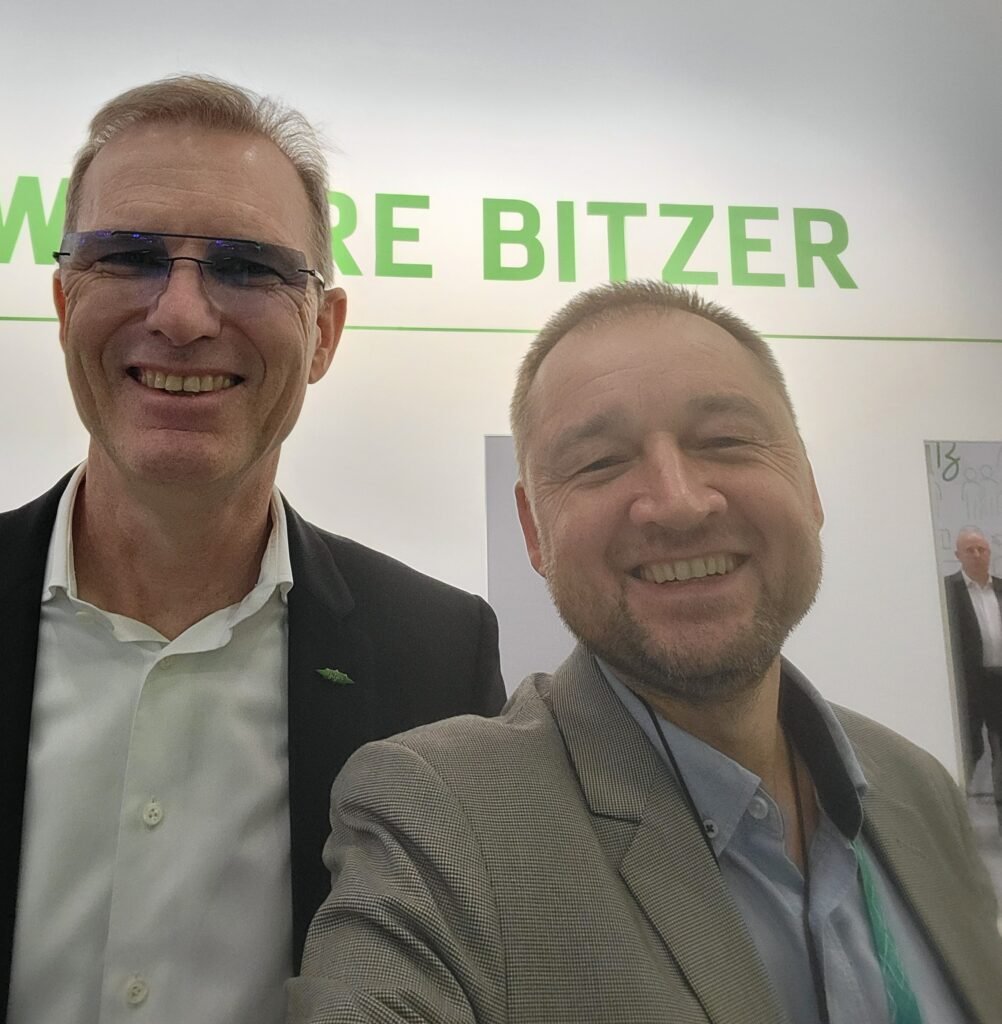
At Chillventa 2026 in Nuremberg, Sergei Mukminov, Editor-in-Chief of Refindustry.com, spoke with Martin Büchsel, Chief Sales and Marketing Officer of the BITZER Group, about some of the key developments shaping the HVAC+R industry. Büchsel discusses how BITZER is responding to different regulatory speeds across global markets, the growing role of natural and low-GWP refrigerants, and the rapidly increasing demand for data center cooling driven by AI. He also explains how innovations such as the new HELICOM screw compressor address these changing requirements and why investing in training and education is becoming increasingly important.
BITZER names AI and decarbonisation as the drivers transforming the HVAC+R industry. What opportunities and challenges do they bring for the industry?
Let’s start with AI. Artificial intelligence is already changing the way we work and live, and I am convinced that this is far more than a short-term trend. It is not a straw fire that will disappear soon, and it is not a bubble. For our industry, one of the most tangible effects is the rapid growth in data centre infrastructure. More computing power also means more heat that needs to be removed, making reliable and highly efficient cooling increasingly important.
This creates significant opportunities for the HVAC+R industry, but also new challenges. Data centers require cooling solutions that can operate in different climate zones globally reliably around the clock, handle high loads and deliver energy efficiency. At the same time, the industry needs to keep pace with the speed at which this market is developing.
Data center cooling is one of the most visible themes at this year’s show. How is BITZER building its business around this segment?
Data center cooling is clearly a growth area for BITZER. Here at Chillventa, you can see this very prominently on our stand with HELICOM, our newest generation of compact screw compressors. We started with models specifically designed for the demanding requirements of data center cooling and continuous high-load operation.
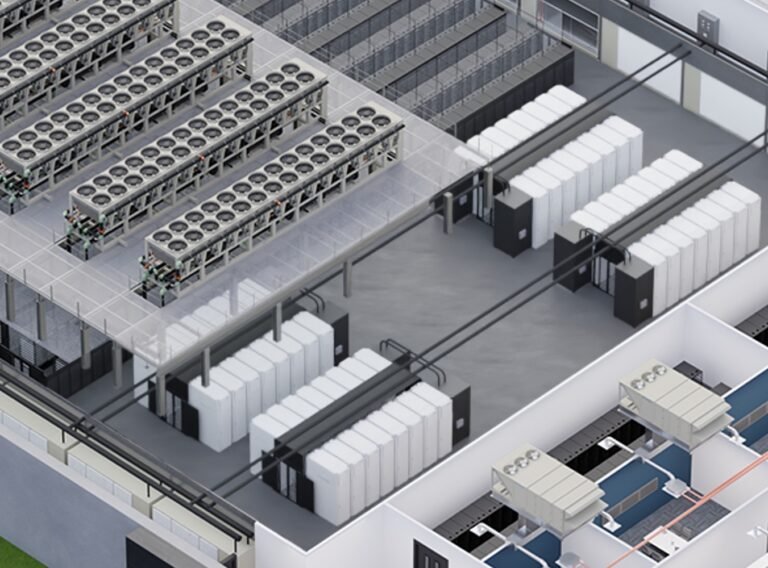
But it is not just about the compressor. At our stand, we show HELICOM together with matching condenser and evaporator technology to demonstrate how these components can work efficiently together in data center cooling applications.
What matters in this market is reliability, efficiency and scalability. Data centers need cooling solutions that can handle different load profiles and a wide range of ambient conditions. At the same time, efficiency is crucial because cooling represents an important part of a data center’s energy demand.
Our CSVH inverter screw compressors, for example, offer strong part-load performance. With HELICOM, we are also addressing very low-lift operation, creating further opportunities for highly efficient cooling concepts with raising water temperature. And we work closely with our OEM customers to turn these technologies into solutions for the specific requirements of data centers
With the EU HFC quota cut sharply from 1 January 2027 and US supermarket limits now pushed to 2032, how do you plan one compressor portfolio for markets moving at such different speeds?
There is no single solution that fits every region. Markets are moving at different speeds, driven by different regulatory frameworks and application requirements. Europe is clearly leading the transition, with a strong shift towards natural refrigerants wherever technically and economically feasible. Other regions are following at their own pace.
For BITZER, this means we need a broad and flexible portfolio that enables us to support our customers across different applications, refrigerants and regions. At the same time, we are continuously expanding our range for natural refrigerants, and many of the new products we are presenting here at Chillventa reflect exactly this development.
However, we also continue to support solutions for more traditional refrigerants like HFO/HFCs where they remain relevant. Our aim is to give customers the right technology for their market today, while helping them prepare for the transition ahead.
Maybe you could elaborate on the new products?
Take our new air-cooled ECOLITE CO₂ condensing unit. It offers customers a reliable and flexible solution for both medium- and low-temperature refrigeration applications, while providing a future-oriented solution based on the natural refrigerant CO₂. It has attracted a great deal of interest here at the show.
Another highlight we launched here at Chillventa is our new ECOLINE 6-cylinder reciprocating compressor for transcritical CO₂ applications. With this addition, we now offer a complete ECOLINE CO₂ compressor range from 2 to 8 cylinders, covering a broad spectrum of capacities and applications. These compressors are used in applications ranging from supermarkets to industrial refrigeration and heat pumps.
And then there is our CSH2T screw compressor for high-temperature heat pumps, with fluid outlet temperatures of up to 120°C. This is a particularly important solution when we talk about the second major trend: the decarbonisation of heat.
Which refrigerants is BITZER betting on for the next five to ten years, by application and region?
For Europe, our direction is clear: whenever possible, consider natural refrigerants. Where this is not technically or economically feasible, we recommend refrigerants with the lowest possible GWP, ideally below 10, with a GWP of 150 as an upper limit.
The right refrigerant, however, always depends on the application. Reciprocating compressors are particularly versatile and can operate with a wide range of refrigerants, which continues to make them an attractive solution for many applications. At the same time, we are offering screw and scroll compressors for hydrocarbons such as propane and isobutane.
In the US and China, we are also seeing growing interest in CO₂ solutions. In industrial refrigeration, ammonia continues to play an important role. Here at Chillventa, for example, we are presenting our new ACP SINGLE ammonia compressor pack and the OS.A 105.
Another important topic is the large number of existing systems in the market. There will not be enough refrigerant to top up all existing systems, so those who wait will face two problems: refrigerants, and finding people. If refrigerant needs to be replaced or refilled, we recommend considering a retrofit to a refrigerant with the lowest possible GWP, provided this is technically and economically feasible. Drop-in solutions can also offer a practical way to reduce the GWP of existing systems.
But retrofit is about more than the refrigerant itself. There is also significant potential to improve the efficiency and extend the useful life of existing systems. This is where our PERFORMANCE KITS, including the IQ MODULE, can support customers in upgrading existing equipment and improving its operation and energy efficiency.
The industry is short of qualified people at every level, from installers to design engineers, just as refrigerants and systems become more demanding. How serious is this for BITZER and its customers, and what is a manufacturer’s role in solving it?
The shortage of skilled people is one of the major challenges our industry is facing. So for us, training and education are an important part of supporting our customers and the industry as a whole.
BITZER has training centers around the world. Most recently, we opened a new training center for the APAC region in Thailand. There, we provide practical training for professionals across the industry, from end users and contractors to OEMs, with a particular focus on the installation, commissioning and servicing of CO₂ and other natural refrigerant systems. The center is equipped with real systems, including a rack and our ECOLITE condensing units, so participants can gain hands-on experience in addition to classroom knowledge.
In Europe, we have the SCHAUFLER Academy, our flagship training center, as well as further training centers in China, the US and South America. This allows us to share knowledge and practical experience close to our customers in all five of our sales regions.
But the challenge goes beyond technicians in the field. We also need the next generation of engineers and technical experts. As a foundation-owned company, BITZER takes a long-term view of its responsibility towards the industry and future generations. The SCHAUFLER FOUNDATION supports this commitment through its engagement with universities and academia. We want young people to see just how much innovation, digitalisation and potential for meaningful impact there is in refrigeration, air conditioning and heat pump technology.
As a manufacturer, I believe we have a responsibility that goes beyond developing and selling products. We also need to invest in knowledge and skills and help prepare our industry for the future. This is not something one company can solve alone, but it is an area where BITZER wants to make a meaningful contribution.
Thank you, Martin, for sharing your insights!