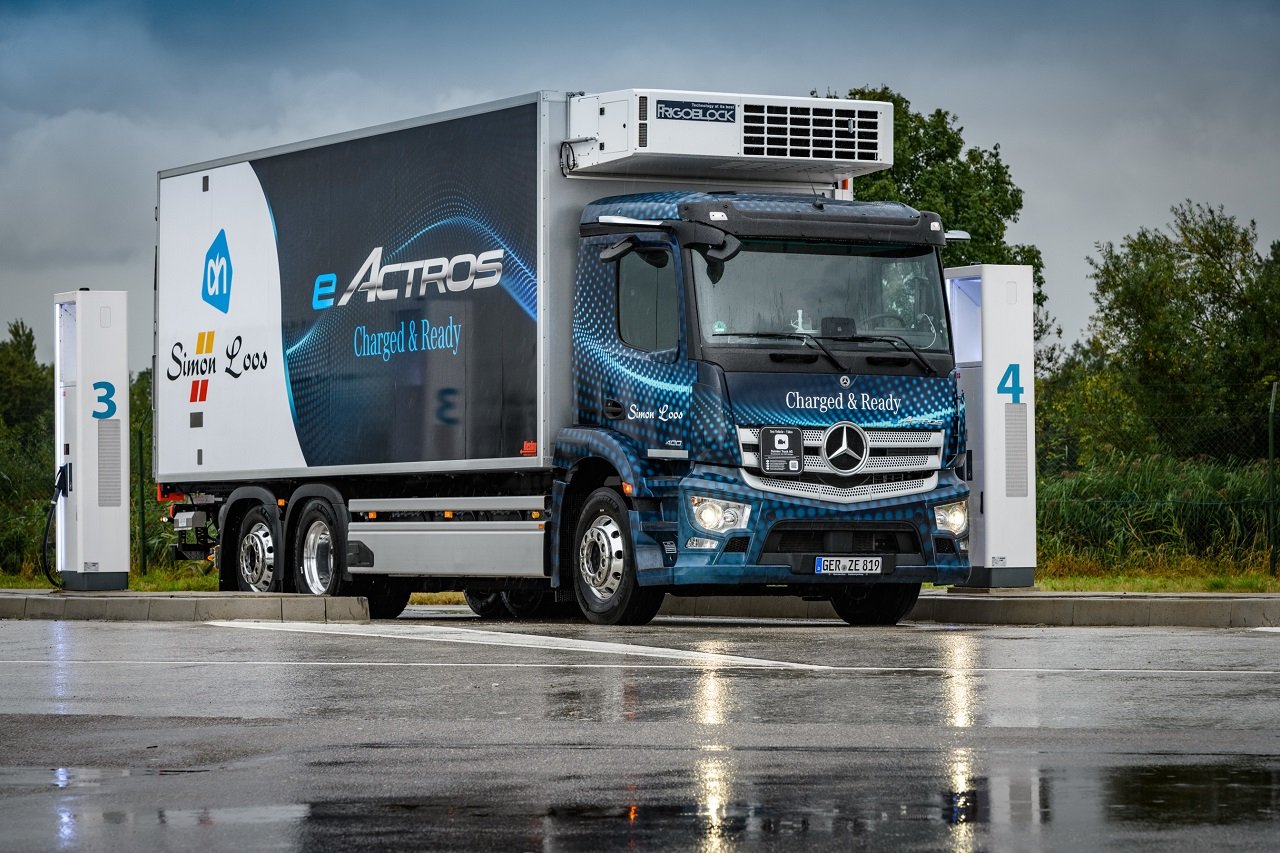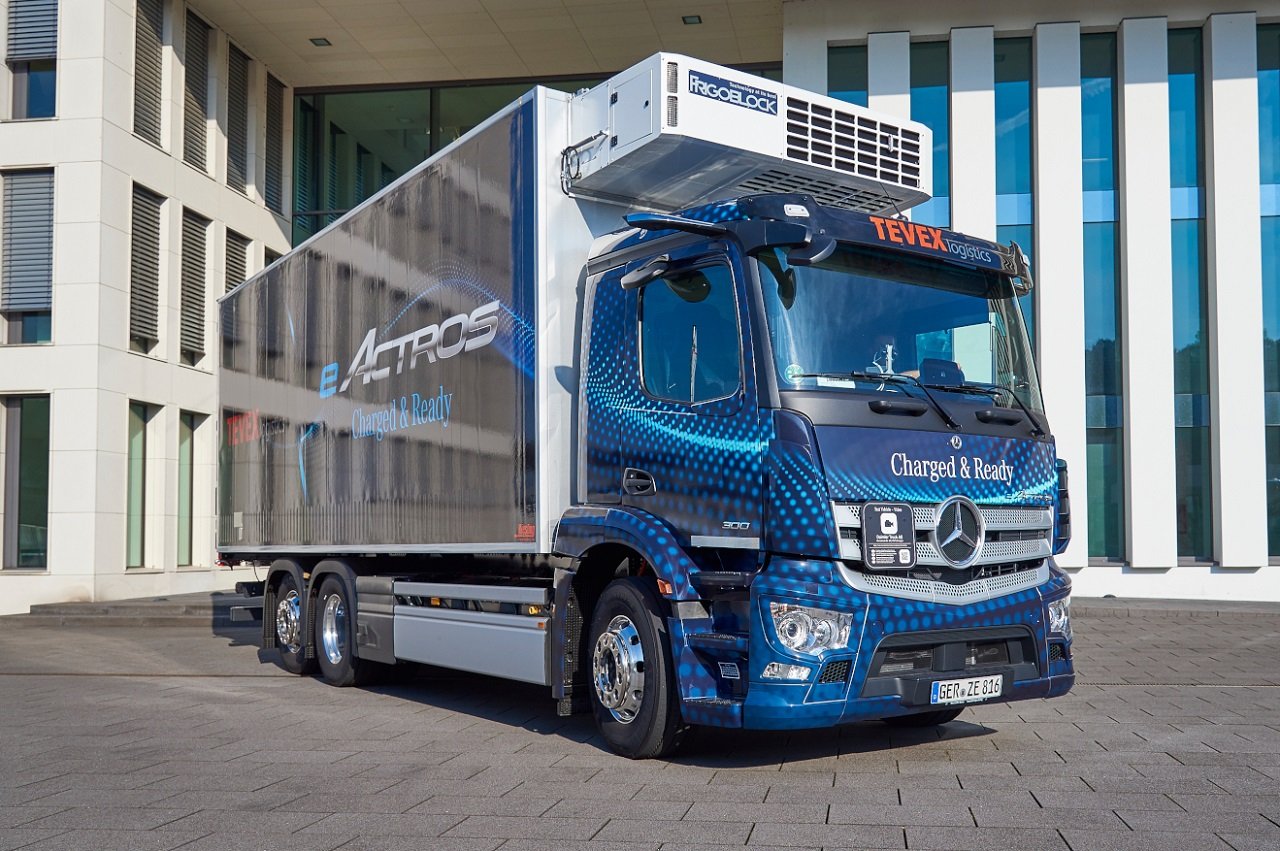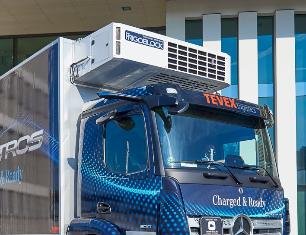
Frigoblock announced today that its all-electric refrigeration technology is used by Mercedes-Benz to cool the first near-series battery-powered eActros trucks that started practical operations in Germany and the Netherlands. This project is a result of a close collaboration between Frigoblock and Daimler Trucks to offer customers a sustainable refrigeration technology that can seamlessly work with the new Mercedes-Benz eActros vehicles.
“Furthering sustainable innovation in electric transport refrigeration is the core of what Frigoblock stands for,” said Ingo Kaltwasser, Chassis OEM Manager for Frigoblock in Europe, Middle East and Africa. “We have worked closely with the engineering teams at Mercedes-Benz Trucks to adapt the Frigoblock technology and meet the precise energy needs of the new eActros vehicle. This project builds on our decades-long relationship with Daimler, and we’re proud to move the industry another step towards a CO2-neutral refrigerated transport.”
Using integrated inverter technology, electric Frigoblock refrigeration units are designed to work directly with the battery-powered vehicles, minimising the number of energy-consuming components. This allows for most optimal use the vehicles’ battery capacity and contributes to maximising the truck’s range.
To meet the electrical requirements of the new eActros, Frigoblock designed a new CAN-Bus-Gateway system for direct communication between the truck and the cooling system. The intelligent control efficiently manages the energy demand of the unit using only the minimal energy needed to maintain the set-point temperature. The redesigned CAN-Gateway system also ensures additional electrical safety, independently shutting down the refrigeration unit in case of an electrical emergency.
Simon Loos in the Netherlands and Tevex Logistics in Germany are the two food transport companies that added the first battery-powered and Frigoblock refrigerated eActros trucks into their fleets.
The e-truck in Simon Loos fleet, supplies supermarket stores in various cities including Rotterdam, The Hague and Delft, with dry goods and fresh, temperature-controlled food. The Frigoblock refrigerated eActros will run seven days a week, covering up to 300 kilometres every day in a locally CO2-neutral operation. The batteries will be charged overnight at their customer’s distribution centre in Delfgauw.
The German Tevex Logistics plans to use the new Frigoblock refrigerated eActros in multi-shift operation. The logistics subsidiary of the Tönnies Group will each day transport its own high-quality food products to various customers in the greater local area. The company expects the truck to travel up to 600 kilometres per day and will be recharged at a charging station on the company’s premises.