MHI Thermal Systems launches TEU electric transport refrigeration units in Europe

The modular lineup reduces unit size and weight while supporting multiple power sources and temperature zones for electric transport.

MHI Thermal Systems launches TEU electric transport refrigeration units in Europe

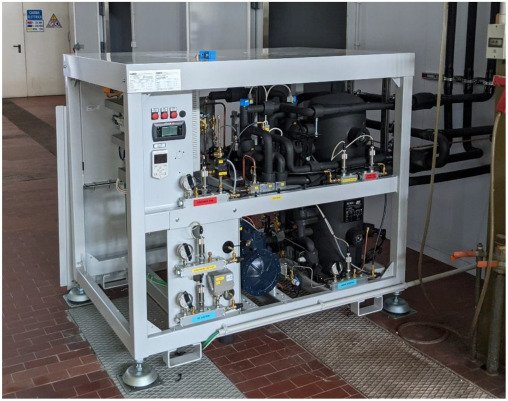
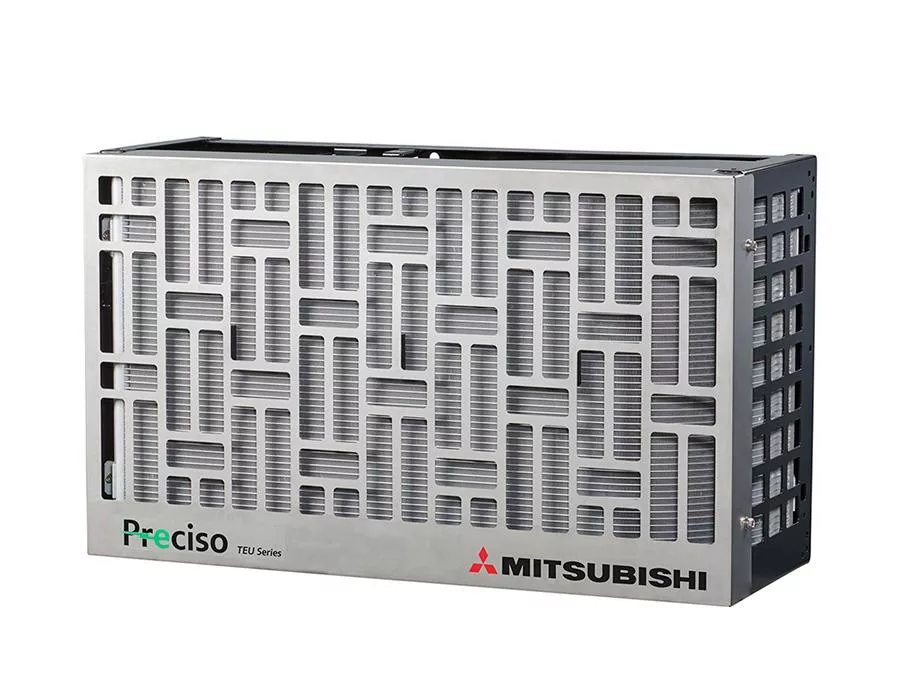
Mitsubishi Heavy Industries Thermal Systems (MHI Thermal Systems) has started European sales of its TEU series, a new lineup for the Preciso brand of all-electric-driven transport refrigeration units. Sales are being handled by Mitsubishi Heavy Industries Thermal Transport Europe GmbH (MTTE), MHI’s European sales arm based in Osnabruck, Germany.

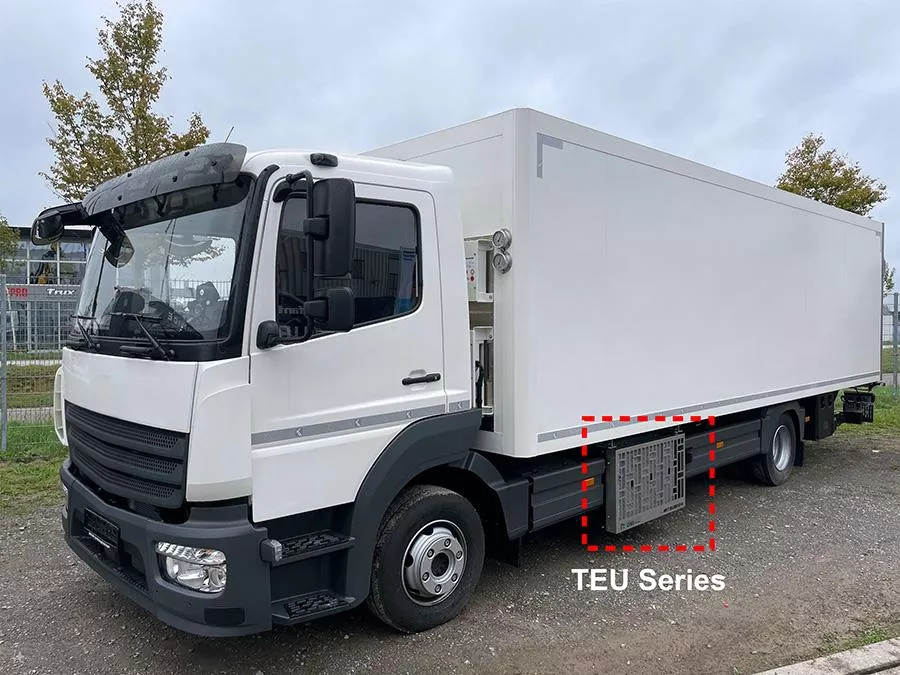
The TEU series uses a modular structure, a first for MHI Thermal Systems’ product lines, separating the condenser, evaporator and compressor into compact modules. The design is intended to facilitate installation in electric vehicles with varying mounting constraints resulting from battery configurations.

Compared with the TU series of conventional sub-engine trailer units, the TEU series’ main unit is around 30% smaller by volume, requires 40% less opening width and area, and weighs 55% less. According to the company, the compact and lightweight structure also contributes to extending the range of electric vehicles equipped with lightweight, high-capacity batteries.

The units use an “economizer cycle,” in which part of the refrigerant is branched to cool the main refrigerant flow before being injected into the intermediate stage of the compressor during compression. This configuration increases refrigeration capacity. The TEU series can use power from electric vehicle batteries, vehicle-mounted generators or dedicated transport refrigeration unit batteries.

The TEU1400MA is a multi-evaporator system designed for transporting cargo at different temperature ranges simultaneously. Four types of evaporators of different sizes can be installed in partitioned cargo compartments to regulate multiple temperature zones.

MHI Thermal Systems said it will continue developing electric systems using inverter technology for energy savings and temperature control, as well as multi-evaporator systems aimed at improving operational efficiency.
Get the daily refrigeration briefing

One email a day. Trusted by 3,000+ RACHP professionals.

Most read this month

All news →

Related insights

Article

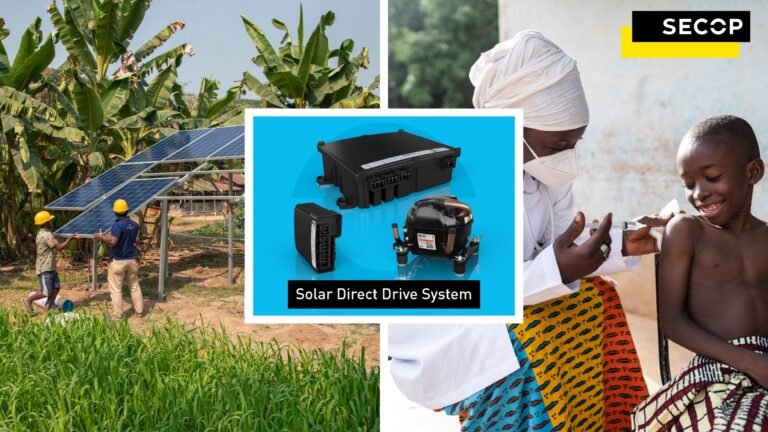
Secop’s Solar Direct Drive (SDD) System Earns WHO PQS Approval – The Team Behind It

Partner's material In March 2026, Secop’s Solar Direct Drive Power Management Module was granted WHO PQS prequalification and officially listed in the WHO Catalogue of Prequalified Immunization Devices. The WHO IMD-PQS (Immunization Devices Performance, Quality and Safety programme) is the global benchmark for cold chain equipment used in immunisation. Being listed in its catalogue is

22 Jun 2026
Tech Guide

Case Study – Effect of Louvers or diffusers on air flow distribution and cooling time on a meat log during Chill cycle

By Kushal Aurangabadkar An experimental analysis was conducted on a cooler space measuring 3.66 m × 6.096 m (12.0 ft × 20.0 ft), equipped with an ammonia refrigeration coil, five 30 cm (12 in.) fans, and five diffusers. The study measured airflow patterns, cooling rates, and heat transfer efficiency in meat storage by testing two configurations:

Kushal Aurangabadkar · 21 Jan 2026
Tech Guide

Total Cost of Ownership (TCO) for Modular Refrigeration Systems in Life Sciences Distribution Centers

by Ramez Naguib, P.E. Introduction Life sciences distribution centers are under immense pressure to deliver consistent temperature control, comply with increasingly stringent regulations, and optimize operational efficiency. Traditional built-up refrigeration systems often prove cumbersome, costly, and slow to implement. In contrast, modular, factory-assembled refrigeration systems have emerged as a compelling alternative. Drawing on lessons from

14 Jan 2026