Esta página solo está disponible en inglés. Ir a la portada en español

×

Questa pagina è disponibile solo in inglese. Home page in italiano

×

Diese Seite ist nur auf Englisch verfügbar. Zur deutschen Startseite

×

Cette page est disponible uniquement en anglais. Aller à la page d'accueil en français

×

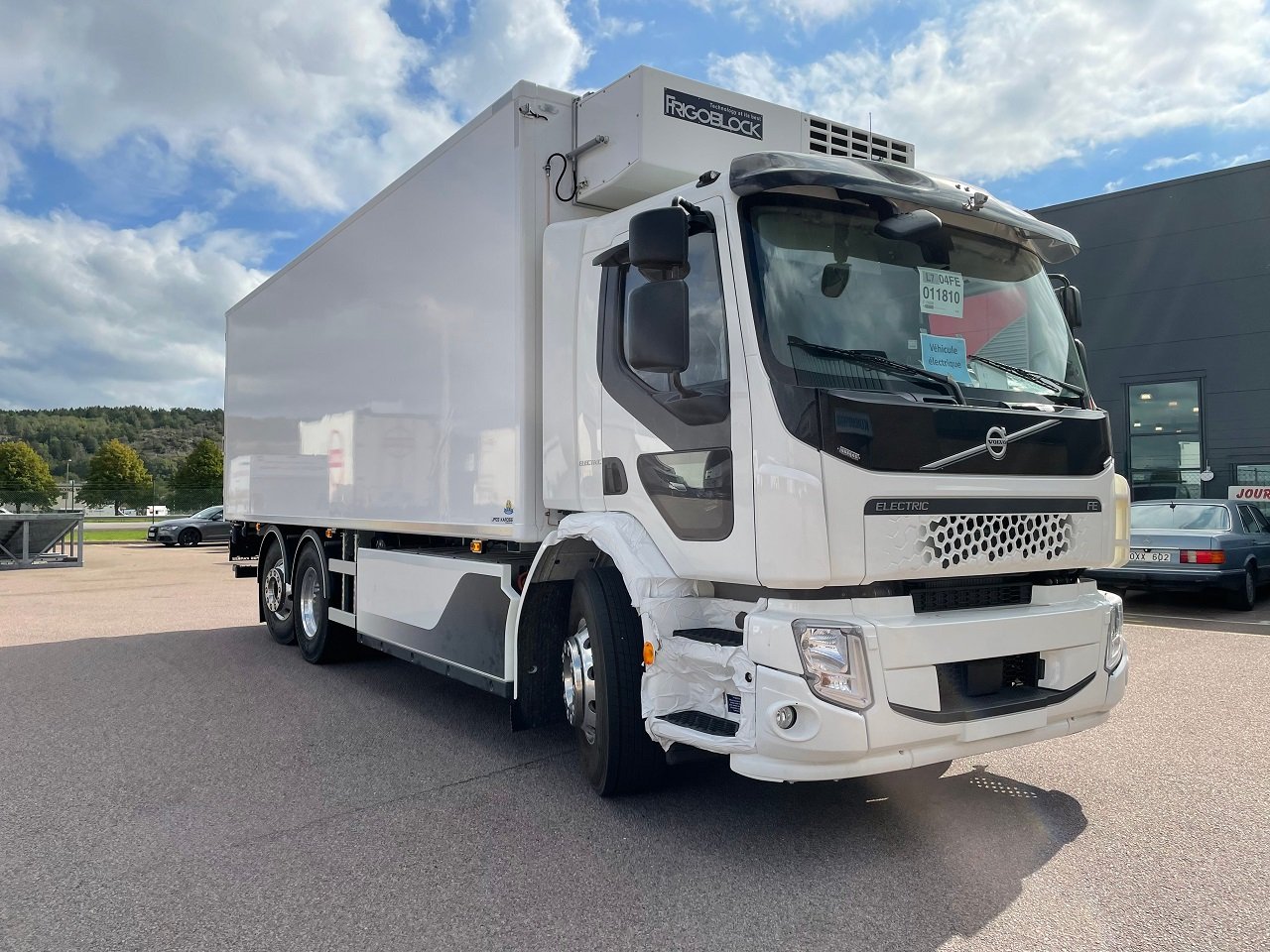
Frigoblock Refrigerates Martin & Servera’s First 100% Electric Truck

Frigoblock Refrigerates Martin & Servera’s First 100% Electric Truck

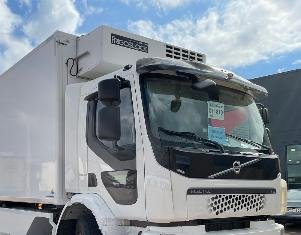
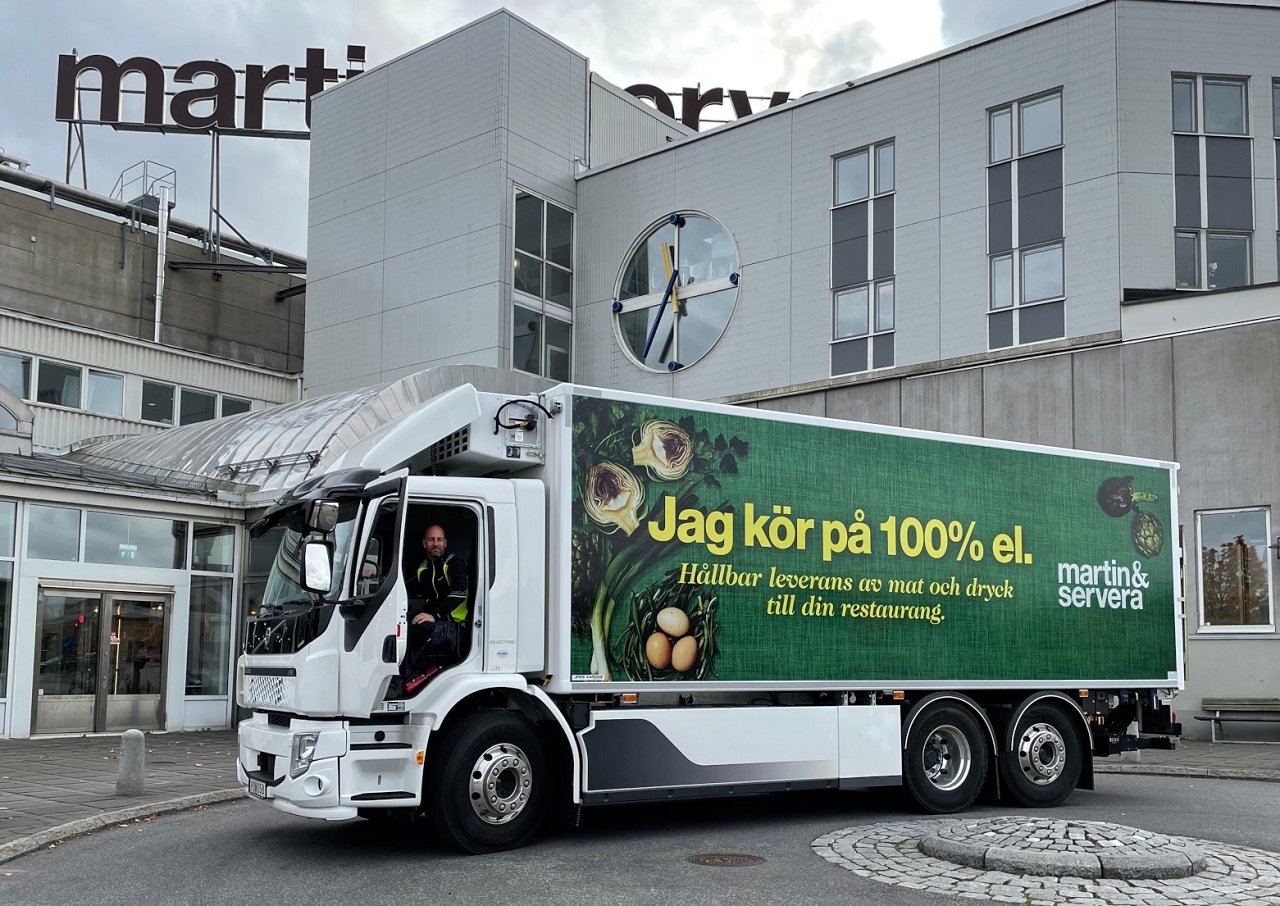
FRIGOBLOCK announced the delivery of the first all-electric distribution truck to Martin & Servera, a Swedish wholesaler for restaurants and commercial kitchens. The new Volvo FE Electric truck featuring the electric Frigoblock FK13 refrigeration unit started delivery operations in the city of Stockholm, Sweden. 

This zero-emission and low-noise solution will allow Martin & Servera to deliver goods in Low Emission Zones, and at any time of day or night, significantly contributing to increasing the efficiency of their inner-city deliveries. The driver can also easily operate the refrigeration unit from inside the cab and turn it off if necessary when approaching one of the city’s sensitive areas. 

“Building on decades of industry expertise, our technology is designed to create value for our customers while helping them to reduce the environmental footprint of their transport operations”, said Fredrik Weimyr, Managing Director at Thermo King Sverige AB. “Combining the electric technologies of Volvo and Frigoblock, we developed an energy efficient solution that takes our customers and the industry another step closer to sustainable, CO2-neutral temperature-controlled transport.”

The Frigoblock FK13 dual-zone unit selected for this application communicates with the vehicle’s CAN-system via the Frigoblock inverter technology. This allows the Frigoblock refrigeration units to work directly with the battery-powered vehicle, minimising the number of energy-consuming components and optimising the use of the battery. The supply of energy from the vehicle’s batteries can be altered depending on the need to secure the correct temperature in the two refrigerated compartments.

“Energy efficiency and optimization of the vehicle’s battery usage it crucial for effective transport operations. Our technology ensures that the refrigeration unit uses only the minimal power necessary to secure the correct cargo temperature. This contributes to maximising the truck’s range and allows our customers to do more emission-free deliveries”, said Fredrik Weimyr. 
Get the daily refrigeration briefing

One email a day. Trusted by 3,000+ RACHP professionals.

Related news

Most read this month

All news →

Related insights

Article

Secop’s Solar Direct Drive (SDD) System Earns WHO PQS Approval – The Team Behind It

Partner's material In March 2026, Secop’s Solar Direct Drive Power Management Module was granted WHO PQS prequalification and officially listed in the WHO Catalogue of Prequalified Immunization Devices. The WHO IMD-PQS (Immunization Devices Performance, Quality and Safety programme) is the global benchmark for cold chain equipment used in immunisation. Being listed in its catalogue is

22 Jun 2026
Tech Guide

Case Study – Effect of Louvers or diffusers on air flow distribution and cooling time on a meat log during Chill cycle

By Kushal Aurangabadkar An experimental analysis was conducted on a cooler space measuring 3.66 m × 6.096 m (12.0 ft × 20.0 ft), equipped with an ammonia refrigeration coil, five 30 cm (12 in.) fans, and five diffusers. The study measured airflow patterns, cooling rates, and heat transfer efficiency in meat storage by testing two configurations:

Kushal Aurangabadkar · 21 Jan 2026
Tech Guide

Total Cost of Ownership (TCO) for Modular Refrigeration Systems in Life Sciences Distribution Centers

by Ramez Naguib, P.E. Introduction Life sciences distribution centers are under immense pressure to deliver consistent temperature control, comply with increasingly stringent regulations, and optimize operational efficiency. Traditional built-up refrigeration systems often prove cumbersome, costly, and slow to implement. In contrast, modular, factory-assembled refrigeration systems have emerged as a compelling alternative. Drawing on lessons from

14 Jan 2026