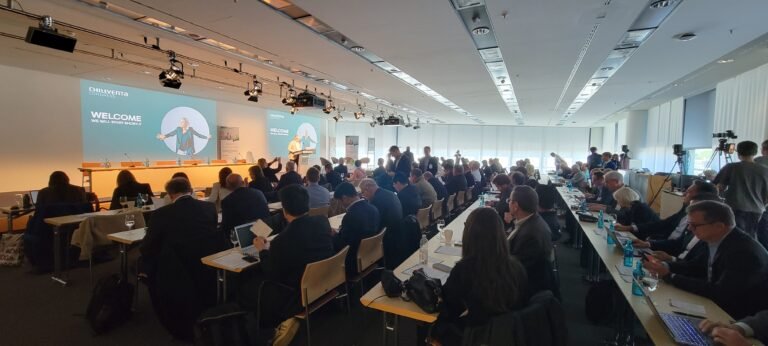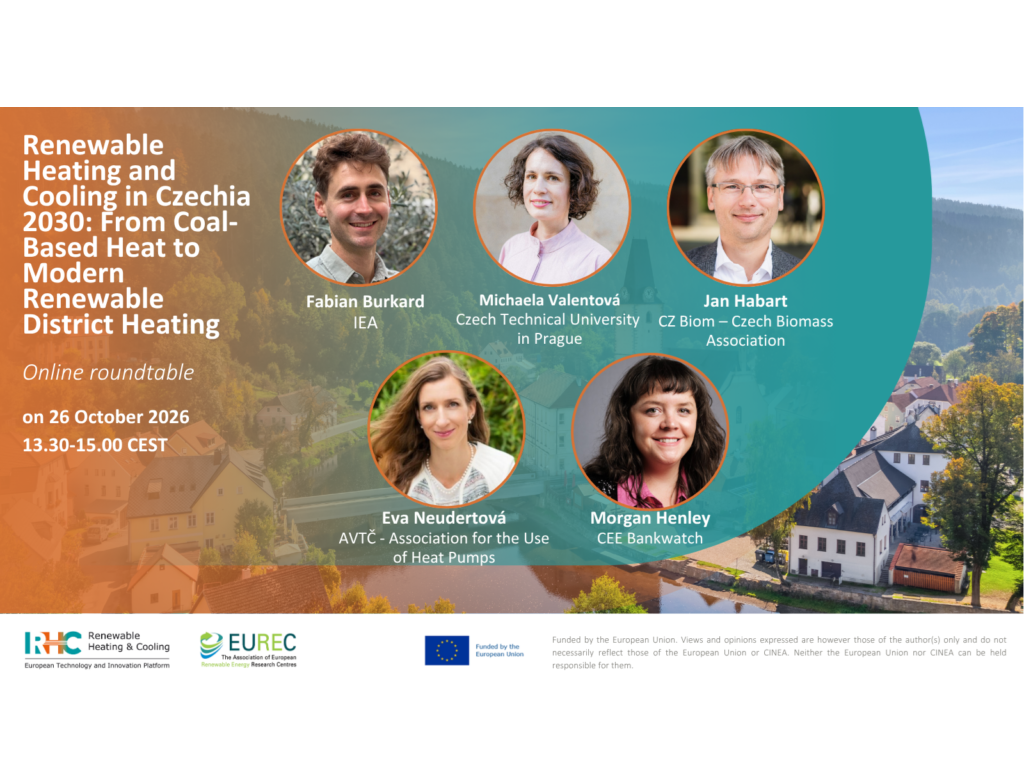
Experts from research, industry, civil society and international organisations discussed the decarbonisation of Czechia’s heating sector at the latest RHC-ETIP National Roundtable. With coal expected to be phased out over the coming decade, participants focused on renewable heating technologies, infrastructure investment and maintaining affordable and reliable heat supplies.
Czechia’s existing district heating networks were identified as a foundation for integrating renewable and low-carbon heat sources. Options discussed included geothermal energy, sustainable biomass, solar thermal, industrial excess heat, wastewater heat recovery, large-scale heat pumps and thermal storage. Participants emphasised that technology choices should reflect regional conditions and local heating and cooling strategies.
Large-scale heat pumps and waste heat recovery were highlighted as underutilised options for industrial applications and district heating systems. The discussion also addressed electrification, renewable gases and biomethane, alongside the strategic use of biomass in areas where alternative technologies are more difficult or costly to deploy.
Participants identified the Modernisation Fund, stable regulatory frameworks and long-term policy certainty as important factors for financing infrastructure upgrades, renewable heat generation and energy efficiency improvements. Building renovations, targeted financial support and public communication were also discussed as measures to maintain affordability and public acceptance.
The roundtable concluded with a shared vision for 2030 in which renewable energy supplies an increasing share of Czechia’s heating demand through modernised infrastructure. Participants noted that several renewable heating projects are already underway across the country, while further implementation will require coordinated planning and investment.