The International Institute of Refrigeration (IIR) has outlined recent technological developments in refrigeration, air conditioning and heat pumps (RACHP), highlighting the transition towards low-GWP refrigerants, higher energy efficiency, electrification and energy-system integration. In an article published in the 2026–2027 international special issue of Industria e Formazione, IIR Director General Yosr Allouche examines developments across commercial refrigeration, industrial heat pumps, cold storage and refrigerated transport.
According to the IIR, more than 5.4 billion RACHP systems operate worldwide, generating over USD 300 billion in annual sales and employing approximately 12 million people. Refrigeration accounts for around 20% of global electricity consumption and an estimated 7.5% of global CO2 emissions. Air conditioning alone represents more than 12% of global electricity use, with approximately 77% of its emissions associated with electricity consumption and 23% with refrigerant emissions.
Heat pump development is extending into higher-temperature industrial applications. Commercially available high-temperature heat pumps now cover approximately 100–300°C (212–572°F), with capacities reaching around 100 MW (approximately 341 million BTU/h). In Germany, R290 heat pumps represented approximately 20% of the domestic heat pump market at the time of the IIR assessment. Industrial technologies include multistage compression, cascade cycles, absorption systems and thermal energy storage.
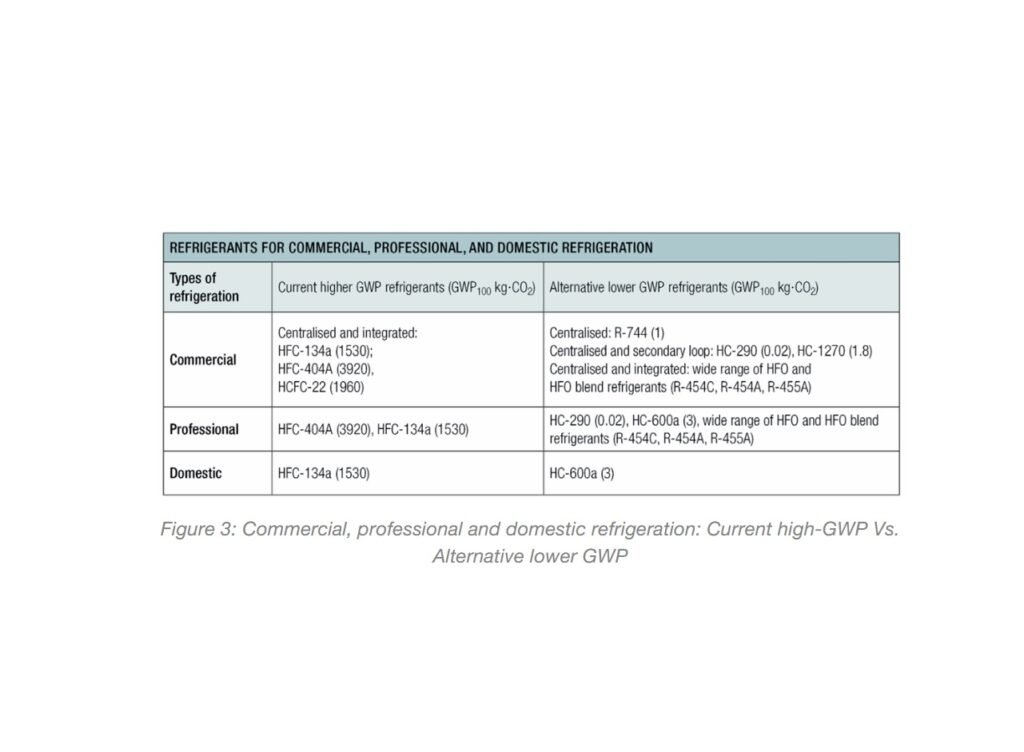
In commercial refrigeration, supermarkets are adopting R744, R290 and lower-GWP refrigerant blends, alongside parallel compression, heat recovery and improved display cabinets. Refrigeration frequently accounts for 40–60% of supermarket electricity consumption. The IIR also reports growing use of solar photovoltaics and thermal storage in walk-in cold rooms, while refrigerated transport developments include electric compressors, eutectic storage and natural refrigerants.
The report also examines dehumidification, data centre cooling and marine refrigeration. Technologies under development or evaluation include liquid and solid desiccants, membrane dehumidification, liquid cooling for high-density computing, AI-based optimisation and hybrid refrigeration systems. Across these applications, the IIR emphasises the importance of equipment efficiency, refrigerant containment, electricity carbon intensity, technical training and international cooperation in supporting the sector’s transition.