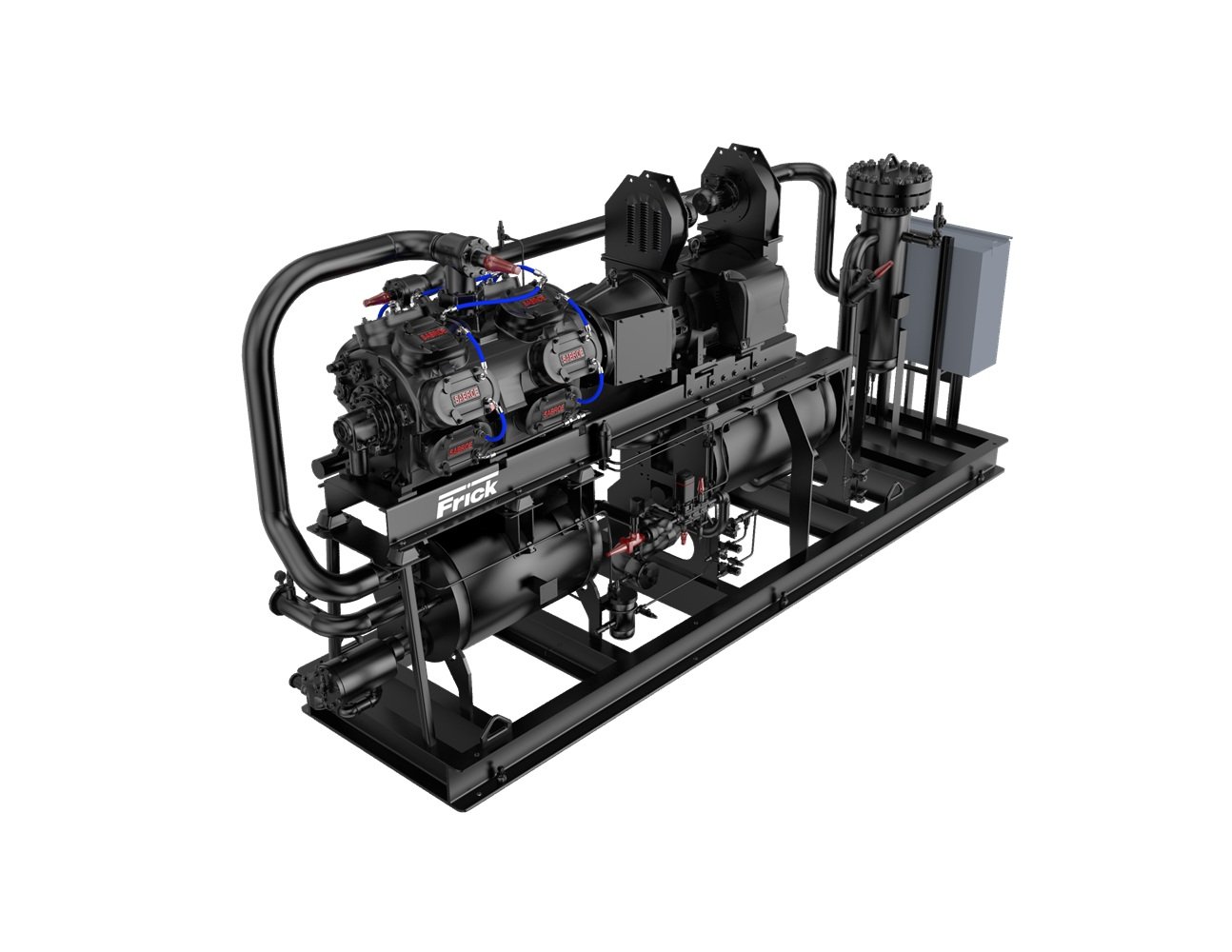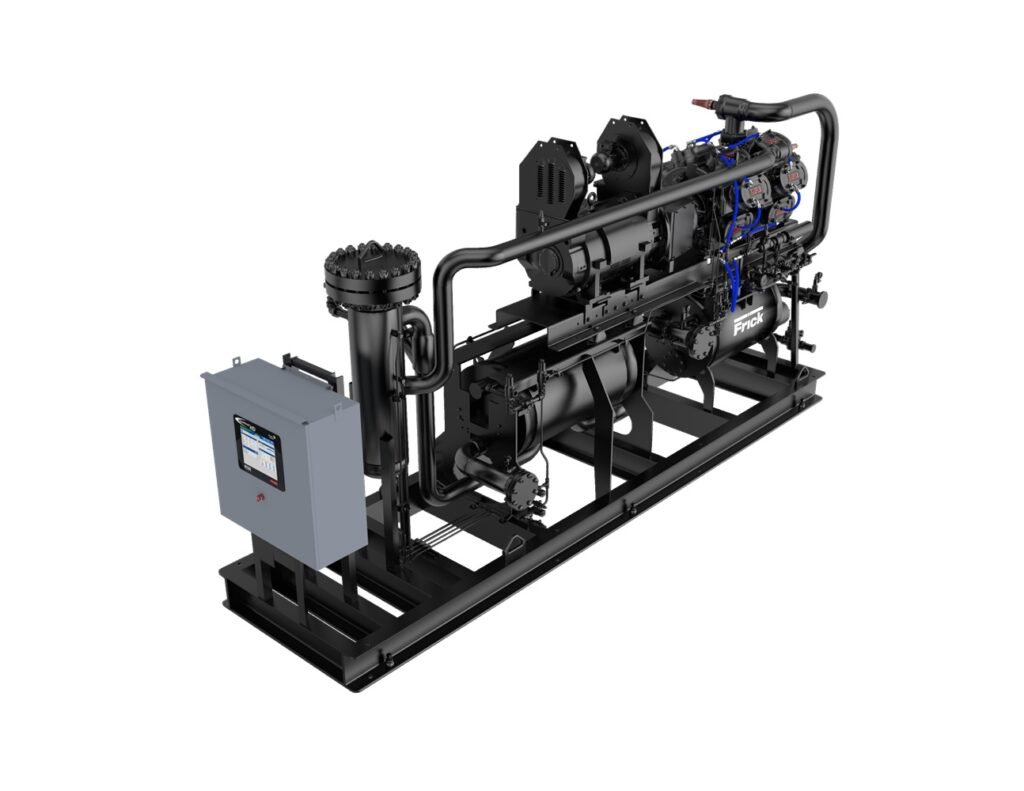
Johnson Controls has launched the FRICK HeatPAC Reciprocating Ammonia Heat Pump for food and beverage processing facilities. The standardized system recovers waste heat from ammonia refrigeration systems to produce high-temperature hot water for pasteurization, sanitation and space heating. According to the company’s internal modeling, HeatPAC can be up to seven times more energy efficient than a natural gas boiler in typical food and beverage applications.
HeatPAC is the first FRICK product engineered around the Mark 5 Sabroe reciprocating compressor platform. It offers heating capacities from 200 to 2,000 kW (approximately 682,000 to 6.82 million BTU/h) and delivers hot water at temperatures between 130°F and 190°F (approximately 54°C to 88°C). Its standardized, factory-assembled design can reduce upfront investment and shorten lead times by weeks compared with engineered-to-order industrial heat pumps.
The factory-assembled, pre-tested units feature a fully welded plate-and-shell condenser with an integrated desuperheater, two-stage oil separation, crankcase ventilation and a variable frequency drive with a standard 4:1 turndown ratio. The ammonia charge can be as low as 87 lb (approximately 39.5 kg). Each unit includes a FRICK Quantum HD controller with Unity architecture and a 15-inch (approximately 38 cm) touchscreen, supporting integration with plant control systems and remote access.
Johnson Controls also provides FRICK Coolware selection software to estimate waste heat requirements, system efficiency, heating output and operating costs. In a modeled cheese production application requiring 2,000 kW of hot water at 140°F (60°C), HeatPAC was projected to reduce annual energy costs by up to 40% compared with natural gas boilers, depending on the energy prices and operating assumptions entered into the software.
“As energy costs continue to rise, waste heat is becoming an increasingly valuable and often untapped resource for food and beverage producers,” said Micah Lehman, product manager at Johnson Controls. “HeatPAC applies Johnson Controls deep thermal management expertise to help customers put energy they have already generated back to work. By combining advanced equipment, controls and performance modeling, we can help customers improve efficiency, lower costs and strengthen the competitiveness of their operations.”