The European Heat Pump Association announced a call for application-specific PFAS derogations, including time-unlimited exemptions where non-polyfluorinated refrigerants are not technically feasible, economically viable or safely deployable at scale. EHPA proposes reviewing such exemptions 10 years after the restriction enters into force.
Outdoor air-to-water monobloc heat pumps are among the categories most ready for transition, with factory-sealed products using non-polyfluorinated refrigerants already deployed commercially. Fluorinated refrigerants remain dominant in larger 70–200 kW units, although R290 and other alternatives are entering this capacity range.
Split, multi-split and VRF systems face greater barriers involving refrigerant charge limits, flammability, system design, energy performance and building safety requirements. EHPA considers the proposed general 18-month transition period insufficient for most stationary refrigeration, air-conditioning and heat pump applications because redesign, testing, certification, production changes and installer training can take several years.
Industrial and district heating heat pumps present additional constraints where systems require output temperatures of 90°C or more. R290 is restricted by charge-size and flammability requirements, NH3 installations require measures including ventilation and leak detection, and CO2 can lose efficiency at the temperature lifts needed by district heating networks. Existing plants may also require substantial redesign of compressors, heat exchangers and piping before changing refrigerants.
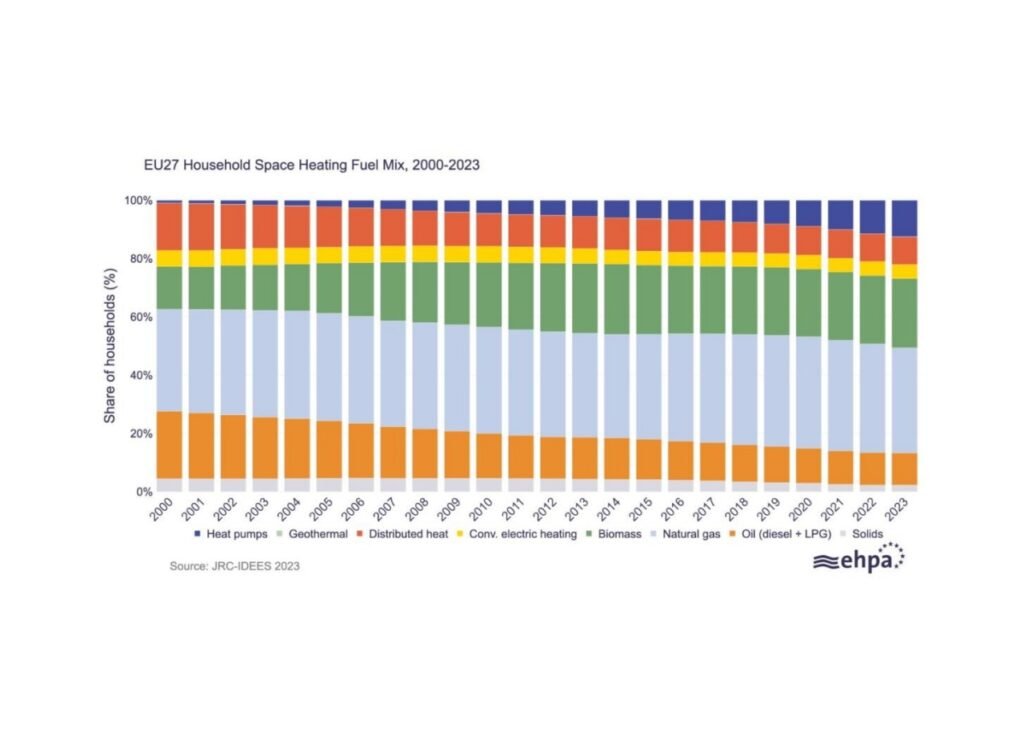
EHPA proposes linking derogations to demonstrated availability of suitable alternatives rather than applying one deadline across all product groups. It also supports leak-rate thresholds, stronger monitoring and mandatory refrigerant recovery at end of life. Europe’s heat pump manufacturing base includes more than 300 production sites supporting about 433,000 direct and indirect jobs, while 28 million installed heat pumps avoid an estimated 21 billion m³ of gas use and 45 million tonnes of CO2 emissions annually.