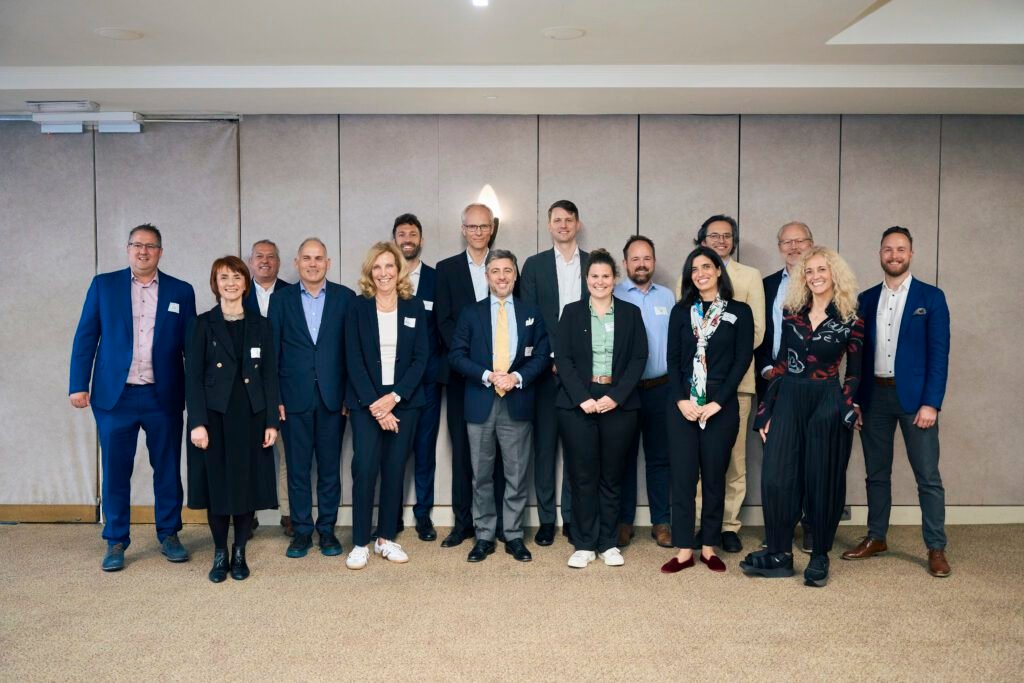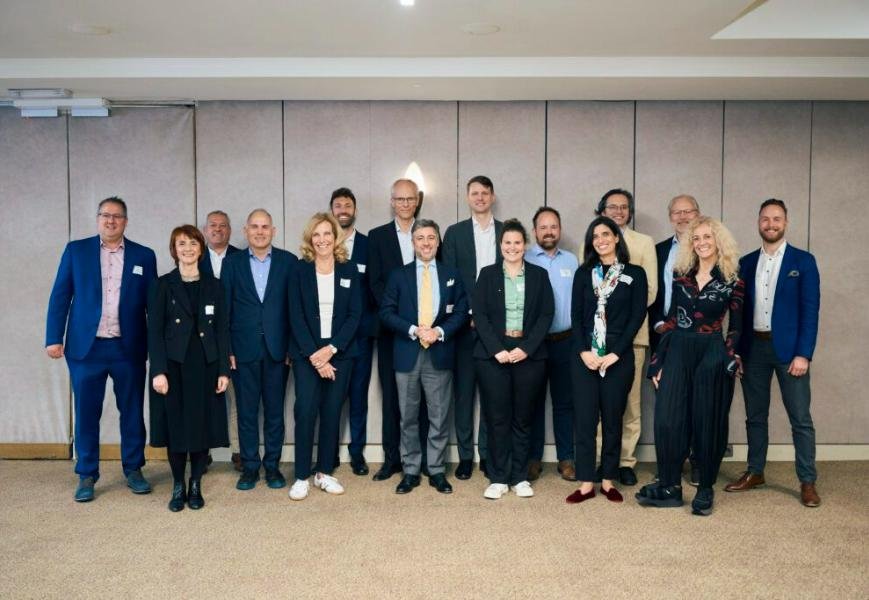
The Eurovent Commission met on 20 May 2026 during the Eurovent Annual Meeting in Brussels to elect its leadership, discuss implementation of the Energy Performance of Buildings Directive (EPBD), and address indoor air quality as a public health priority.
Marta San Román was re-elected as Vice-Chairperson of the Eurovent Commission for an additional term. Lennart Ostergaard remains Chairperson.
The meeting included an exchange with representatives of the European Commission on EPBD implementation and enforcement across Member States. The discussion covered how Member States are approaching transposition, potential implementation challenges, and the Commission’s follow-up to support coherent application across Europe.
Indoor air quality was also discussed in the context of the EPBD as the main EU-level instrument in this area. Eurovent welcomed Marianne Kemmer, Executive Director of the Indoor Air Quality Society (IAQS), and said it will work more closely with IAQS to help place indoor air quality on the public health policy agenda.
“The Eurovent Commission meeting in Brussels highlighted the importance of strong European coordination at a crucial stage in the implementation of the EPBD. We particularly appreciated the exchange with European Commission Policy Officer Pau Garcia Audi, which provided valuable insights into the Commission’s approach to ensuring coherent transposition across Member States. Delivering on the EPBD’s ambitions will require close cooperation between EU and national stakeholders, while ensuring that energy efficiency improvements go hand in hand with high indoor environmental quality across Europe,” said Lennart Ostergaard, Chairperson of the Eurovent Commission.
“I am very happy to continue as Vice-Chair; it is a great honour, and a very good excuse to keep asking difficult questions with a smile, ensuring that our sector –often invisible when it works well– becomes very visible in policymaking, and that EPBD implementation and IAQ are addressed with evidence, practical intelligence and enough European spirit to bring real buildings, real people and real market experience into the debate,” said Marta San Román, Vice-Chairperson of the Eurovent Commission.