The Environmental Investigation Agency (EIA) has marked World Ozone Day by reviewing investigations into illegal trade in ozone-depleting substances (ODS) and highlighting lessons for the ongoing phase-down of hydrofluorocarbons (HFCs). The bulletin notes that shifts in refrigerant supply and demand as ODS are phased out and HFCs phased down can create incentives for illegal production and trade.
According to EIA, an estimated 20,000 tonnes of ODS were traded illegally each year by the mid-1990s, equivalent to approximately 20% of legitimate trade. Investigations during the 1990s and 2000s documented practices including false labeling, fraudulent documentation, repackaging, use of transit countries and diversion through brokers.
A 2003 EIA investigation described a scheme involving Singapore, South Africa and the U.S., in which newly produced CFCs were transported to South Africa and subsequently documented as used refrigerant recovered from mining equipment before being sold to the U.S. In one shipment, 28.5 tonnes of “used” CFC-12 were declared as recovered from a gold mine, while authorities found that the refrigerant capacity of the mine’s operating equipment totaled only 9 tonnes.
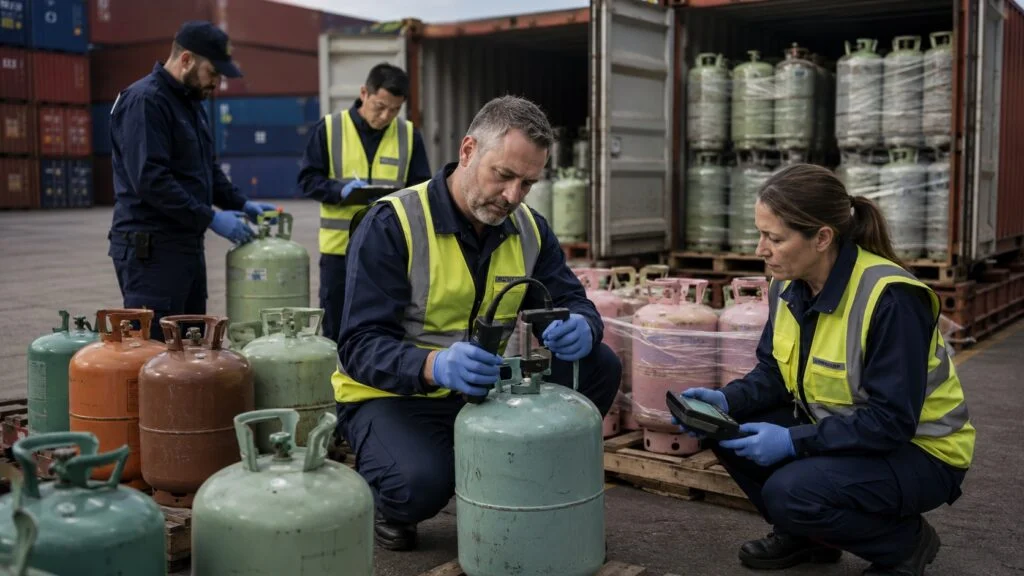
EIA also cites World Customs Organization data showing that customs administrations reported 185 seizures of smuggled ODS and HFCs in 2025, 26% more than in 2024. HCFCs accounted for 98 seizures, a 30% increase from the previous year. Misdeclaration of refrigerant cylinders and concealment in mixed cargo or equipment shipments were among the methods reported.
The bulletin also covers enforcement in South Korea, where the Gyeonggi Province Special Judicial Police Unit is conducting a crackdown on 150 scrap dealers from September 7–18, 2026. The action targets releases of HFCs during illegal collection and dismantling of waste appliances including refrigerators and air conditioners, as well as abandoned waste and illegal dumping.
EIA says effective enforcement requires controlled substances to be tracked throughout the supply chain, supported by information sharing and cooperation across agencies and borders. It also highlights centralized data, trained customs personnel and controls at ports of entry among measures identified through its investigations.