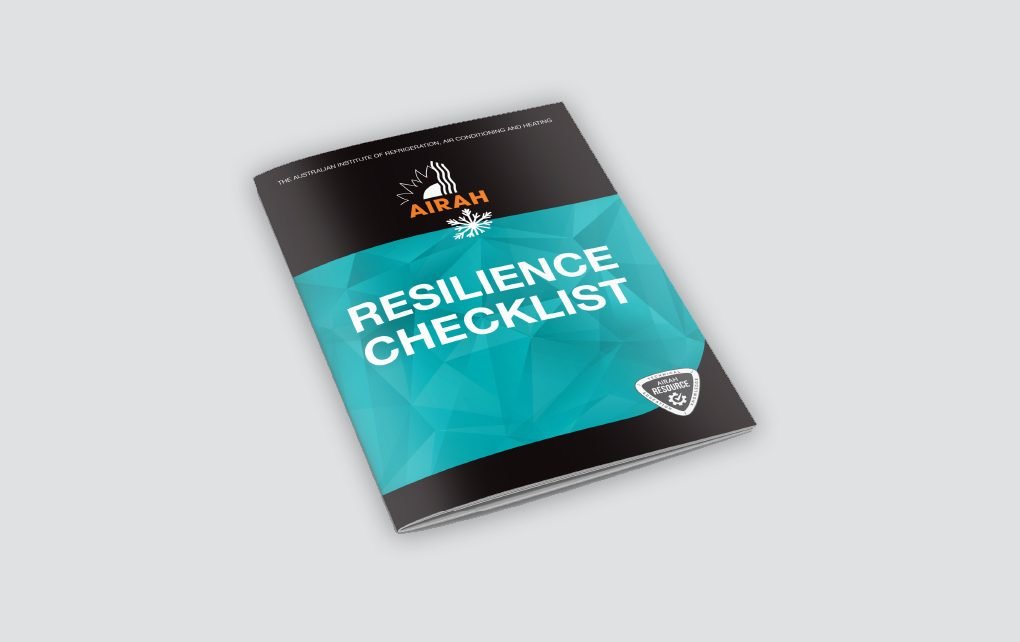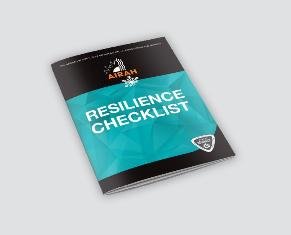
AIRAH has released the inaugural version of its AIRAH Resilience Checklist.
A resource aimed at improving the resilience of the built environment, the checklist provides considerable information on how buildings can be made more resilient in order to survive a world impacted by climate change.
“The 2021 IPCC climate change report highlighted that Australia will be exposed to even more heatwaves, cold snaps and floods,” says AIRAH CEO Tony Gleeson. “Coupled with the risk of infrastructure and utilities failure, potential terrorist or cyber-attacks, these acute shocks and chronic stresses can have a significant impact on our lives and our livelihoods.
“A key cornerstone of AIRAH’s advocacy is HVAC&R resilience. As a critical enabler, the HVAC&R industry has both direct and indirect roles to play in safeguarding Australia’s built environment and its occupants. The AIRAH Resilience Checklist is designed to offer guidance about improving resilience for buildings, particularly in an environment where there is greater likelihood for them to be impacted by extreme-weather events.”
Developed by the AIRAH Resilience Special Technical Group (STG), the checklist was produced through research and industry consultation. The aim was to encourage a greater focus on resilience in the built environment.
“The guide discusses technical concepts involved in improving the resilience of buildings and their HVAC systems,” says Liza Taylor, M.AIRAH, who leads AIRAH’s Resilience STG. “The AIRAH Resilience Checklist is designed as a self-assessment tool for both new and existing buildings. The objective is to enable key decision makers, influencers and stakeholders to make informed choices when selecting, installing, operating or maintaining HVAC&R assets.”
To this end, the AIRAH Resilience Checklist includes an eight-step process for developing a resilience action plan. The steps cover defining a resilience strategy, understanding the future climate, and understanding key risks to buildings. Other steps relate to how to design, engineer, install and manage for resilience.
The checklist also explores the concept of “Build Back Better”.
This new approach to resilience focuses on implementing positive social change and improving the community capacity by viewing resilience not merely as an outcome but also as a process in itself.
Rather than merely coping with or responding to potential extreme events or changing environments, resilience is viewed as continuous learning and growth, allowing us to make better, more informed decisions to improve the built environment.
To access the AIRAH Resilience Checklist, click here.