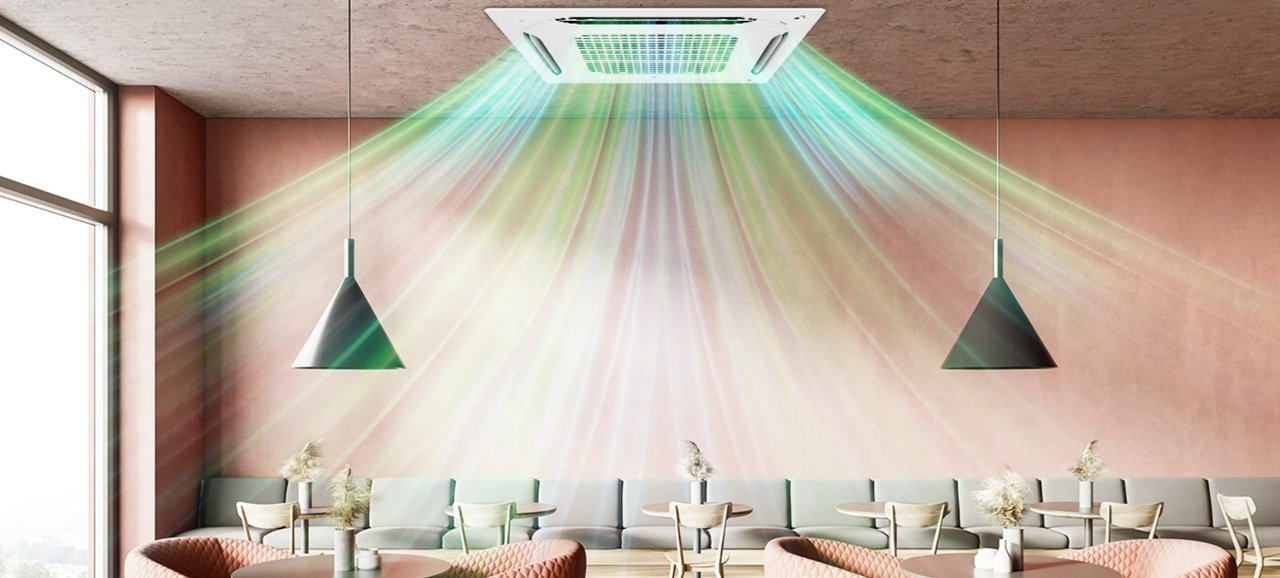
LG Electronics has introduced a new material and manufacturing process for its commercial 4-way system air conditioners, aiming to reduce plastic use and carbon emissions. The company’s initiative aligns with its ESG vision, “Better Life for All.”
According to TÜV Rheinland, LG’s revised production method has reduced carbon emissions to 14.85 kilograms of CO₂ equivalents per unit. This is primarily due to two changes: the adoption of a foaming injection molding process and the switch from Acrylonitrile Butadiene Styrene (ABS) to Polypropylene (PP) for exterior panels.
The foaming injection technique injects nitrogen gas into the mold, forming bubbles that reduce plastic usage by around 900 grams per unit. As a result, LG expects to cut approximately 270 tons of plastic and over 4,400 tons of CO₂ equivalent emissions annually.
Since June 2025, LG has applied this process to its 4-way system units and plans to extend it to other residential and commercial air conditioning models.
As part of its wider carbon neutrality goals, LG aims to reduce greenhouse gas emissions by 54.6 percent by 2030 compared to 2017. The company is also incorporating high-efficiency equipment and renewable energy sources in manufacturing, and recently launched an inverter scroll chiller using R32 refrigerant, which has a GWP around 30 percent lower than R410A.
“The new material and manufacturing process we’ve introduced for our 4-way system air conditioner underscores our dedication to sustainability,” said Bae Cheung-hyun, head of the System Air Conditioners Business at the LG ES Company. “LG will continue to leverage innovative technologies to develop eco-conscious air conditioners for a healthier planet.”