A growing scientific and regulatory debate is unfolding over rising global levels of trifluoroacetic acid (TFA), a persistent chemical now frequently detected in rainwater, surface water, food, and even human bodily fluids. TFA, a human-made compound, is accumulating due to its resistance to natural degradation, largely driven by its strong carbon–fluorine bonds.
TFA is considered by some scientists to be the smallest per- and polyfluoroalkyl substance (PFAS), a class of compounds known for environmental persistence. Although many PFASs are internationally restricted due to health concerns, TFA’s health risks remain uncertain. Existing animal studies suggest current environmental levels are significantly below harmful thresholds. The United Nations Environment Programme (UNEP) currently considers TFA to pose minimal risk until at least 2100, though it has been asked by member states to revisit this assessment.
Some countries are taking a more precautionary stance. In June 2024, two German federal agencies proposed that the European Chemicals Agency (ECHA) classify TFA as a reproductive toxin and a very persistent and very mobile substance. The ECHA is currently soliciting public comments on this petition, with a deadline of 25 July.
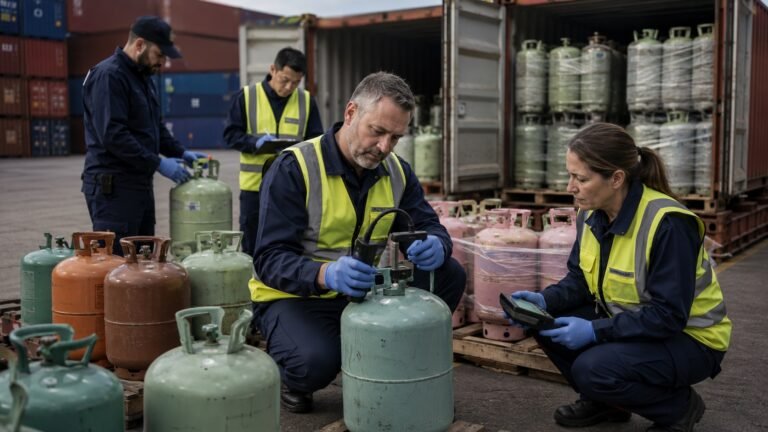
TFA is both directly emitted and formed from precursor substances such as refrigerant gases, pesticides, pharmaceuticals, and anaesthetic agents. F-gases like HFC-134a, used in refrigeration and insulation, are known atmospheric sources of TFA through their breakdown products. TFA is also produced from PFASs and other compounds in soil and water but does not evaporate, leading to its accumulation on land and in crops.
Some researchers and industry representatives argue that large quantities of TFA found in oceans may point to natural sources. However, others dispute this claim, citing the absence of known natural production mechanisms and pointing to anthropogenic origins as the primary source of increasing concentrations in terrestrial ecosystems.
Recent studies have prompted fresh concern. German environmental agencies based their ECHA petition on unpublished reproductive toxicity studies involving rats and rabbits exposed to high doses of TFA, which showed developmental effects in fetuses. Though the dosages were far higher than environmental levels, scientists such as Jamie DeWitt of Oregon State University argue these results indicate potential human health risks.
Other experts emphasize the possible ecological impact. TFA is absorbed by plants through roots and remains in the tissues, potentially affecting growth. Historical studies by the Alternative Fluorocarbon Environmental Acceptability Study (AFEAS) in the 1990s showed that high TFA levels could inhibit plant development.
“TFA levels in the environment are rising sharply due to human activity,” said Finnian Freeling, an analytical chemist at the German Water Centre. “Even if some amount of TFA is natural, that doesn’t mean it’s safe to keep adding more.”