As of today, 29 states and the District of Columbia have some form of legal cannabis. That change has driven a large interest in the cannabis industry and the rapid expansion of grow facilities. As new laws have passed within a territory, local engineers, architects, and construction professionals have been faced with the challenge of rapidly understanding and providing solutions for a facility that they may have never encountered before.
The new white paper was authored by Dave Meadows who is the Director of Industry, Standards, and Technology at STULZ. “With many engineering firms being asked to design a grow facility for the first time, my hope is that this white paper will become a valuable resource for engineering firms who need to get up to speed quickly with selecting the right HVAC equipment,” said Mr. Meadows. “STULZ has been working directly with customers in this industry to deliver the right equipment and features to make them more successful. By sharing what we’ve learned, I believe the entire industry will benefit.”
STULZ USA has provided environmental control equipment to some of the premier grow facilities in the United States. By working closely with growers, STULZ has developed their CyberOne system to address some of the most important issues facing the cannabis industry including the prevention of mold and mildew, pest control, CO2 augmentation, and prevention of pollen contamination.
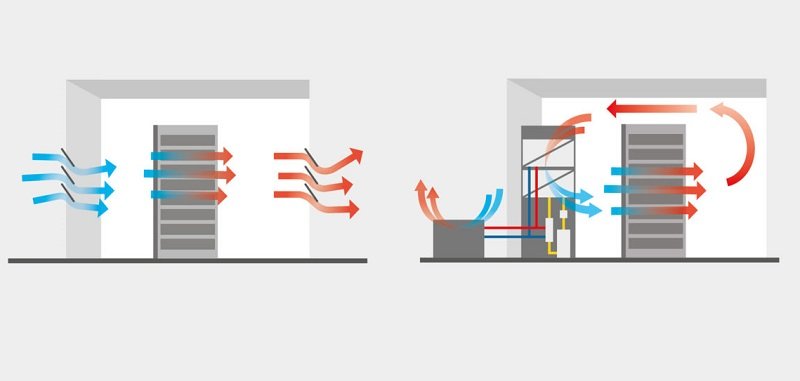
According to the white paper, there are several similarities between a data center and the modern cannabis grow room. The most noticeable similarity is the energy intensive nature of both industries and the subsequent desire to reduce operational costs through energy efficiency. Computer room air conditioners (CRACs) are well suited in almost all respects for grow room applications with controls and software designed for maintaining tight tolerances of temperature and humidity while using as little energy as possible. However, unlike a data center the grow room has a large latent load which comes from the large amounts of water that are fed to the plants on a daily basis. This water, which is removed primarily by the HVAC system, is produced through a biological mechanism known as “transpiration.” Typical computer room air conditioners are designed to remove as little moisture from a data center as possible to prevent the need for re-humidifying the space, providing a challenge for any engineer designing for grow room conditions.
To address this issue, STULZ USA medical CyberOne cannabis units have an enhanced dehumidification feature that rapidly reduces moisture content in the grow space while making fewer air changes. “We have designed our cannabis systems so that the STULZ E2 controller monitors relative humidity in the grow space and when it identifies a moisture spike due to transpiration it slows the fans rotational speed to reduce the CFM, dropping the average coil temperature to the low temperature set point,” confirmed Mr. Meadows. “The colder coil rapidly cools air below its dew point and strips unwanted moisture. Hot gas, electric, steam, or hot water reheat precisely adjusted by the controller maintains the leaving air temperatures during dehumidification to stabilize the grow room and limit stress on the plants.”