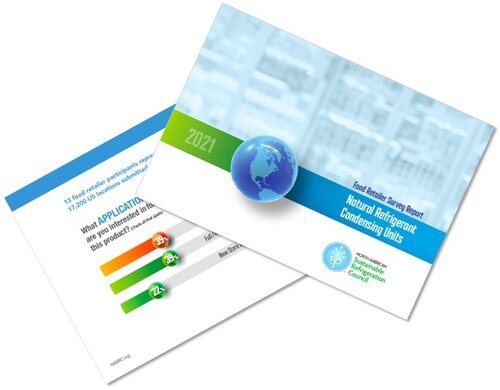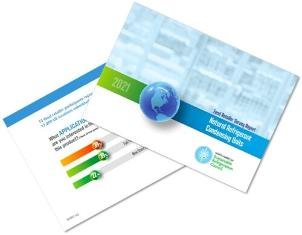
The North American Sustainable Refrigeration Council (NASRC), a 501(c)(3) nonprofit working in partnership with the supermarket industry to advance the use of climate-friendly natural refrigerants, has released a report summarizing US food retailer preferences for natural refrigerant-based condensing unit technologies.
“The most significant takeaway from the report is that it demonstrates a strong demand for natural refrigerant-based condensing unit technologies in the US, with 100 percent of participating retailers indicating interest,” comments Danielle Wright, executive director of North American Sustainable Refrigeration Council.
NASRC conducted a survey of 13 major food retailers representing more than 17,000 US locations to characterize retailer demand for natural refrigerant-based condensing units. The report summarizes retailer preferences for CO2-and-propane-based condensing unit product applications, load type and corresponding capacity ranges (MBTUs), condensing medium, as well as other considerations and requirements.
Another key finding is the potential for existing stores, with almost 80% of retailers surveyed were interested in condensing unit applications for existing stores. The majority indicated a preference for CO2-based condensing units to serve medium temperature refrigerated display cases.
“The real challenge is how to accelerate emissions reduction in the 38,000 stores that exist today,” said Danielle Wright, NASRC executive director. “We need solutions that can be phased in as part of the normal equipment replacement schedule and serve the refrigeration capacity expansion that is happening across the food retail sector today due to the rise in online shopping.”
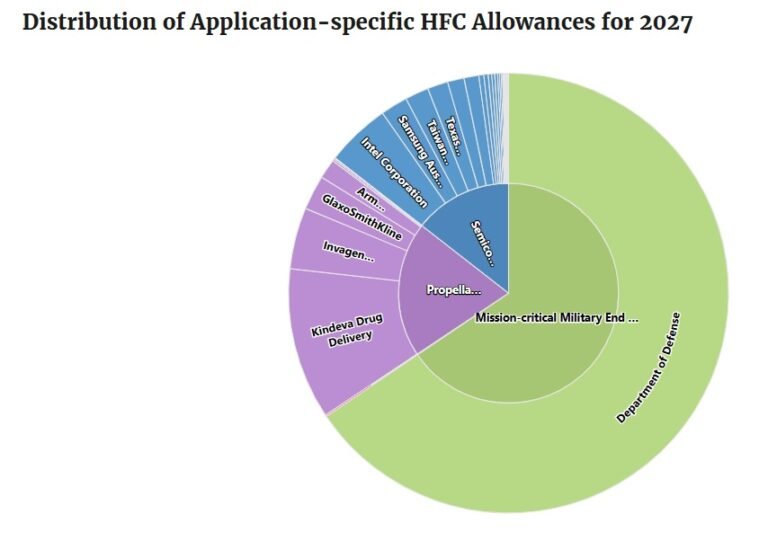
Food retailers are facing increasing regulatory pressures at the international, federal, and state levels to transition to climate-friendly natural refrigerants, including ammonia, CO2, and propane. Today, the vast majority of stores are using hydrofluorocarbon (HFC) refrigerants, which are considered super greenhouse gases and have thousands of times more global warming potential (GWP) than natural refrigerants. Transitioning away from harmful HFCs to natural refrigerants is not so simple as it requires replacing the entire refrigeration system, which is unfeasible from a cost and, many times, technical perspective. Retailers need cost-effective, modular technology options that allow them to migrate their refrigeration loads and displace the existing system over time.
Natural refrigerant-based condensing units, using Carbon Dioxide (CO2) and Propane, are an ideal option due to their ability to serve unique load types and reduce overall GWP of the system. Despite increasing interest from food retailers, very few product options are available in the US market compared to Europe and Asia.
“Ultimately, our goal is to bring more natural refrigerant product solutions to the US market,” said Wright. “This report was the first step in bridging the information gap by leveraging our strong network of stakeholders.”