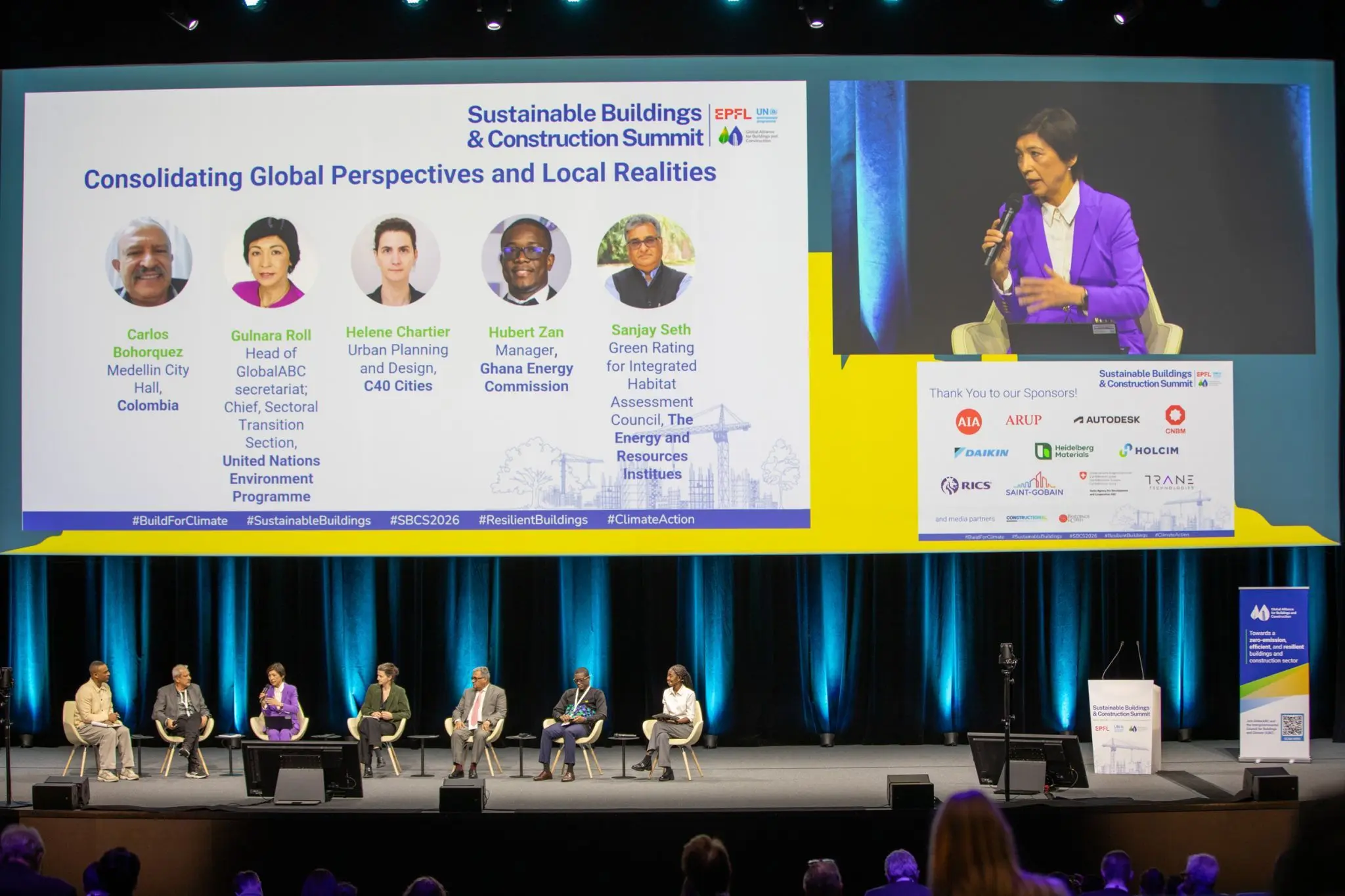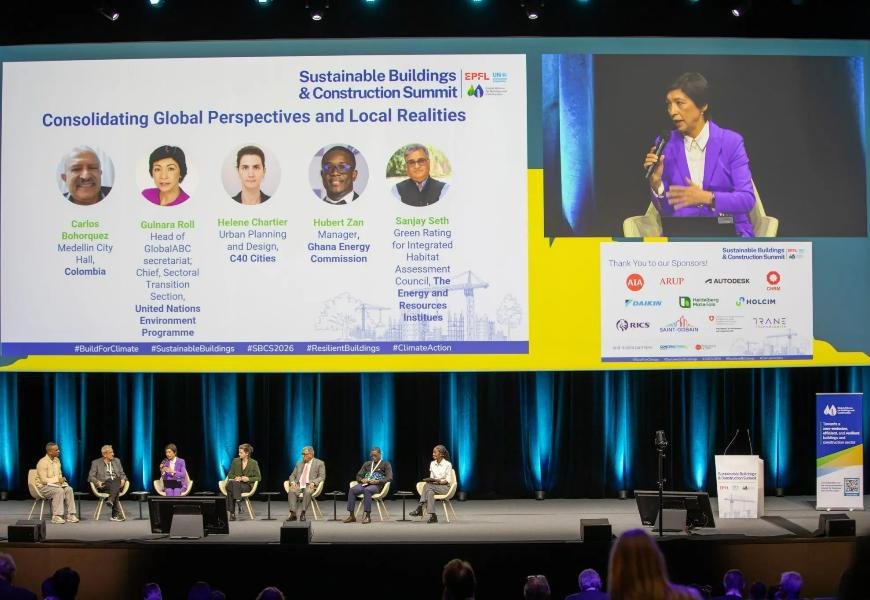
The Cool Coalition led two sessions on cooling and buildings at the Sustainable Buildings and Construction Summit (SBCS26), held in Lausanne, Switzerland, from 20 to 22 April. The summit was co-organised by UNEP’s Global Alliance for Buildings and Construction (GlobalABC) and EPFL’s Centre for Worldwide Sustainable Construction, bringing together 468 participants from 64 countries.
The Cool Coalition convened more than 25 organisations to discuss demand-side flexibility in buildings. According to the source, residential air conditioning places 600 GW of peak load on grids worldwide, while only 60 GW of building demand response is currently active.
At the summit, the Action Hub on Demand-Side Flexibility was launched, co-led by UNEP, the International Renewable Energy Agency (IRENA), and the China Association of Building Energy Efficiency (CABEE). The hub will build evidence, convene relevant actors, and contribute to the forthcoming UNEP–IRENA publication Turning Energy Demand into a Resource.
The Cool Coalition also presented the Be Cool India experience, which has supported passive cooling work across five Indian states: Delhi, Maharashtra, Odisha, Tamil Nadu, and Uttar Pradesh. Delivered by UNEP with the Swiss Agency for Development and Cooperation, Be Cool is demonstrating simplified minimum energy performance standards for passive cooling.
The summit also included the first in-person Technical Meeting of the Intergovernmental Council for Buildings and Climate (ICBC). Senior Representatives from 30 countries took part, with cooling, energy efficiency standards, and policy design among the topics discussed.
The source said the forthcoming ICBC ministerial event will provide a platform for advancing affordable, sustainable housing in the run-up to COP31, with cooling expected to remain central to the discussion.