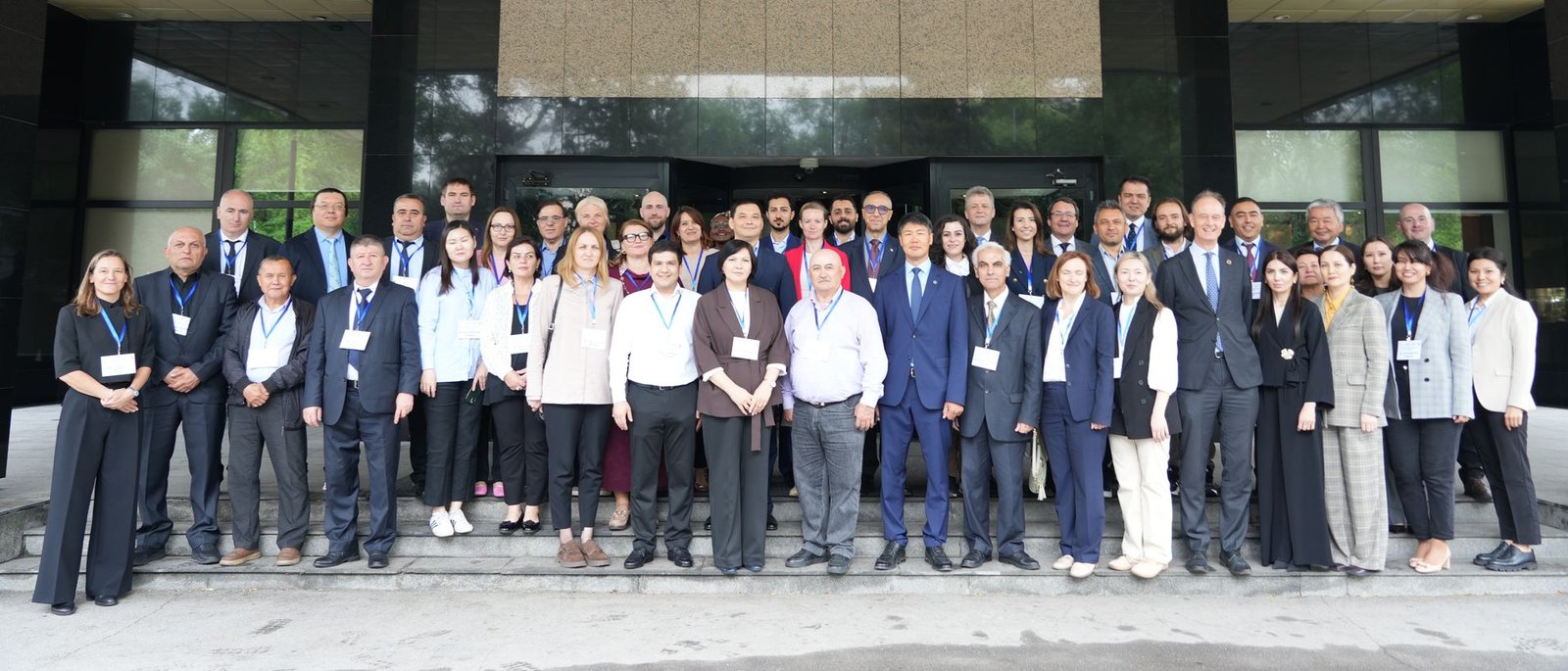
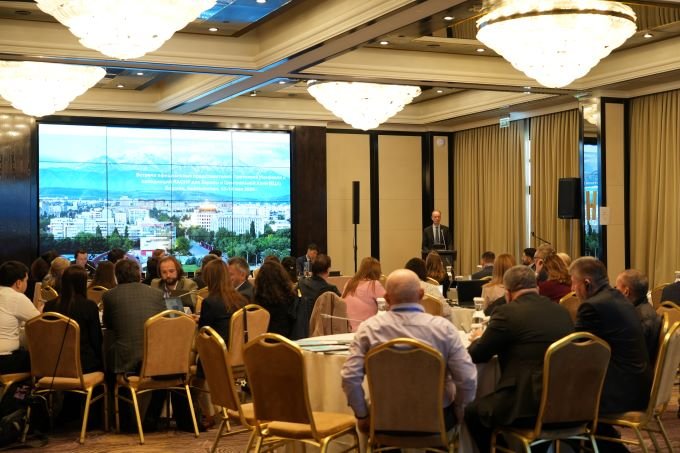
UNEP OzonAction convened a regional meeting in Kyrgyzstan to strengthen cooperation on sustainable cooling, low-GWP refrigerants, and implementation of the Montreal Protocol and its Kigali Amendment across Europe and Central Asia.
The meeting took place in Bishkek from 12 to 14 May 2026 and brought together Montreal Protocol Officers and representatives of refrigeration, air-conditioning, and heat pump associations. Representatives of UNIDO and UNDP attended in person, while the Multilateral Fund Secretariat and the Ozone Secretariat participated virtually. The event was hosted by the Government of the Kyrgyz Republic and funded by the Multilateral Fund for the implementation of the Montreal Protocol.
Participants discussed safety standards and best practices for low-GWP refrigerants, training and certification systems, compliance and enforcement, refrigerant lifecycle and waste management, centres of excellence, and energy-efficiency measures in Kigali implementation planning.
The Multilateral Fund Secretariat briefed participants on the outcomes of the 97th Executive Committee meeting, issues for the upcoming ExCom-98 and beyond, and good practices in project design and submission. The Ozone Secretariat provided updates on the 37th Meeting of the Parties, the forthcoming 48th Open-Ended Working Group meeting, decisions of the Implementation Committee, and efforts to support ratification of the Kigali Amendment.
Countries discussed the need to strengthen national capacity for the safe introduction and use of natural and other low-GWP refrigerants. They also shared experience on technician training, certification, compliance systems, and refrigerant recovery, recycling, reclamation, and destruction options.
Participants noted that National Ozone Units are managing a broader agenda, including HCFC phase-out, HFC phase-down, Kigali Implementation Plans, data reporting, energy-efficiency linkages, standards, enforcement, gender considerations, financing, and stakeholder coordination. The meeting also identified practical needs for digital licensing and data workflows, tools to monitor HFCs and refrigerant blends, and regional or thematic centres of excellence for training and knowledge exchange.