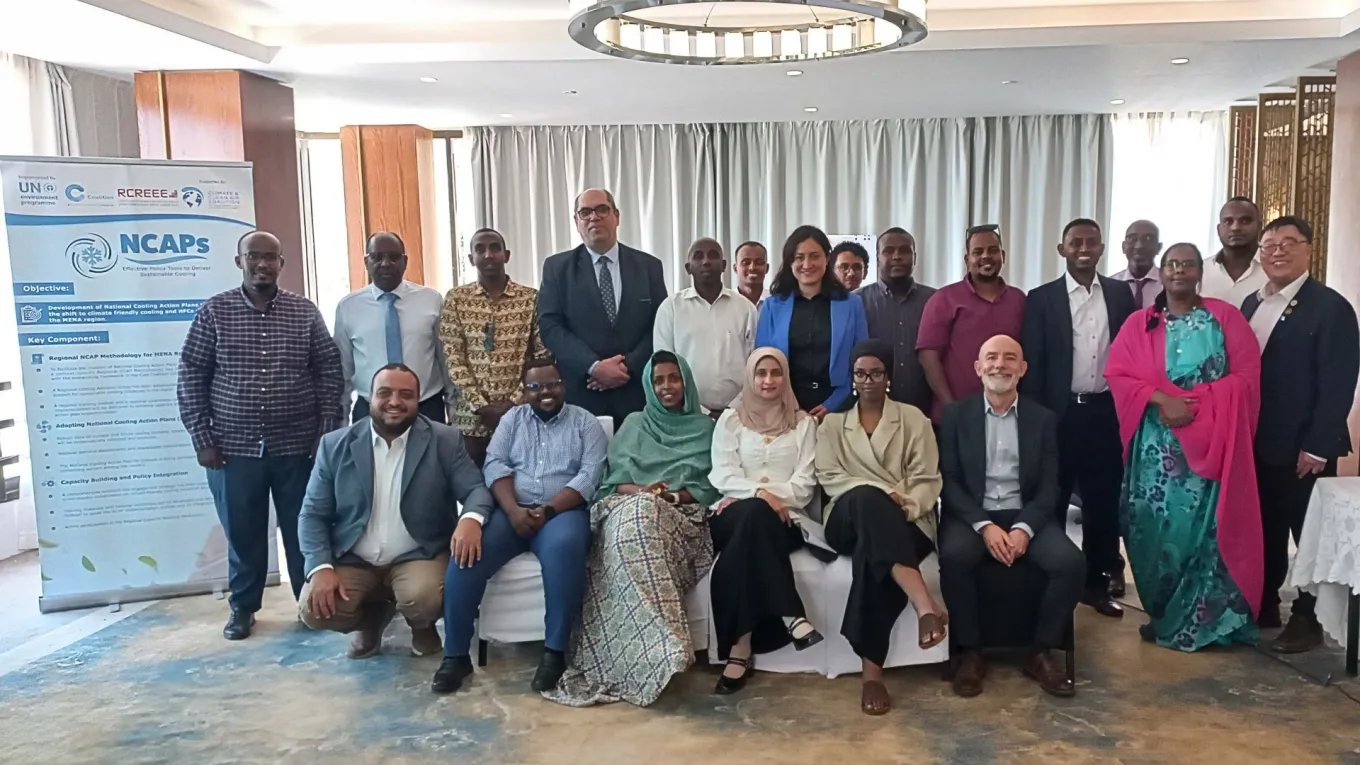
Somalia and Djibouti launched their National Cooling Action Plan processes in May 2026 with support from the UNEP Cool Coalition. Both countries are signatories of the Global Cooling Pledge, a collective commitment to cut cooling-related emissions by 68% by 2050 and to develop NCAPs.
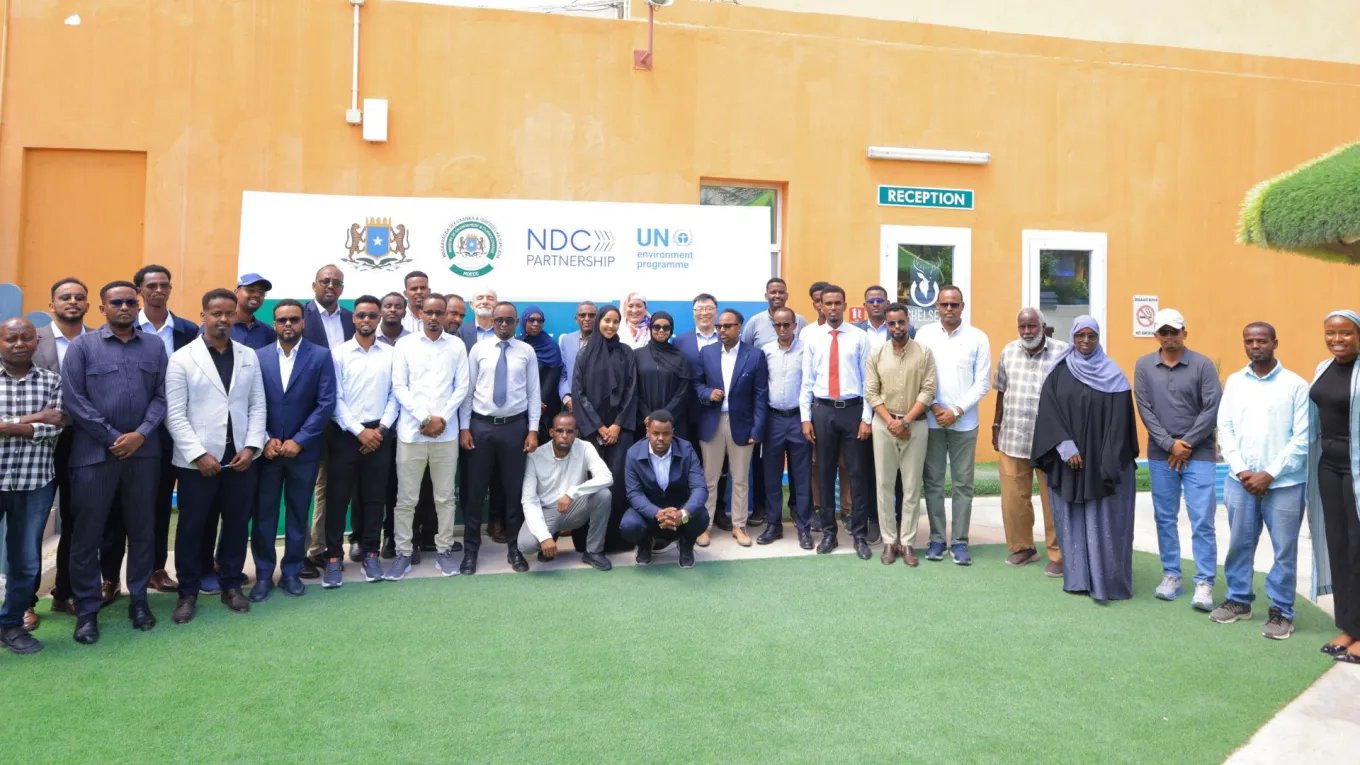
Somalia launched its process on 11 May in Mogadishu with 37 participants from federal ministries, five federal member states, the private sector and international partners. The meeting established an inter-ministerial Steering Committee to coordinate data collection and technical planning.
The plan frames refrigeration as a missing link for food security and value retention. Livestock contributes around 40% of Somalia’s GDP and more than half of export earnings, with an estimated 50 million animals, including more than 7 million camels. Limited cold chain infrastructure means exports remain concentrated in live animals, while fish catches must be sold the same day or risk waste.
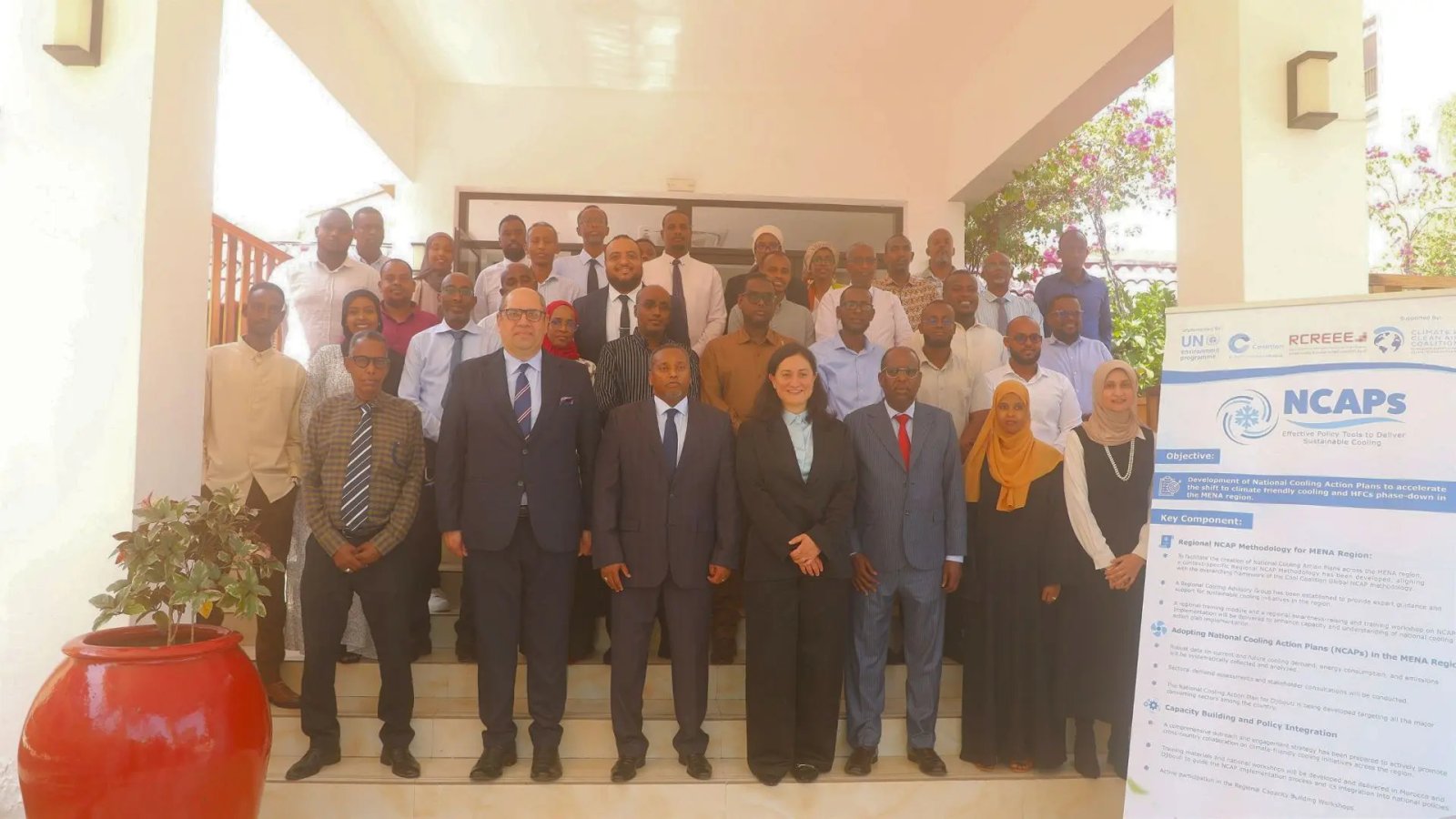
Djibouti launched its NCAP process on 13 and 14 May, convening 39 participants from government institutions, public agencies, the private sector and international organizations. Participants included Minister of Energy and Natural Resources Yonis Ali Guedi.
Djibouti records around 4,450 Cooling Degree Days, among the top five globally, with demand projected to reach around 5,050 by 2050. The country has temperatures up to 50°C, around 50 days per year above 40°C and approximately 180 days above 35°C. The technical discussion focused on appliance labelling, Minimum Energy Performance Standards, standards verification and enforcement, efficient cooling in public buildings, and the balance between efficiency and affordability.
Food storage was also highlighted in Djibouti, where around 30% of local agricultural production is lost due to lack of cold storage and nearly 90% of food is imported. Existing cold chain infrastructure is mainly concentrated in the free zone and large supermarkets, leaving local markets with limited access to reliable cooling.