Numerous papers presented during these conferences show that phase change materials (PCMs) and more generally thermal energy storage (TES) systems have significant benefits in a wide range of refrigeration applications.
13th IIR conference on phase change materials (PCM conference)
During this conference, promising results were stressed in the following areas:
Refrigerated transport
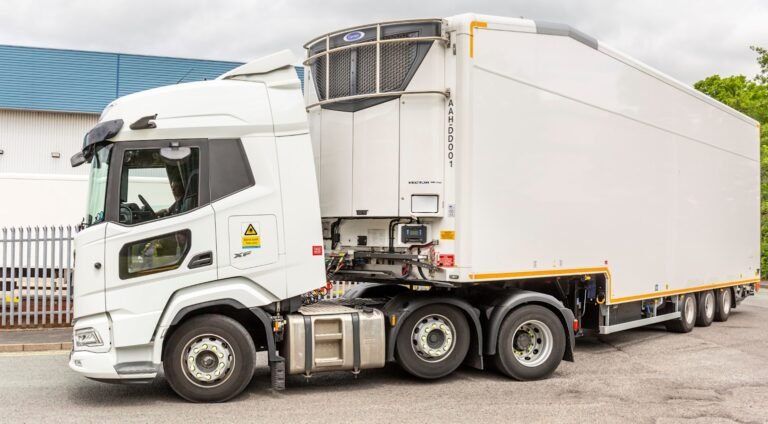
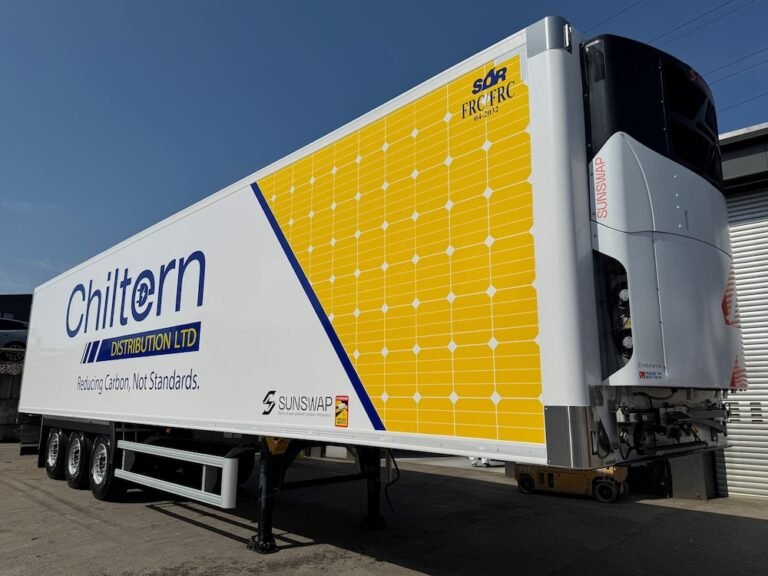
Italian researchers (1) have presented the benefits of the addition of a PCM layer – with different thicknesses – to the traditional 5cm insulated polyurethane wall of a refrigerated truck. 2D transient simulations run by applying a varying hourly solar irradiation of a typical summer day in Vicenza show that for all the evaluated scenarios, even the smallest thickness of the PCM layer can ensure temperature stability inside the truck cell for the most part of the daily journey.
Refrigerated display cabinets
According to Norwegian authors (2), TES systems using PCMs can significantly reduce temperature variations in a display cabinet during loading of warm items, defrost cycles or power outages. This contributes to reduced loss in product quality and lessen food waste. With an increasing share of intermittent renewables in the power grid, PCM-enhanced systems benefit from low-cost electricity during periods with low demand. Stored excess cold can be later used during periods with high demand. A TES prototype was developed using water as PCM integrated in an evaporator. This system was experimentally compared to a reference case not using PCMs. The results show the potential for PCM-TES to consistently keep the cabinet air temperature low, thus prolonging shelf life and product quality. Once charged, PCM-TES systems provide cooling of the items for several hours after the main evaporator is deactivated.
Fishing vessels
A paper by SINTEF researchers (3) investigates thermal storage integration with the refrigerated seawater (RSW) system of a fishing vessel. Various scenarios were investigated. The use of ice in chilling tanks as cold storage can complement the RSW system and reduce total chilling time. This was tested by the addition of 5m3 ice, which resulted in a reduced cooling time of 30minutes. Design modifications in tanks were also introduced to assess the potential of built-in thermal storage. A concept for plug-in thermal storage was also designed, employing a PCM with a 4°C phase change temperature. Results showed that 1m3 thermal energy storage could provide an average of 30kWh for chilling fish during peak load.
Air conditioning
Russian researchers (4) have studied the application of a TES system inserted after the evaporator – with a separator installed downstream – connected to the fluid line between the expansion valve and the evaporator. In the charging mode, the TES works out as an evaporator, the separator can be used as a normal liquid separator on the suction line. In the cooling mode with TES, the compressor is turned off, and the refrigerant is circulated by a pump. The refrigerant leaving the evaporator re-condenses in the TES due to its cold capacity. In this way, the thermal energy stored in TES is released directly into the evaporator by the refrigerant itself. The proposed configuration does not generate energy savings but reduces energy costs to 42% of the cost without TES thanks to the transfer of the electricity consumed during the night period. The serial operation of TES and compressor allows reducing the required TES volume.
9 IIR Conference on Ammonia and CO2
The 9th IIR Conference on Ammonia and CO2 Refrigeration Technologies on Ohrid also addressed the topic of TES and PCMs:
Food processing
Researchers at NTNU (5) in Norway stressed that refrigeration demands in food processing plants can vary significantly over a week, depending on production schedules. As a result, it is common to experience peaks of electricity consumption due to the operation of refrigeration equipment during the day. Integrating TES technology in the refrigeration system enables significant peak shaving, shifting the load from peak to off-peak hours. The paper presents the results obtained from an experimental study conducted on a novel plates-in-tank TES unit integrated into a pump-circulated CO refrigeration system at -5°C for the chilling of food. The unit consists of a stack of pillow-plates fitted in a stainless-steel container filled with an organic PCM (melting point of -9°C). The refrigerant circulates through the channels inside each pillow-plate and evaporates and condenses during the charging and discharging process, respectively. The results show the feasibility of integrating a TES unit with PCM directly into the refrigerant circuit, employing a freezing/melting process of the PCM and an evaporation/condensation process of the refrigerant in the same heat exchanger.