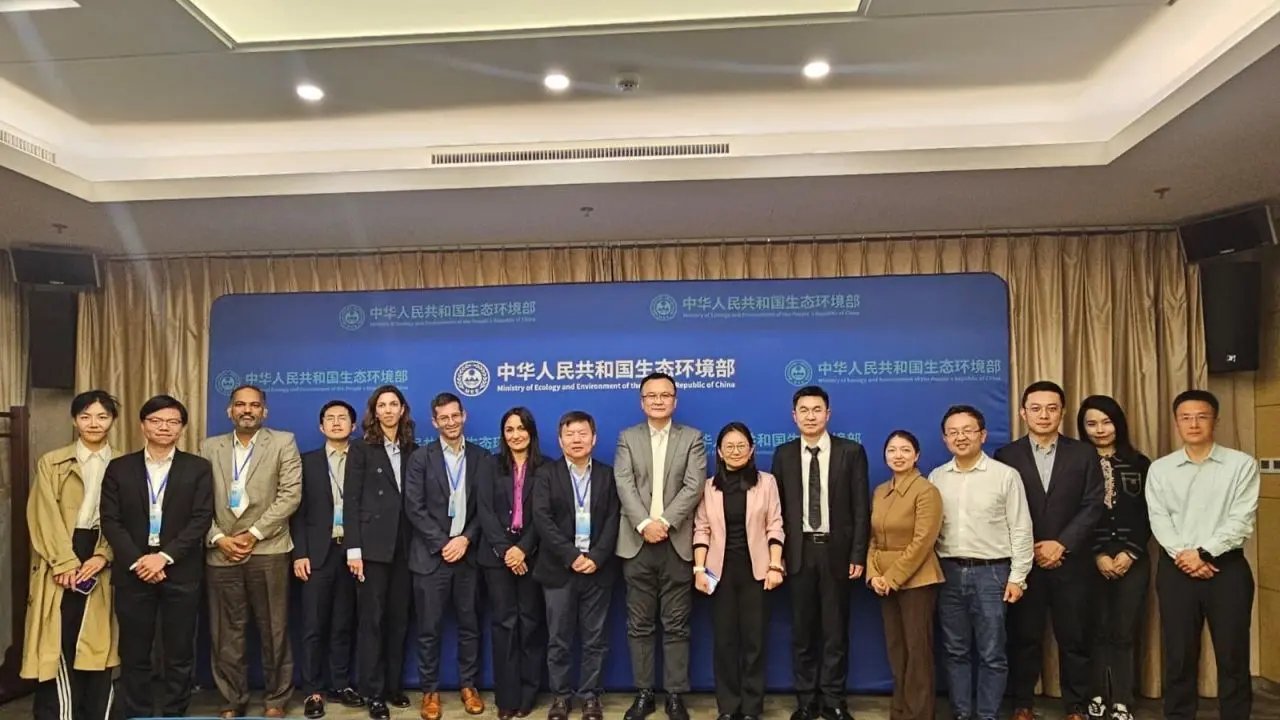
A recent UNEP mission to China, joined by the Cool Coalition, explored how China’s manufacturing scale can support wider global deployment of efficient, affordable and climate-friendly cooling. The mission focused on high-efficiency technologies, solar-powered cooling, standards, testing and South-South cooperation.
China is the world’s largest manufacturer of cooling equipment. The mission placed cooling within the wider buildings and energy agenda, noting that rising electricity demand and pressure on grids make reducing building energy demand as important as expanding clean power supply.
The mission highlighted Chinese manufacturers developing solar-powered cooling systems with battery storage for off-grid and weak-grid environments. These systems were described as relevant for rural communities in Africa and South Asia, including homes, health facilities, food systems and livelihoods.
Cooperation is also advancing on high-efficiency cooling technologies that combine renewable energy, storage and advanced system design. Partnerships on testing, standards and training are taking shape to support deployment across emerging markets and help ensure efficient cooling products are tested, maintained and used effectively.
In Shenzhen, Biosphere 3 was presented as an example of demand-side thinking in building design. Founded by Wang Shi, who built Vanke into China’s largest residential developer, the project includes passive design, shading, ventilation, thermal mass, efficient equipment, solar power and battery storage as part of efforts to help buildings stay cooler and reduce peak demand.
The Cool Coalition said it will continue building on these partnerships to support the deployment of sustainable cooling solutions worldwide.