Esta página solo está disponible en inglés. Ir a la portada en español

×

Questa pagina è disponibile solo in inglese. Home page in italiano

×

Diese Seite ist nur auf Englisch verfügbar. Zur deutschen Startseite

×

Cette page est disponible uniquement en anglais. Aller à la page d'accueil en français

×

Carrier Transicold Expands Cold Chain Education Efforts with NaturaLINE Refrigerated Container Unit Donation in the Philippines

Carrier Transicold Expands Cold Chain Education Efforts with NaturaLINE Refrigerated Container Unit Donation in the Philippines

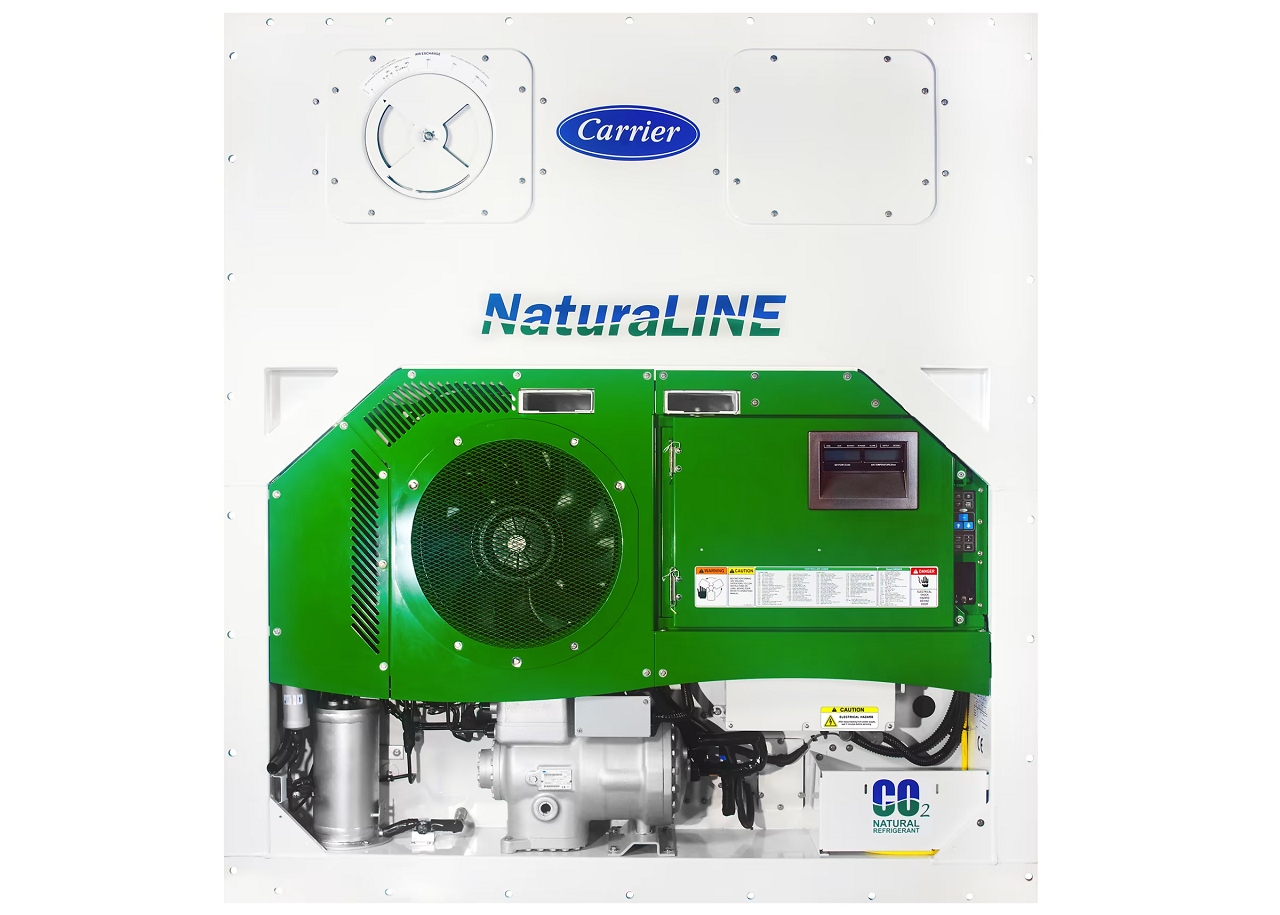
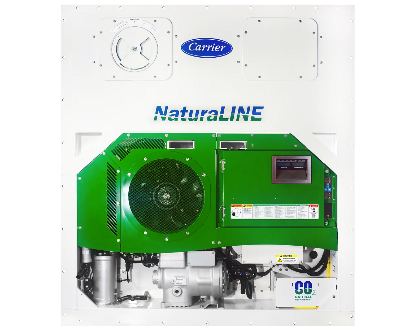
To help educate companies and organizations in the Philippines about sustainable cold chain technologies, Carrier Transicold has donated a 20-foot NaturaLINE refrigerated container unit to the Cold Chain Innovation Hub (CCI-Hub), based in Manila. Through this donation, companies will learn to identify and develop lower-carbon, energy-efficient refrigeration practices in the Philippines and beyond for use in the cold chain.

The CCI-Hub is the official platform of the “Global Partnership for Improving the Food Cold Chain in the Philippines” project. It serves as the project’s central ecosystem of technical resources, training, knowledge sharing and stakeholder collaboration. The project was established by the United Nations Industrial Development Organization together with the Philippines Department of Environment and Natural Resources and the Technical Education and Skills Development Authority.

“In support of Carrier’s Healthy, Safe, Sustainable and Intelligent Cold Chain Program, we are pleased to donate a NaturaLINE refrigerated container unit to help educate companies and organizations in the Philippines on using sustainable natural refrigerant like carbon dioxide (CO2) with an ultra-low global warming potential (GWP) in place of of conventional synthetic refrigerants,” said Tan Sooi Kuan, Director, Finance, Global Container Refrigeration, Carrier Transicold.

Commenting on the donation, Jan Dusek, Head of Global Partnership for CCI-Hub said, “We genuinely appreciate the donation from Carrier Transicold. Using their technology and systems as a teaching point will enable us to educate companies in the Philippines on sustainable technologies for perishables and pharmaceuticals. The NaturaLINE unit will help us raise awareness and increase knowledge of the use of energy-efficient, sustainable natural refrigerant alternatives in the cold chain.”

The NaturaLINE unit utilizes CO2, which has the lowest global warming potential of all refrigerants used in commercially available container refrigeration systems today, setting a clear standard in terms of environmental sustainability. It also is currently the most environmentally-sustainable alternative for refrigerated marine transport and features:

  • Power consumption comparable to Carrier’s best-in-class performer and the industry’s bestselling unit for 15 years running
  • Best-in-class carbon footprint
  • No CO2
  • No intermediate refrigerant step
Get the daily refrigeration briefing

One email a day. Trusted by 3,000+ RACHP professionals.

More on Cold Chain

All on Cold Chain →

Insights

Secop's Solar Direct Drive (SDD) System Earns WHO PQS Approval – The Team Behind It
Article

Secop’s Solar Direct Drive (SDD) System Earns WHO PQS Approval – The Team Behind It

Partner's material In March 2026, Secop’s Solar Direct Drive Power Management Module was granted WHO PQS prequalification and officially listed in the WHO Catalogue of Prequalified Immunization Devices. The WHO IMD-PQS (Immunization Devices Performance, Quality and Safety programme) is the global benchmark for cold chain equipment used in immunisation. Being listed in its catalogue is

22 Jun 2026
Case Study - Effect of Louvers or diffusers on air flow distribution and cooling time on a meat log during Chill cycle
Tech Guide

Case Study – Effect of Louvers or diffusers on air flow distribution and cooling time on a meat log during Chill cycle

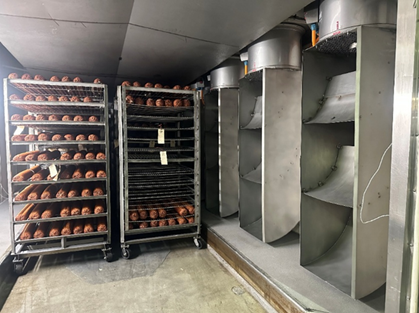
By Kushal Aurangabadkar An experimental analysis was conducted on a cooler space measuring 3.66 m × 6.096 m (12.0 ft × 20.0 ft), equipped with an ammonia refrigeration coil, five 30 cm (12 in.) fans, and five diffusers. The study measured airflow patterns, cooling rates, and heat transfer efficiency in meat storage by testing two configurations:

Kushal Aurangabadkar · 21 Jan 2026
Total Cost of Ownership (TCO) for Modular Refrigeration Systems in Life Sciences Distribution Centers
Tech Guide

Total Cost of Ownership (TCO) for Modular Refrigeration Systems in Life Sciences Distribution Centers

by Ramez Naguib, P.E. Introduction Life sciences distribution centers are under immense pressure to deliver consistent temperature control, comply with increasingly stringent regulations, and optimize operational efficiency. Traditional built-up refrigeration systems often prove cumbersome, costly, and slow to implement. In contrast, modular, factory-assembled refrigeration systems have emerged as a compelling alternative. Drawing on lessons from

14 Jan 2026
Everything on Cold Chain: 2,041 articles, 2 case studies, 23 insights

Most read this month

All news →